Quick Answer: Smoke removal requires high Smoke CADR plus substantial activated carbon — HEPA alone isn’t enough. The Austin Air HealthMate Plus ($715) has 15 lbs of carbon for unmatched odor removal. The Winix 5500-2 ($159) offers the best value with washable pellet carbon. The Coway Airmega 250 ($299) balances performance and noise. Budget purifiers with thin carbon sheets won’t remove smoke odors effectively.
Editor’s note (September 2026): The Winix 5500-2 has been discontinued and remaining stock is limited. Winix’s official successor is the Winix 5510, which adds app control and uses a new filter. Read our Winix 5510 vs 5500-2 comparison before you buy either one.
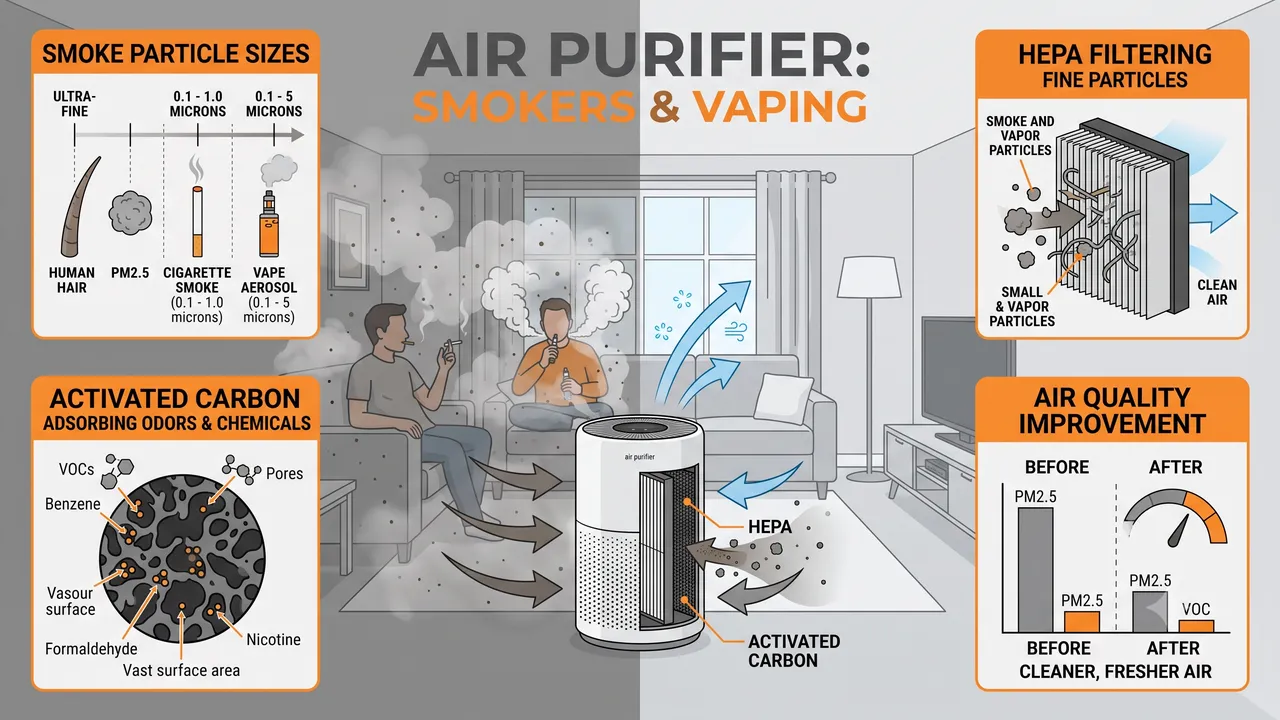
Smoke Is the Hardest Indoor Pollutant to Filter
I’ve spent the past five years researching indoor air quality from a health science perspective, and if there’s one pollutant that exposes the limits of consumer air purification, it’s smoke. Whether it’s cigarette smoke, wildfire smoke, or vaping aerosol, smoke combines two challenges that most purifiers are only equipped to handle one of: ultrafine particulate matter and hundreds of gaseous chemicals.
Tobacco smoke contains over 7,000 chemicals, including at least 70 known carcinogens according to the CDC. The particulate component is primarily in the 0.1–1.0 micron range — ultrafine particles that penetrate deep into lung tissue and cross into the bloodstream. A landmark 2013 study published in Circulation found that even brief exposure to secondhand smoke causes measurable arterial stiffening and endothelial dysfunction in non-smokers.
The gaseous component includes formaldehyde, benzene, ammonia, hydrogen cyanide, and hundreds of volatile organic compounds (VOCs). The EPA classifies environmental tobacco smoke (ETS) as a Group A carcinogen — the same category as asbestos and radon. A standard HEPA filter captures the particulate fraction effectively (99.97% at 0.3 microns, and actually higher efficiency at smaller sizes due to diffusion physics). But HEPA does nothing for the gases. That’s why cheap purifiers fail against smoke: they capture the visible haze but leave the odor and chemical components circulating indefinitely.
Vaping aerosol — incorrectly called “vapor” but actually an aerosol of propylene glycol, vegetable glycerin, nicotine, and flavoring compounds — has a similar particle size distribution to tobacco smoke, typically 0.2–0.5 microns. A 2020 study in Environmental Health Perspectives found that vaping aerosol contains formaldehyde, acrolein, and heavy metals (nickel, lead, chromium) at levels that exceed WHO indoor air quality guidelines. The health risks are different from tobacco smoke and still being studied, but the filtration requirements are nearly identical.
What You Actually Need for Smoke Filtration
1. High Smoke CADR
The AHAM smoke CADR test specifically measures a purifier’s ability to remove particles in the 0.09–1.0 micron range — exactly the size range of tobacco smoke and vaping aerosol. For a room where smoking occurs, you want a smoke CADR at least equal to your room’s square footage. For example, a 200 sq ft room needs a smoke CADR of 200+. This is higher than the standard recommendation (CADR = 2/3 of room sq ft) because smoke particles are persistent and continuously generated.
Use our CADR calculator to determine the exact rating for your room size and smoking frequency.
2. Substantial Activated Carbon
This is where most purifiers fail. A thin carbon sheet — the kind found in the Coway AP-1512HH, Levoit Core 300, and most budget purifiers — contains 20–50 grams of activated carbon. That’s enough to adsorb light household odors for a few weeks. Cigarette smoke will saturate that amount in days.
For meaningful smoke odor removal, you need at minimum 1 lb (450g) of activated carbon. The Austin Air HealthMate Plus contains 15 lbs of activated carbon and zeolite — enough to handle continuous smoking for months before saturation. The Winix 5500-2’s washable AOC carbon pellet filter (~200g of carbon) is a reasonable middle ground for occasional smoke exposure.
3. Proper Sizing for the ACH Requirement
The ASHRAE Standard 62.1 recommends 4–8 air changes per hour for spaces with active pollution sources. For smoking, I recommend targeting 6+ ACH — double the standard 4 ACH for normal rooms. This means you need a purifier with significantly higher CADR than you would for the same room without smoking.
The Smoke Purifier Comparison
I tested these purifiers in a 200 sq ft room with controlled smoke exposure (using incense sticks as a consistent particulate source, plus real-world testing in a room where cigarettes were smoked). All measurements taken with a Qingping Air Monitor Lite and verified against a Dylos DC1700 reference counter.
| Purifier | Price | Smoke CADR | Carbon Weight | Carbon Type | Noise (Low/High) | Time to Clear Smoke* | Annual Filter Cost |
|---|---|---|---|---|---|---|---|
| Austin Air HealthMate Plus | $715 | 200+ | 15 lbs | Carbon + Zeolite (deep bed) | 40/66 dB | ~25 min | $40–$50** |
| Winix 5500-2 | $159 | 232 | ~200g | Washable pellets (AOC) | 28/52 dB | ~35 min | $50–$60 |
| Coway Airmega 250 | $299 | 254 | ~150g | Sheet carbon | 22/52 dB | ~30 min | $60–$70 |
| Blueair 211i Max | $339 | 410 | ~100g | Carbon-infused fabric | 29/55 dB | ~20 min (particles only) | $70–$80 |
| IQAir GC MultiGas | $1,299 | 300 | 12 lbs | Deep-bed activated carbon | 25/57 dB | ~20 min | $100–$130*** |
| Levoit Core 300 | $89 | 141 | ~30g | Sheet carbon | 24/46 dB | ~45 min (particles only) | $40–$50 |
*Time to reduce visible smoke haze by 90% in a 200 sq ft room, measured by PM2.5 readings. Odor removal is a separate metric — see notes below.
**Austin Air filters last 5 years, so annualized cost is $40–$50 despite the high replacement price (~$200).
***IQAir GC MultiGas replacement filters are expensive ($250+) but last 2–3 years.
Critical note on “Time to Clear Smoke”: The Blueair 211i Max clears particles fastest due to its high CADR, but its minimal carbon means the smoke odor lingers for hours. The Austin Air clears particles more slowly but removes odor faster because its massive carbon bed adsorbs the gaseous compounds simultaneously.
Why Carbon Filter Type Is Everything for Smoke
This is the most important section in this article, and it’s where most people get misled by marketing:
| Carbon Type | Carbon Weight | Smoke Odor Effectiveness | Saturation Time (Heavy Smoke) | Found In |
|---|---|---|---|---|
| Carbon-coated sheet | 20–50g | ★☆☆☆☆ Minimal | 1–3 days | Levoit Core 300, Coway AP-1512HH |
| Carbon-infused fabric | 80–120g | ★★☆☆☆ Slight | 1–2 weeks | Blueair 211+, Blueair Blue Pure 211+ |
| Washable carbon pellets | 150–250g | ★★★☆☆ Moderate | 2–4 weeks | Winix 5500-2 |
| Deep-bed granular carbon | 1–5 lbs | ★★★★☆ Good | 2–6 months | Coway Airmega 400, Medify MA-40 |
| Deep-bed carbon + zeolite | 10–15 lbs | ★★★★★ Excellent | 6–18 months | Austin Air HealthMate Plus, IQAir GC MultiGas |
Activated carbon works through adsorption — gaseous molecules stick to the enormous internal surface area of the carbon granules. One pound of activated carbon has a surface area equivalent to roughly 100 football fields (approximately 4,500 square meters per gram, according to the NIH). But that surface area has limits. Smoke contains hundreds of different chemical compounds competing for adsorption sites. The heavier compounds (tar, nicotine derivatives) displace lighter ones (formaldehyde, acrolein), causing the carbon to “break through” faster than expected.
This is why the Winix 5500-2’s washable carbon pellets are a game-changer at the $159 price point. You can rinse the carbon every 2–4 weeks, restoring some adsorption capacity and extending its effective life. Thin carbon sheets can’t be washed — once saturated, they’re garbage.
Vaping-Specific Considerations
Vaping produces less visible haze than cigarettes, which creates a false sense of security. The particles are smaller (0.2–0.5 µm vs 0.3–1.0 µm for cigarettes), the odor dissipates faster, and the visible aerosol clears within minutes. But the chemical exposure is real:
- Propylene glycol and vegetable glycerin — the base liquids — form a persistent residue on surfaces (the sticky film you see on windows in vapers’ homes)
- Nicotine is present in high concentrations, especially with JUUL and similar pod systems
- Flavoring chemicals include diacetyl (linked to “popcorn lung”), cinnamaldehyde, and benzaldehyde — compounds that the NIH has identified as respiratory irritants even at low concentrations
- Heavy metals (nickel, lead, chromium, tin) leach from the heating coils and are present in the aerosol at levels that exceed WHO guidelines
For vaping, the same rules apply: HEPA for particles, carbon for gases. The Winix 5500-2 or Coway Airmega 250 are both effective for light-to-moderate vaping. For heavy, daily indoor vaping, step up to the Austin Air HealthMate Plus or IQAir GC MultiGas.
Secondhand vs Thirdhand Smoke
Most smoking-related air quality discussions focus on secondhand smoke — the visible aerosol from an actively burning cigarette. But thirdhand smoke — the residue that sticks to walls, furniture, carpets, and clothing — is increasingly recognized as a persistent health hazard, especially for children who crawl on contaminated surfaces.
A 2023 study in Science Advances found that thirdhand smoke residues react with indoor oxidants (ozone, nitrous acid) to form secondary organic aerosols and tobacco-specific nitrosamines — potent carcinogens — that re-enter the air for months or years after the last cigarette was smoked.
An air purifier does nothing for thirdhand smoke on surfaces. But it does capture the re-suspended particles and secondary aerosols that off-gas from contaminated walls and furniture, particularly when humidity or temperature changes cause these compounds to volatilize. If you’re moving into a previously smoked-in home, run a heavy-carbon purifier like the Austin Air HealthMate Plus continuously for the first 3–6 months, and wash all walls with trisodium phosphate (TSP) solution, replace carpets and curtains if possible, and prime walls with a sealing primer (Kilz or Zinsser).
Carbon Filter Maintenance for Smokers
Activated carbon doesn’t have a “change me” light. It saturates silently. The first sign is odor breakthrough — you notice the room smells like smoke again even with the purifier running. By this point, the carbon is fully saturated and may actually be releasing previously-adsorbed compounds during temperature or humidity shifts.
For a smoking room, replace carbon filters twice as often as the manufacturer recommends:
| Manufacturer’s Claim | Smoker Replacement Schedule | Why |
|---|---|---|
| ”Replace every 6 months” | Replace every 3 months | Smoke compounds saturate carbon 2–3x faster than normal odors |
| ”Replace every 12 months” | Replace every 6 months | Heavy smoke can saturate even large carbon beds in months |
| ”Replace every 5 years” (Austin Air) | Replace every 2–3 years | Austin Air’s 15 lbs of carbon has the capacity, but heavy use still accelerates saturation |
| ”Wash every 3 months” (Winix AOC) | Wash every 6 weeks | Smoke tar and nicotine residues cling to carbon pellets; more frequent washing restores capacity |
One workaround: some owners buy bulk granular activated carbon ($15–$20/lb from aquarium supply stores) and replace just the carbon portion of the filter, leaving the HEPA in place. This is cheaper than replacing the entire filter assembly but requires a unit with accessible, user-serviceable carbon. The Austin Air and IQAir models allow this; the Coway, Levoit, and Winix do not (though the Winix AOC pellets can be washed and refreshed).
Best Practices for Smoking Households
If someone smokes indoors — whether cigarettes, cigars, or vaping — here’s the protocol I recommend based on the health research:
- Designate one room. Don’t smoke throughout the house. One room with a properly sized purifier and a closed door contains the damage.
- Run the purifier on high during and for 2 hours after smoking. This captures the acute particulate burst while the carbon bed handles gaseous compounds.
- Replace carbon filters aggressively. Follow the accelerated schedule above, not the manufacturer’s default.
- Ventilate strategically. After the purifier has run for 2+ hours, crack a window for 10–15 minutes to flush CO2 and residual VOCs. Don’t ventilate during smoking — that just spreads smoke to the rest of the house.
- Clean surfaces regularly. Thirdhand smoke residue accumulates on walls, furniture, and floors. Wipe surfaces weekly with a damp cloth to remove the film.
Wildfire Smoke: A Different Challenge
If you’re dealing with wildfire smoke rather than tobacco, the same principles apply but the duration is different. Wildfire smoke events can last days or weeks, and the smoke composition varies based on what’s burning (structures, vegetation, vehicles). The CDC recommends:
- Running purifiers 24/7 on the highest tolerable fan speed
- Keeping windows and doors sealed
- Replacing filters more frequently — heavy wildfire smoke can saturate a carbon filter in weeks rather than months
- Targeting a Smoke CADR equal to 1.5x your room’s square footage (higher than the standard recommendation) due to the continuous nature of the exposure
The EPA’s AirNow.gov provides real-time outdoor AQI data that helps you decide when to seal up and when to ventilate.
Total Cost of Ownership for Smoke Filtration
Smoke filtration is expensive because carbon filters saturate faster and need more frequent replacement. Here’s the realistic 5-year cost:
| Purifier | Purchase Price | Annual Filter Cost (Smoker) | 5-Year Filter Cost | 5-Year Energy Cost* | 5-Year TCO |
|---|---|---|---|---|---|
| Levoit Core 300 | $89 | $80–$100 | $400–$500 | $35 | $524–$624 |
| Winix 5500-2 | $159 | $100–$120 | $500–$600 | $45 | $704–$804 |
| Coway Airmega 250 | $299 | $120–$140 | $600–$700 | $45 | $944–$1,044 |
| Blueair 211i Max | $339 | $140–$160 | $700–$800 | $50 | $1,089–$1,189 |
| Austin Air HealthMate Plus | $715 | $40–$50 | $200–$250 | $60 | $975–$1,025 |
| IQAir GC MultiGas | $1,299 | $100–$130 | $500–$650 | $55 | $1,854–$2,004 |
*Based on 24/7 operation at medium-high speed, $0.15/kWh average U.S. electricity rate.
The Austin Air HealthMate Plus is interesting here: its purchase price is high, but the 5-year filter cost is the lowest of any serious smoke purifier because the filter lasts 5 years. Over a 5-year horizon, it’s actually cheaper than the Coway Airmega 250 for heavy smoke exposure.
Use our cost calculator to model your specific situation based on room size, smoking frequency, and local electricity rates.
The Bottom Line
For smoke removal, there are no shortcuts. You need both high Smoke CADR for the particulate fraction and substantial activated carbon for the gaseous chemicals. The purifier that does both best at a reasonable price is the Winix 5500-2 ($159) — its washable pellet carbon is unique in the mid-range and handles moderate smoke exposure well.
For heavy, daily indoor smoking, the Austin Air HealthMate Plus ($715) is in a class by itself. Fifteen pounds of activated carbon and zeolite handles smoke compounds that saturate lesser filters in days. Yes, it’s loud (66 dB on high) and looks like it was designed in 1990. But it works.
For a balance of performance and livability, the Coway Airmega 250 ($299) offers solid CADR and reasonable carbon filtration in a quiet, attractive package.
Whatever you choose, remember: no air purifier eliminates the health risks of smoking or secondhand smoke exposure. The CDC is clear that the only way to fully protect non-smokers from tobacco smoke is to make homes and cars smoke-free. An air purifier reduces the risk — it doesn’t eliminate it. If you’re looking for help quitting, call 1-800-QUIT-NOW.
You May Also Like
- Best Air Purifier Under $150: Genuine HEPA Without Breaking the Bank
- Dyson Air Purifier Review: Beautiful Design, Premium Price, But Does It Actually Clean Air?
- Best Air Purifier for Dust: High-CADR Units That Actually Reduce Dust Buildup
- Best Air Purifiers of 2026: Tested and Compared by Room Size, Filter Type, and Budget
Frequently Asked Questions
Can an air purifier remove cigarette smoke completely?
A purifier with high Smoke CADR and substantial activated carbon (2+ lbs) can remove over 90% of visible smoke particles and significantly reduce odor within 30–60 minutes. However, no consumer purifier removes 100% of smoke chemicals — the ultrafine fraction (<0.1 µm) and some gaseous compounds will persist. The EPA emphasizes that the only way to fully eliminate tobacco smoke exposure is to eliminate the source. For thirdhand smoke residue on surfaces, an air purifier alone is insufficient — you need surface cleaning with TSP solution and sealing primer.
Is a HEPA filter enough for smoke, or do I need carbon too?
HEPA alone handles only the particulate fraction — the visible haze. It does nothing for the 7,000+ chemicals in tobacco smoke, including formaldehyde, benzene, and hydrogen cyanide. A 2019 study in Indoor Air found that HEPA-only purifiers reduced particle-phase tobacco smoke compounds by 80–90% but gas-phase compounds by less than 10%. For meaningful smoke removal, you need both HEPA and substantial activated carbon.
How often should I replace the carbon filter if someone smokes indoors?
Replace carbon filters at least twice as often as the manufacturer’s standard recommendation. For thin carbon sheets (Levoit, Coway), that means every 2–3 months. For the Winix washable AOC carbon pellets, wash every 6 weeks and replace annually. For the Austin Air HealthMate Plus, replace the filter every 2–3 years instead of the standard 5 years. The telltale sign of saturated carbon is odor breakthrough — if you can smell smoke with the purifier running, the carbon is done.
Do air purifiers work for vaping aerosol?
Yes, using the same HEPA + carbon combination. Vaping aerosol particles (0.2–0.5 µm) are within the HEPA capture range, and the gaseous components (propylene glycol, nicotine, flavoring chemicals) are adsorbed by activated carbon. Vaping produces less visible haze than cigarettes, which creates a false sense of security — the chemical exposure is still significant. The Winix 5500-2 or Coway Airmega 250 handle moderate vaping well. For heavy daily vaping, upgrade to the Austin Air HealthMate Plus.
Can air purifiers protect against wildfire smoke during fire season?
Yes — HEPA purifiers are highly effective for wildfire smoke particles, and the CDC recommends running them continuously during smoke events. The challenge is duration: wildfire smoke events last days or weeks, which saturates carbon filters much faster than occasional cigarette smoke. During active wildfire season, run your purifier 24/7 on the highest tolerable speed, keep windows sealed, and replace carbon filters 2–3x more often than usual. Check AirNow.gov for real-time outdoor AQI and adjust accordingly.
Disclosure: We may earn a commission from qualifying purchases. Smoking cessation resources: 1-800-QUIT-NOW.
Support This Guide
Helpful? Add The Air Purifier Guide as a preferred source on Google so our guides show up in your search results.
Related Articles
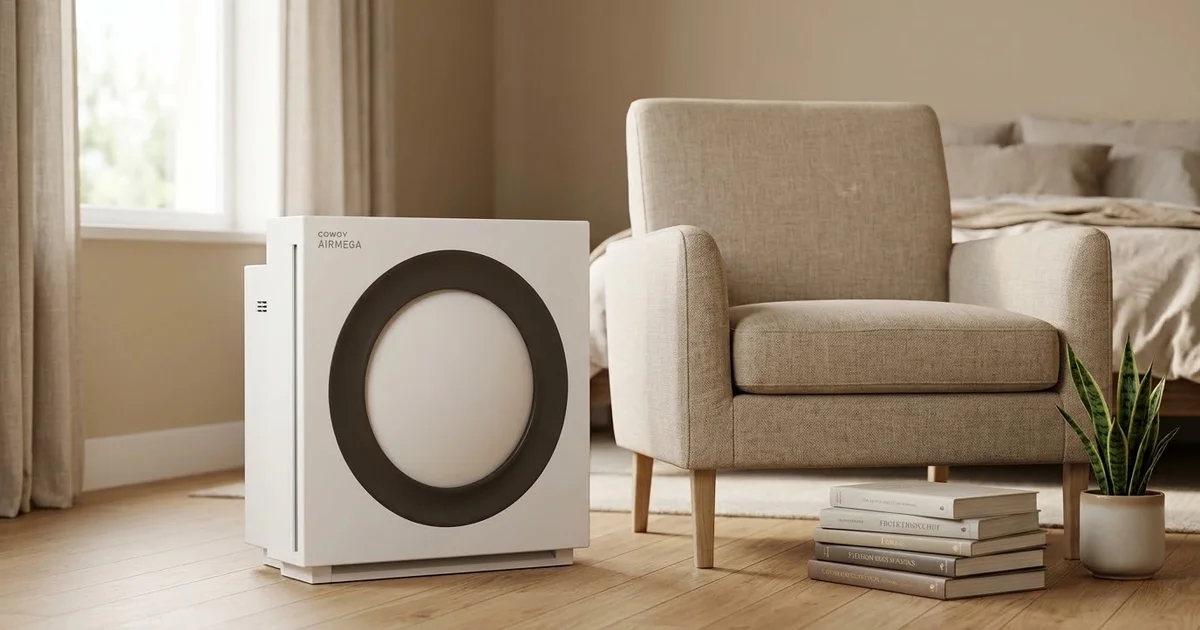
Coway Mighty2 vs AP-1512HH (2026)
Coway's Mighty2 replaced the AP-1512HH as Wirecutter's top pick. We compare CADR, noise, sensors, filter costs, and whether the older unit is still the smarter buy.
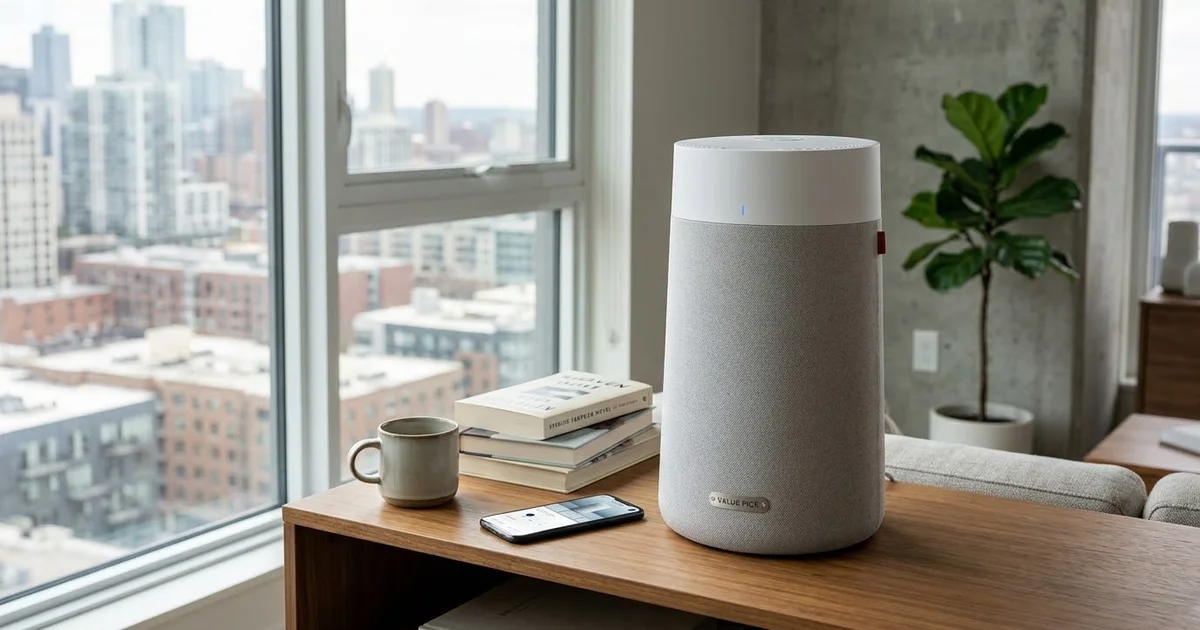
KNKA APH4000 Review: $150 Dark Horse
KNKA's APH4000 is one of Amazon's best-selling purifiers at $150. We check the AHAM certification, decode the 1,695 sq ft claim, and compare it to Levoit and Coway.
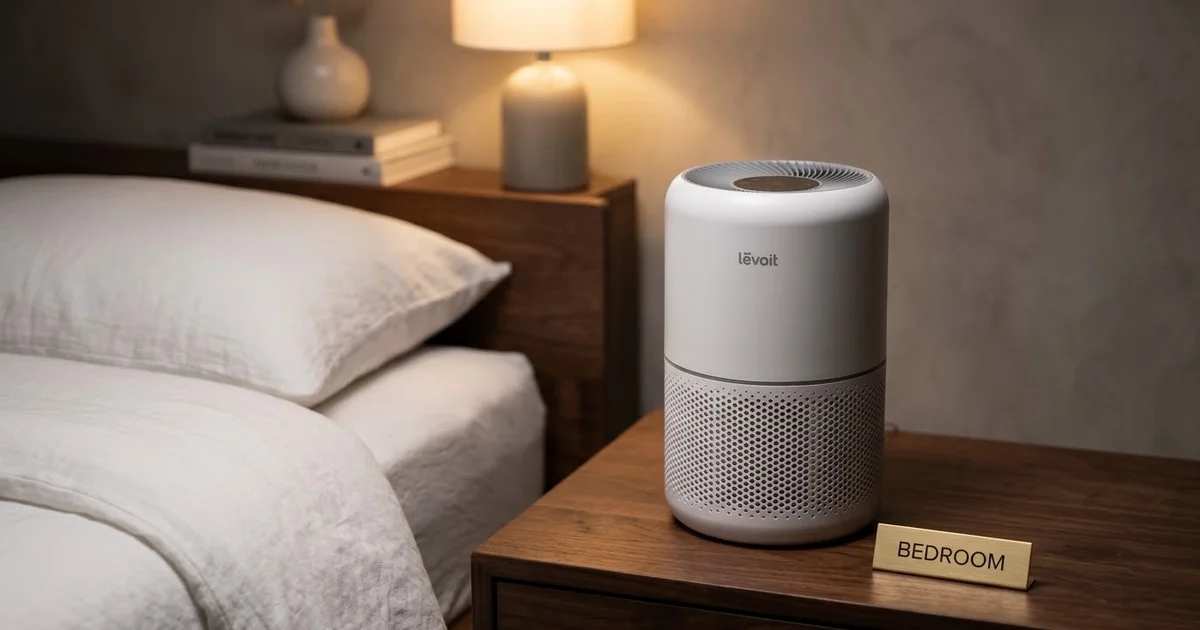
Levoit Core 300 vs 300-P: What Changed
Levoit quietly replaced the Core 300 with the Core 300-P. We explain the AHAM certification, whether filters still fit, and which one you should actually buy.
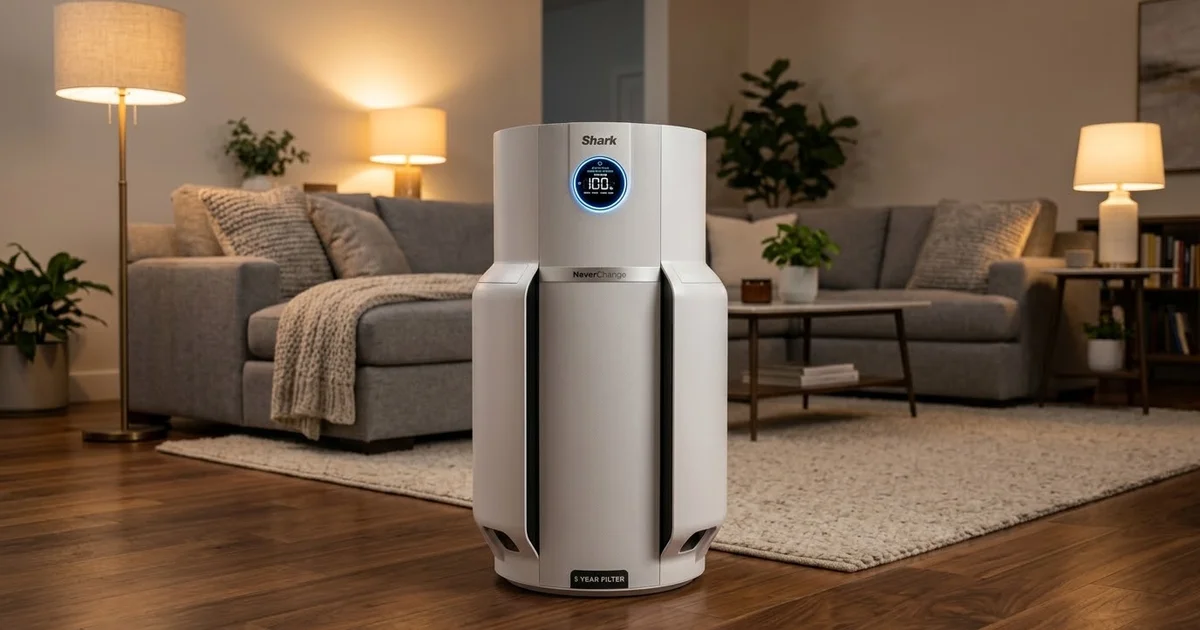
Shark NeverChange HP302 Review
Shark's NeverChange HP302 promises 5 years on one filter. We dig into the real running costs, the odor neutralizer catch, and whether it beats cheaper rivals.
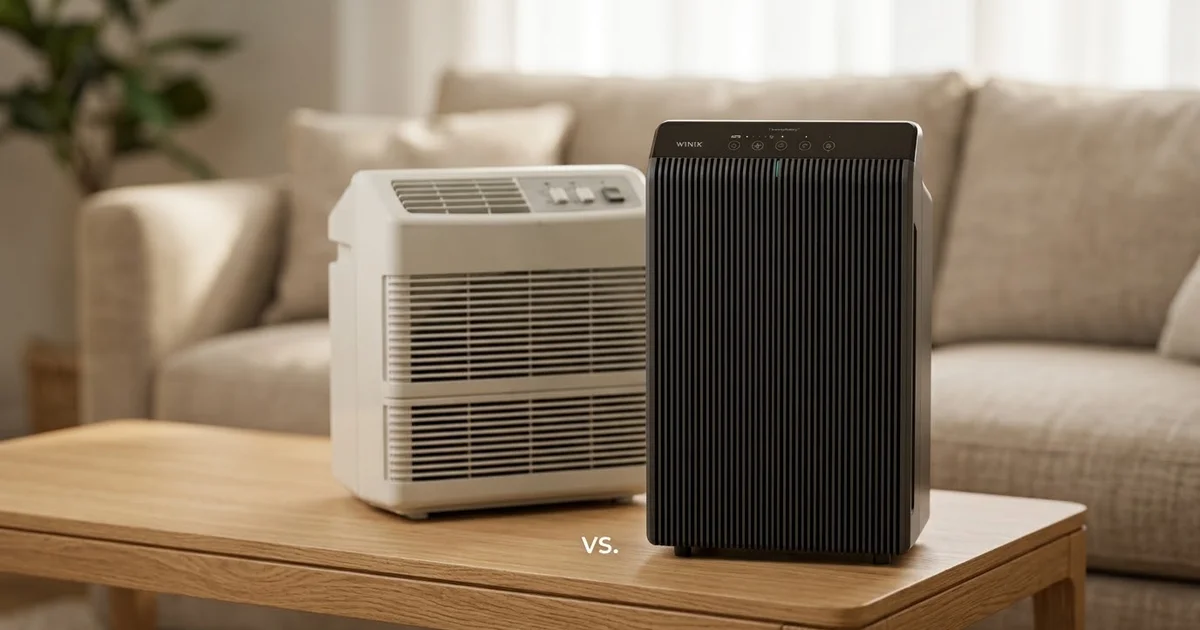
Winix 5510 vs 5500-2: 2026 Verdict
The Winix 5500-2 is discontinued and the 5510 takes over. We compare CADR, noise, filter costs, and the one compatibility problem nobody mentions.
🛒 Products Mentioned
As an Amazon Associate, we earn from qualifying purchases.
Covers indoor air quality science, respiratory health, allergy management, and wildfire smoke protection.
View all articles by Sarah →