The Short Answer: 7 air purifier myths debunked: 1) Houseplants don’t clean air (need 1,000+ per sq meter). 2) Ionizers produce ozone and are less effective than HEPA. 3) Higher CADR isn’t always better (size to your room). 4) Run your purifier 24/7, not just when air looks bad. 5) Expensive filters don’t last longer. 6) Never wash a HEPA filter. 7) Air purifiers don’t eliminate the need to dust.
Editor’s note (September 2026): The Winix 5500-2 has been discontinued and remaining stock is limited. Winix’s official successor is the Winix 5510, which adds app control and uses a new filter. Read our Winix 5510 vs 5500-2 comparison before you buy either one.
Why myths persist
The air purifier industry is worth over $13 billion globally and growing at 8% annually. That kind of money attracts marketing that ranges from optimistic to outright deceptive. Meanwhile, well-intentioned advice spreads through social media. Your cousin’s Instagram post about houseplants cleaning the air has been shared 50,000 times, while the peer-reviewed study debunking it has been read by roughly 12 academics.
Here are the seven most persistent air purifier myths, and what the evidence actually says.
Myth 1: “Houseplants clean indoor air”
The claim: NASA’s 1989 Clean Air Study proved that houseplants remove VOCs from indoor air. Spider plants, peace lilies, and snake plants are “natural air purifiers.”
The reality: The NASA study tested plants in sealed, small-volume chambers (roughly one cubic meter) over 24 hours. Extrapolating to a real home, a 2019 review in the Journal of Exposure Science & Environmental Epidemiology calculated you would need between 10 and 1,000 plants per square meter to achieve the same CADR as a typical mechanical air purifier. For a 150 sq ft bedroom, that’s 140 to 14,000 plants.
Houseplants provide real psychological benefits. Reduced stress, improved mood, slight humidity regulation. They do not meaningfully clean your air. Buy them because you like them, not because you expect them to replace a HEPA filter.
Myth 2: “Ionizers clean air just as well as HEPA filters”
The claim: Ionic air purifiers electrically charge particles, causing them to cling to surfaces or each other and fall out of the air. They’re quieter, use less energy, and don’t need filter replacements.
The reality: Ionizers do reduce airborne particles. But they don’t remove them from your environment. The charged particles stick to walls, furniture, and floors, where they can be resuspended into the air by movement. They also produce ozone as a byproduct, which is a respiratory irritant. California has restricted the sale of ozone-producing air cleaners since 2010.
Independent testing by Consumer Reports and others consistently shows that mechanical HEPA filtration removes particles more effectively and without the ozone concerns. If your purifier has an ionizer that can be turned off, leave it off.
Read our HEPA filter guide for more on filtration technology.
Myth 3: “A higher CADR is always better”
The claim: Buy the highest CADR purifier you can afford, regardless of room size.
The reality: An oversized purifier is a waste of money. And sometimes counterproductive. A purifier with a CADR of 400 in a 150 sq ft bedroom will clean the air to near-zero particles within minutes, then cycle on and off (or just push air through an already-clean filter, wasting energy). The money spent on the oversized unit could have bought a properly sized purifier plus a second unit for another room.
Size your purifier based on the 2/3 rule: your room’s square footage times 0.67 should equal or be less than the smoke CADR for 4.8 ACH.
Calculate your room size to find the right CADR for your space.
Myth 4: “You only need to run your purifier when air ‘looks’ bad”
The claim: Turn the purifier on when you see dust in a sunbeam or smell something funny. Turn it off the rest of the time to save energy and filter life.
The reality: The most harmful particles (PM2.5, ultrafine particles) are invisible. By the time you can see dust in the air, PM2.5 levels are already well into the unhealthy range. Air purifiers are designed for continuous operation. The filters last longer when the particulate load is managed steadily rather than addressed in panicked bursts during visible pollution events.
Run your purifier on auto mode (or low/medium if it lacks auto) 24/7 in occupied rooms. The electricity cost is trivial. We calculated it at $7-20 per year for most models.
Calculate your exact electricity cost based on your local rate.
Myth 5: “Expensive filters last longer”
The claim: Premium OEM filters at $60-80 last significantly longer than $30 third-party alternatives.
The reality: Filter life is determined by particulate load (how many grams of dust and particles the filter has captured), not by price. A $30 filter and an $80 filter of the same dimensions and media type will last roughly the same amount of time in the same environment. What the premium OEM filter buys you is:
- Guaranteed seal integrity (no air bypass)
- Verified HEPA media quality
- Often a higher pleat count (more surface area, which does extend life)
If a third-party filter has genuine HEPA certification and a gasket seal, it will perform similarly and last similarly. The price difference reflects brand markup and quality assurance, not filter longevity.
Read our filter replacement guide for more on filter costs.
Myth 6: “You can wash and reuse a HEPA filter”
The claim: Running a HEPA filter under water or vacuuming it thoroughly restores it to like-new condition.
The reality: Washing destroys HEPA filter media. HEPA fibers rely on electrostatic charge to capture the smallest particles. Water and detergents permanently discharge these fibers, reducing filtration efficiency to levels far below the HEPA standard. The filter may look clean but will function at MERV 6-8 levels, not HEPA.
Gentle vacuuming of the exterior surface (not the pleated interior) can extend filter life by removing loose surface debris, but it doesn’t “reset” the filter. When airflow is noticeably reduced or 12 months have passed, replace the filter.
Myth 7: “Air purifiers eliminate the need to dust and vacuum”
The claim: With a HEPA purifier running, dust will disappear from your home entirely.
The reality: Air purifiers capture airborne particles. Most household dust spends the vast majority of its time settled on surfaces. Your purifier only catches it during the brief window when it’s floating between being disturbed (by walking, sitting on furniture, opening curtains) and settling back down.
A purifier reduces the total airborne particulate load, which means less dust eventually settles on surfaces. But you still need to vacuum (with a HEPA vacuum) and dust regularly. The purifier handles the air; the vacuum handles the surfaces. They’re partners, not replacements for each other.
Bonus myth: “I can feel the air is cleaner”
The particles a HEPA filter captures. PM2.5, mold spores, bacteria. Are invisible and odorless. You can’t feel them being removed. What you can feel is the airflow and possibly the white noise effect, which people understandably conflate with “cleaner air.” Trust the CADR numbers and the sensor readings, not the subjective feeling.
The cost of believing myths
| Myth | Financial Cost | Health Cost |
|---|---|---|
| Plants clean air | $50-200 on plants | No air cleaning benefit |
| Ionizers are fine | $100-300 on ionizer | Ozone exposure |
| Higher CADR always better | $100-200 overspend | Wasted money |
| Run only when needed | $0 | Poor air quality |
| Expensive filters last longer | $30-50/year overspend | No benefit |
| Wash HEPA filters | $30-60 on ruined filter | Reduced filtration |
| No need to dust | $0 | Dust accumulation |
What actually works
Based on research and testing, here’s what actually improves indoor air quality:
- True HEPA air purifier run continuously in the bedroom
- Proper sizing based on room square footage and CADR
- Regular filter replacement every 6-12 months
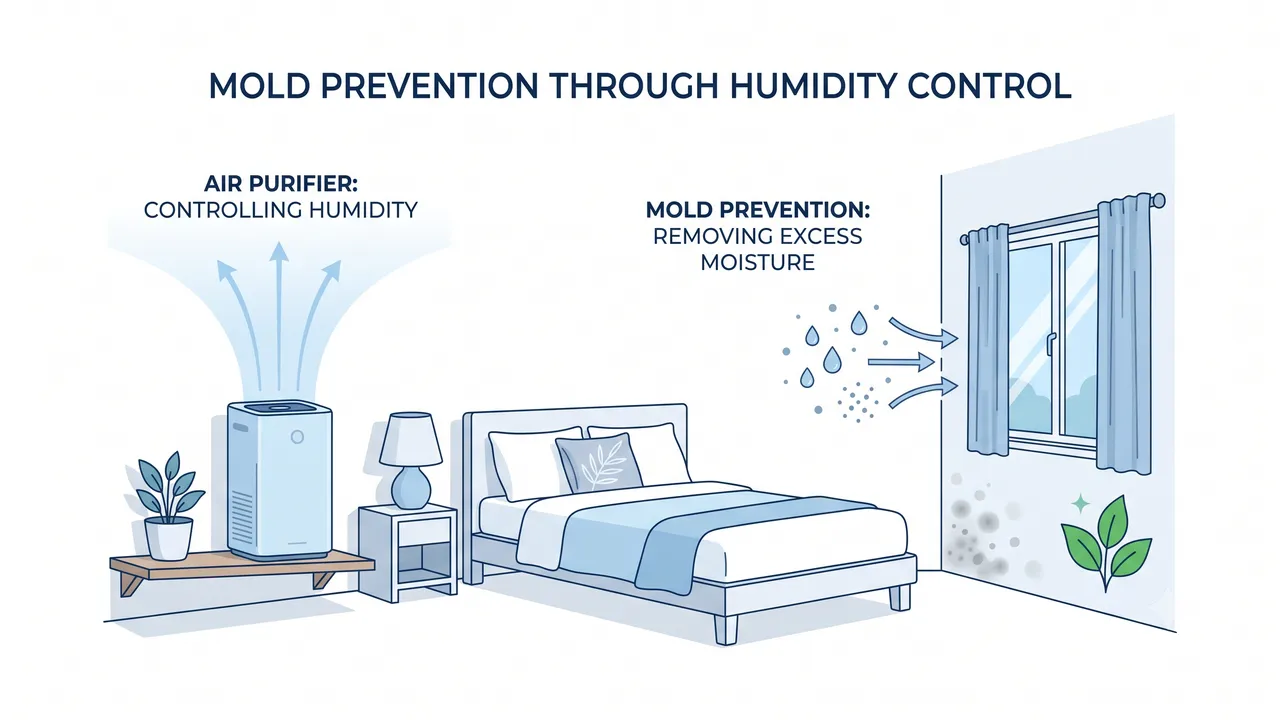
- Humidity control between 30-50%
- HEPA vacuuming twice weekly
- Source control (remove pollution sources, ventilate when cooking)
- MERV 11-13 HVAC filter changed regularly
Read our placement guide for more on what actually works.
You May Also Like
- Air Purifier Placement Guide
- Air Purifier vs Opening Windows
- How Long Should You Run an Air Purifier?
- How to Tell If Your Air Purifier Is Working
Frequently Asked Questions
How long should I run my air purifier each day?
For best results, run your air purifier 24/7 on medium speed. Air purification works by continuously removing particles—turning it off allows them to accumulate again. Modern purifiers use 30-80W on medium (similar to a light bulb), making continuous operation energy-efficient.
Where is the best place to put an air purifier?
Place the purifier 3-5 feet from your breathing zone, near pollution sources, with unobstructed airflow on all sides. Avoid corners, curtains, and furniture that block intake or output. For bedrooms, position near the bed but not blowing directly on you.
How do I know when to replace the filter?
Most purifiers have filter indicator lights. Without indicators, replace HEPA filters every 6-12 months and carbon filters every 3-6 months. Signs of a clogged filter: reduced airflow, visible discoloration, increased noise, or the purifier seeming less effective.
Are air purifiers noisy?
Noise levels vary by model and fan speed. Sleep modes (20-25 dB) are quieter than a whisper. Medium speeds (35-45 dB) are similar to background music. High speeds (50-60 dB) are conversation level. For bedrooms, look for sleep modes under 25 dB.
Do air purifiers use a lot of electricity?
No. Most purifiers use 30-80W on medium and 5-15W on sleep mode. Running 24/7 on medium costs $2-8/month at average US electricity rates. Energy Star models use 15-40% less electricity. The main ongoing cost is filter replacement ($30-120/year).
Disclosure: We may earn a commission from qualifying purchases. Research citations available upon request.
Support This Guide
Helpful? Add The Air Purifier Guide as a preferred source on Google so our guides show up in your search results.
Related Articles
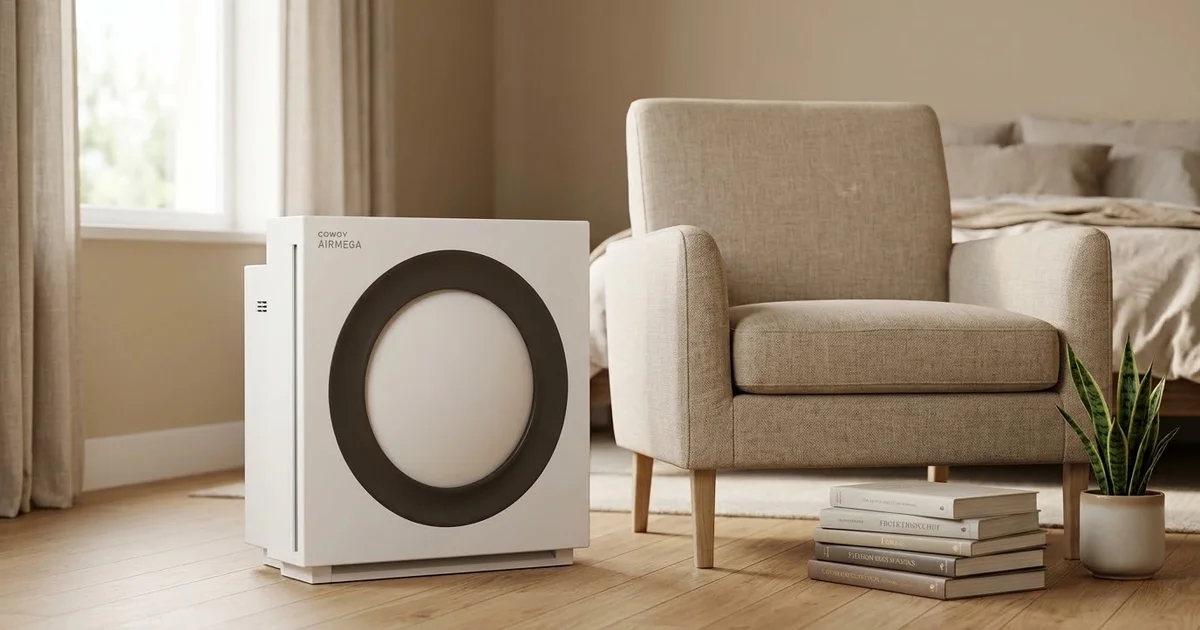
Coway Mighty2 vs AP-1512HH (2026)
Coway's Mighty2 replaced the AP-1512HH as Wirecutter's top pick. We compare CADR, noise, sensors, filter costs, and whether the older unit is still the smarter buy.
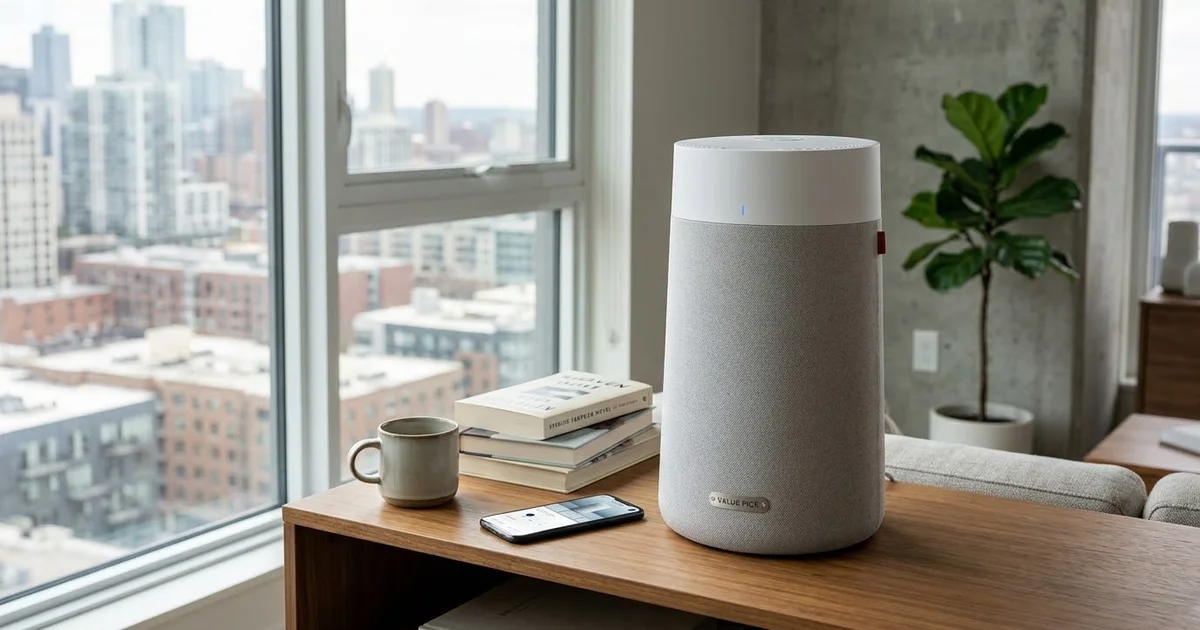
KNKA APH4000 Review: $150 Dark Horse
KNKA's APH4000 is one of Amazon's best-selling purifiers at $150. We check the AHAM certification, decode the 1,695 sq ft claim, and compare it to Levoit and Coway.
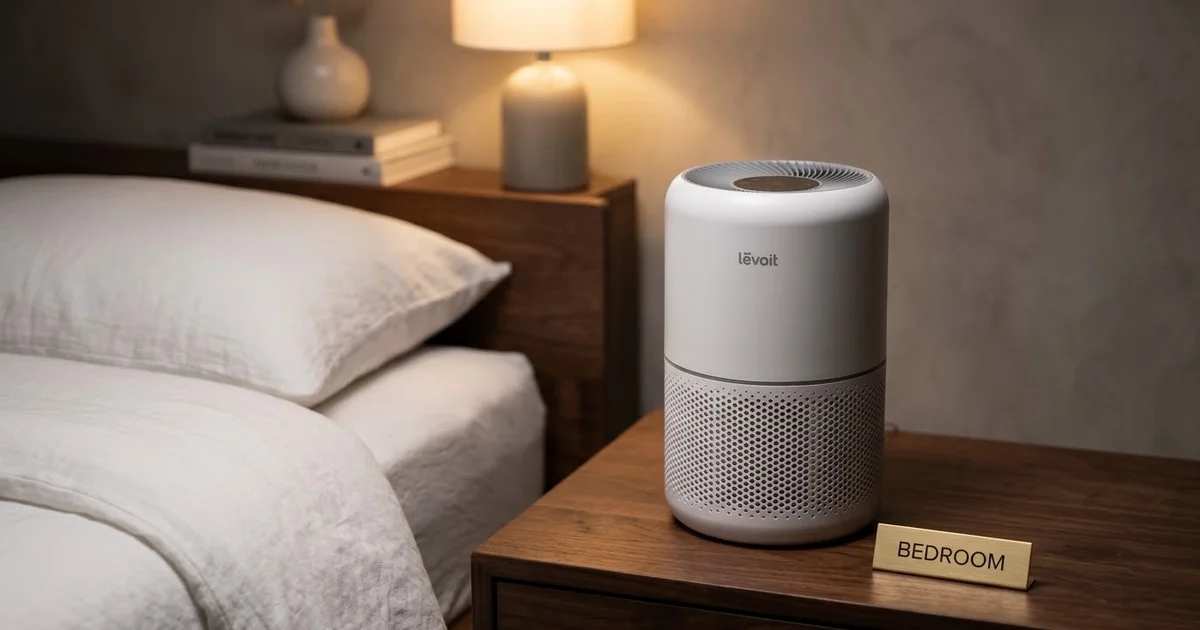
Levoit Core 300 vs 300-P: What Changed
Levoit quietly replaced the Core 300 with the Core 300-P. We explain the AHAM certification, whether filters still fit, and which one you should actually buy.
Shark NeverChange HP302 Review
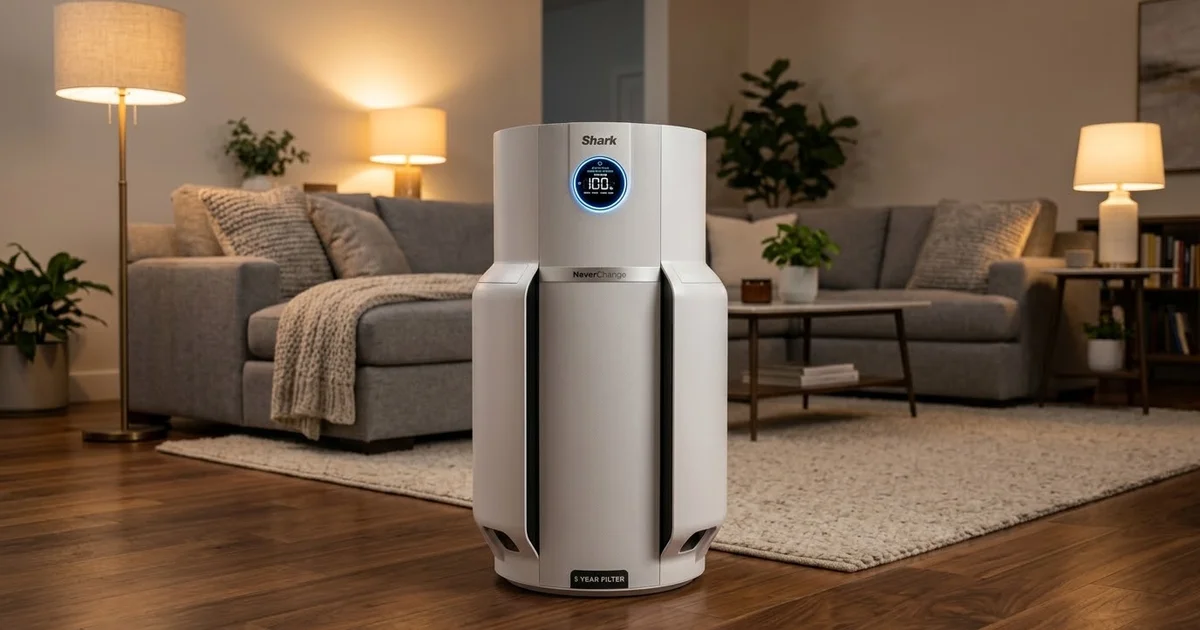
Shark's NeverChange HP302 promises 5 years on one filter. We dig into the real running costs, the odor neutralizer catch, and whether it beats cheaper rivals.
Winix 5510 vs 5500-2: 2026 Verdict
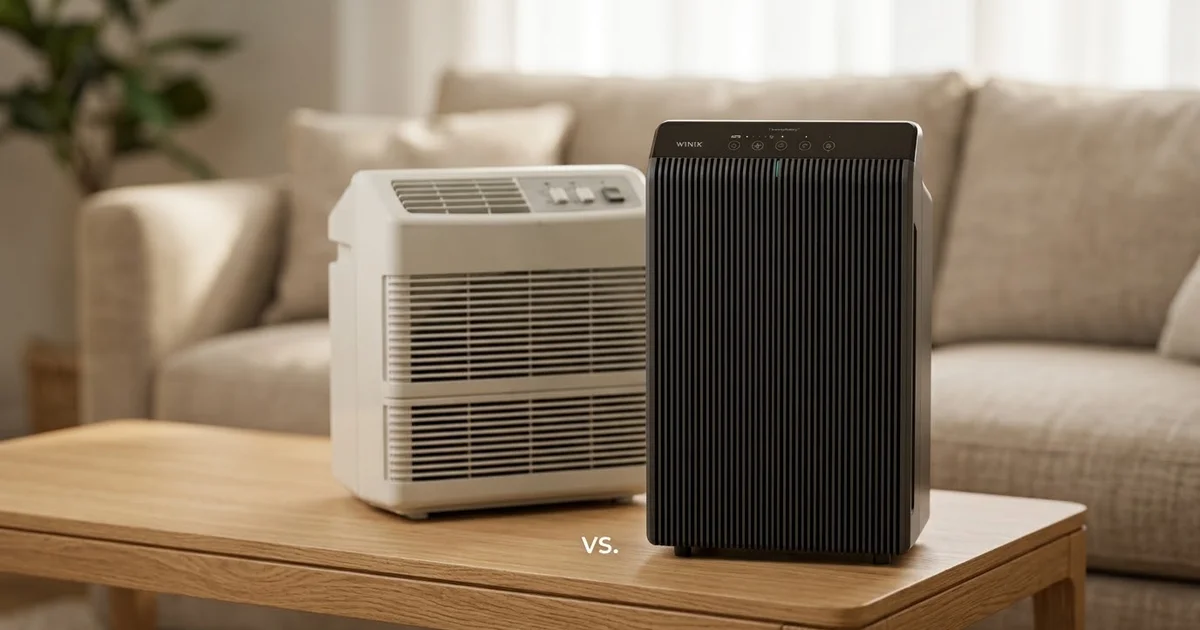
The Winix 5500-2 is discontinued and the 5510 takes over. We compare CADR, noise, filter costs, and the one compatibility problem nobody mentions.
🛒 Products Mentioned
As an Amazon Associate, we earn from qualifying purchases.
Runs side-by-side purifier comparisons, long-term ownership reports, and filter cost analysis.
View all articles by David →