The Short Answer: The best choice depends on your specific needs. True HEPA is essential for particles, activated carbon for gases and odors. Consider room size, noise tolerance, and budget when comparing models.
Editor’s note (September 2026): The Winix 5500-2 has been discontinued and remaining stock is limited. Winix’s official successor is the Winix 5510, which adds app control and uses a new filter. Read our Winix 5510 vs 5500-2 comparison before you buy either one.
The cleanest indoor air strategy isn’t ventilation or filtration, it’s knowing when to use each. Outdoor air can be cleaner or dirtier than indoor air depending on the day, the season, and your location. Opening a window on a crisp autumn morning can flush stale, CO2-laden air in minutes. But on a wildfire smoke day or during peak pollen season, that same window lets in pollutants that trigger allergies, worsen asthma, and compromise respiratory health for days.
This guide gives you a practical, science-backed framework for deciding whether to open your windows or seal up and run your air purifier. We’ll cover side-by-side comparisons, specific scenarios where each approach wins, and a hybrid strategy that gives you the best of both worlds.
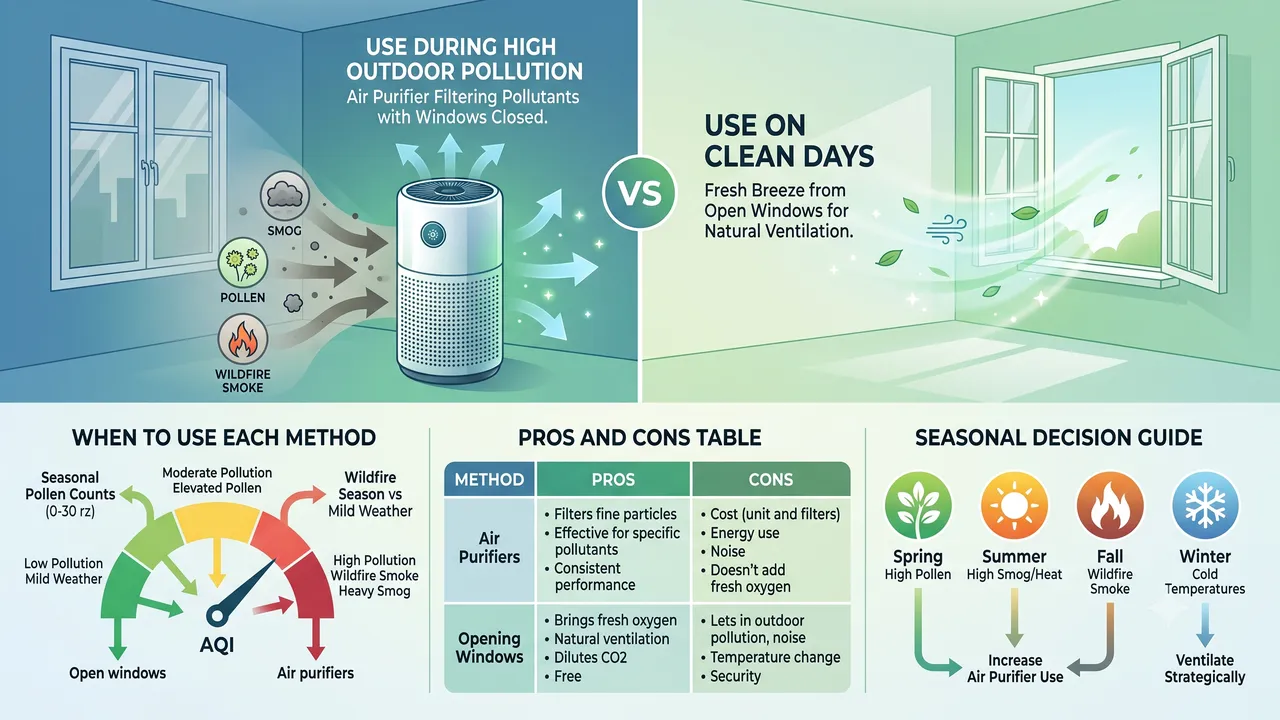
Purifier vs Open Window: Side-by-Side Comparison
Before diving into specific scenarios, let’s look at how ventilation and filtration compare across the factors that matter most.
| Factor | Open Windows (Ventilation) | Air Purifier (Filtration) |
|---|---|---|
| Particle removal (PM2.5, dust) | Depends entirely on outdoor air quality | 99.97% removal of 0.3µm particles (HEPA) |
| CO2 reduction | Excellent, fresh air replaces stale air immediately | Zero, purifiers do not remove CO2 |
| VOC / chemical removal | Excellent for bulk removal with cross-breeze | Limited, activated carbon helps but struggles with high concentrations |
| Pollen control | Worsens (imports outdoor pollen) | Excellent, HEPA traps pollen efficiently |
| Wildfire smoke | Worsens dramatically | Excellent, HEPA + carbon captures smoke particles and gases |
| Energy cost | Free (but may increase HVAC load) | $5–15/month electricity for a typical unit |
| Noise | Outdoor noise enters | Adds fan noise (25–55 dB depending on setting) |
| Humidity control | Matches outdoor humidity | No effect on humidity |
| Ongoing filter cost | None | $30–80/year for replacement filters |
| Speed of effect | Minutes for full air exchange | 15–30 minutes to clear a room on high |
| Coverage | Entire home (with cross-ventilation) | Single room (unless whole-house system) |
The key takeaway from this comparison is that neither option is universally better. Each excels in different categories, and the right choice shifts based on your specific situation at any given moment.
When to Ventilate (Open Windows)
Open windows when outdoor PM2.5 is below 12 µg/m³ (green zone on the Air Quality Index) and at least one of these conditions applies:
- Indoor CO2 exceeds 1,000 ppm. High CO2 impairs cognitive function, studies show decision-making performance drops measurably above 1,000 ppm. A CO2 monitor (~$30-50) is the best tool for timing ventilation.
- VOCs need flushing. New furniture, recent painting, or cleaning with chemical products releases volatile organic compounds that carbon filters struggle with at high concentrations. A 15-30 minute cross-breeze with open windows on opposite sides of the home is far more effective than any purifier for bulk VOC removal.
- Temperature and humidity are comfortable. If it’s 72°F and 45% humidity outside, there’s no HVAC penalty for ventilation.
- Indoor cooking fumes are present. Gas stoves produce nitrogen dioxide (NO2), carbon monoxide, and particulate matter. Range hoods help, but opening a window provides supplemental exhaust that no recirculating purifier can match.
- After cleaning or renovating. Dust, paint fumes, adhesives, and off-gassing from new materials need to be physically removed from the space, not recirculated through a filter.
When Windows Win: Scenarios Where Ventilation Beats Purifiers
There are specific situations where opening a window is not just adequate, it’s categorically superior to running any air purifier on the market.
High CO2 Environments
The single biggest limitation of air purifiers is their complete inability to remove carbon dioxide. In a sealed bedroom with two people sleeping for 8 hours, CO2 can climb from 400 ppm (fresh air) to 2,500+ ppm, a level that causes headaches, grogginess, and measurably impaired next-day cognitive performance. No HEPA filter, no activated carbon, no ionizer addresses this. Only ventilation introduces the oxygen your body needs and removes the CO2 you exhale.
Post-Renovation Off-Gassing
New carpet, fresh paint, particleboard furniture, and laminate flooring emit formaldehyde and other VOCs for weeks or months after installation. At high concentrations (above 0.1 ppm), activated carbon in air purifiers saturates quickly and stops being effective. A sustained cross-ventilation session, windows open on opposite sides of the room for 30-60 minutes, physically sweeps these chemicals out of the space far more efficiently than any filtration system.
Comfortable Weather Days
On mild spring and fall days where outdoor temperature is 65-78°F with low humidity and clean air, there is simply no reason to run an air purifier instead of opening a window. You get free air exchange, CO2 removal, VOC dilution, and the psychological benefit of fresh air, all without consuming electricity or wearing out filters.
Cooking Exhaust
When you’re searing a steak or stir-frying at high heat, the immediate burst of smoke, grease particles, and combustion byproducts needs to leave the space fast. A window opened near the stove, combined with a range hood, creates a direct exhaust path. An air purifier in the next room is cleaning air that has already traveled through your living space.
Pest Control and Chemical Treatments
After using insect sprays, foggers, or other chemical treatments, ventilation is essential. Air purifiers with carbon filters can help reduce residual chemical concentrations, but the initial bulk removal must happen through open windows and fans pushing air outward.
When to Filter (Windows Closed, Purifier On)
Seal the home and run purifiers when:
- Outdoor AQI exceeds 100 (orange zone or worse). At this level, opening windows imports more pollution than indoor sources generate.
- Pollen counts are high. Even moderate pollen levels cause symptoms in sensitized individuals. Check your local pollen forecast alongside AQI.
- Outdoor humidity is extreme. Above 70% invites mold; below 20% dries respiratory membranes.
- Outdoor noise disrupts sleep or work. Traffic, construction, and neighborhood noise are valid reasons to keep windows closed.
When Purifiers Win: Scenarios Where Filtration Beats Ventilation
Just as ventilation has its dominance zones, there are situations where an air purifier is the clearly superior, or only viable, choice.
Wildfire Smoke Events
During wildfire smoke events, outdoor PM2.5 can spike above 300 µg/m³, sometimes exceeding 500 µg/m³ near active fires. Opening a window in these conditions is equivalent to smoking several cigarettes indoors. A quality HEPA air purifier with activated carbon can reduce indoor PM2.5 by 80-95% while also capturing some of the volatile gases in smoke. Seal the house completely, block drafty gaps with towels, set HVAC to recirculate mode, and run purifiers on high continuously.
Allergy Season
Spring and fall pollen seasons turn outdoor air into a biological assault course for anyone with allergies or asthma. Pollen grains range from 10 to 100 micrometers, well within HEPA capture range. Keeping windows closed and running a purifier in the bedroom can reduce overnight pollen exposure by over 99%, leading to dramatically better sleep quality for allergy sufferers.
Urban Traffic Pollution
If you live near a busy road, highway, or intersection, outdoor air carries elevated levels of ultrafine particles, nitrogen dioxide, and black carbon, pollutants linked to cardiovascular disease and cognitive decline. Studies show that homes within 50 meters of heavy traffic have PM2.5 levels 30-50% higher than homes farther away. In these locations, keeping windows closed during rush hours and relying on filtration is a health-conscious decision.
Extreme Temperature Conditions
When it’s 95°F and humid in summer or 15°F in winter, opening windows forces your HVAC system to work overtime. The energy penalty far exceeds the cost of running an air purifier. In these conditions, keep windows sealed, maintain comfortable temperatures, and let a quiet air purifier handle air cleaning in the background.
Smoke and Odor from Neighbors
Apartment dwellers often face secondhand smoke, cooking odors, or cannabis smell drifting in from adjacent units. Ventilation in these cases means importing someone else’s pollution. An air purifier with both HEPA and substantial activated carbon, like the Coway AP-1512HH or Winix 5500-2, can capture both the particles and the odor-causing VOCs without introducing new contaminants.
The Hybrid Approach: Best of Both Worlds
The optimal strategy for most households isn’t either/or, it’s a timed combination of both methods, adjusted daily based on real-time conditions.
The Morning Flush Protocol
- Check outdoor AQI first thing in the morning. If it’s under 50 (green zone), open opposing windows for 15-30 minutes. Morning air is typically cleanest before rush hour and before daytime heat activates ground-level ozone formation.
- Close and filter. After the flush, shut windows and run purifiers for the rest of the day. This keeps the freshly exchanged air clean while preventing afternoon pollution infiltration.
- Monitor CO2 throughout the day. In occupied rooms, if CO2 climbs above 1,200 ppm, do a short 5-10 minute ventilation burst even if outdoor AQI is moderate (50-100). The acute CO2 exposure is more cognitively harmful than brief exposure to moderate outdoor pollution.
Seasonal Adjustments
- Spring/Summer (high pollen, high ozone): Lean heavily on filtration. Ventilate only early morning before pollen release peaks (typically 5-10 AM). Use a room-by-room purifier strategy to cover the spaces you occupy most.
- Fall (moderate pollen, wildfire season): Check AQI daily. Wildfire smoke can travel hundreds of miles, even if you don’t smell smoke, PM2.5 may be elevated. Keep a purifier running in the bedroom at minimum.
- Winter (sealed house, high CO2): Short 5-10 minute ventilation bursts prevent CO2 buildup without significant heat loss. Even in freezing temperatures, 5 minutes of open windows drops indoor temperature less than most people expect, typically only 2-4°F. Run a purifier on low to maintain particle levels during the rest of the day.
The CO2-PM2.5 Decision Tree
The hybrid approach requires balancing two competing risks: CO2 buildup (solved by ventilation) and particulate exposure (solved by filtration). Here’s how to navigate it:
- Low outdoor AQI (< 50) + high indoor CO2 (> 1,200 ppm): Open windows. You win on both fronts.
- Moderate outdoor AQI (50-100) + high indoor CO2 (> 1,500 ppm): Short ventilation burst (5-10 min), then close and run purifier.
- High outdoor AQI (> 100) + high indoor CO2 (> 1,500 ppm): Keep windows closed, run purifier on high, accept elevated CO2. The particulate risk outweighs the CO2 penalty at these outdoor levels.
- High outdoor AQI (> 100) + low indoor CO2 (< 800 ppm): Windows closed, purifier on medium. Ideal “seal and filter” scenario.
Outdoor AQI Decision Matrix
Use this table as a quick reference for deciding between ventilation and filtration based on real-time outdoor air quality.
| Outdoor AQI | Category | Recommended Action | Ventilation Allowed? | Notes |
|---|---|---|---|---|
| 0–50 | Good (Green) | Open windows freely | ✅ Yes | Best time for cross-ventilation and CO2 flushing |
| 51–100 | Moderate (Yellow) | Ventilate cautiously | ✅ Short bursts only | Sensitive individuals may react; limit to early morning |
| 101–150 | Unhealthy for Sensitive Groups (Orange) | Close windows, run purifier | ⚠️ Only if CO2 > 1,500 ppm | 5-minute max ventilation burst, then seal |
| 151–200 | Unhealthy (Red) | Seal home, purifier on high | ❌ No | Block drafts; check MERV-rated HVAC filters |
| 201–300 | Very Unhealthy (Purple) | Full seal protocol | ❌ No | Add wet towels at door gaps; minimize door openings |
| 301–500 | Hazardous (Maroon) | Emergency seal + purifier on max | ❌ No | Consider leaving area if prolonged; follow local health advisories |
Note: AQI thresholds above focus on PM2.5 as the primary pollutant. If the dominant pollutant is ozone, SO2, or NO2, the health risk profile differs slightly, but the ventilation recommendation remains similar, high AQI means keep windows closed regardless of pollutant type.
Tools That Help
Making smart ventilation-vs-filtration decisions requires real-time data. These tools close the information gap:
- CO2 monitor: If CO2 exceeds 1,500 ppm, you need fresh air regardless of outdoor conditions. The Aranet4 ($249) is the gold standard; the Qingping Air Monitor ($129) offers solid accuracy at a lower price.
- Indoor PM2.5 monitor: Compare indoor and outdoor readings to decide whether ventilation will improve or worsen your air. Many modern air purifiers include built-in PM2.5 sensors, if yours doesn’t, a standalone PurpleAir or Temtop sensor provides real-time readings.
- Weather app with AQI overlay: Most weather apps now include Air Quality Index data. Apple Weather and Weather.com both show real-time AQI. For more granular data, AirNow.gov (US) and IQAir.com (global) provide neighborhood-level readings.
- Smart home automation: Advanced users can automate the decision. Set up rules like: “If outdoor AQI < 50 AND indoor CO2 > 1,000 ppm, send notification to open windows.” Home Assistant with an air purifier integration makes this possible.
The CO2 Blind Spot
Air purifiers clean particles. They do nothing for CO2. This is the single most overlooked factor in the ventilation-vs-filtration debate, and it deserves its own expanded discussion.
In a closed bedroom with two people sleeping for 8 hours, CO2 can climb from 400 ppm (fresh air) to 2,500+ ppm (stuffy, headachy territory). An air purifier running on high all night won’t touch that, you need ventilation, not filtration.
The cognitive effects are well-documented. At 1,000 ppm, decision-making performance drops by 10-15%. At 1,500 ppm, most people report headaches, drowsiness, and difficulty concentrating. At 2,500 ppm, the effects become debilitating, similar to the sluggishness you feel in a packed, poorly ventilated conference room.
A standalone CO2 monitor (Aranet4 at $249 or Qingping at $129) is the missing piece that tells you when to open windows despite the purifier. On days with good outdoor AQI (under 50), crack a window for 15 minutes every 3-4 hours to flush CO2. On bad AQI days, keep windows closed and accept slightly elevated CO2, the particulate exposure from outdoor air is worse than the cognitive drag from moderate CO2.
For bedroom air quality specifically, consider this routine: crack a window 30 minutes before bed to flush accumulated CO2, close it, start the purifier on a low/sleep setting, and the room will have both low CO2 and low particulates for the first several hours of sleep.
Frequently Asked Questions
Can I run an air purifier with the windows open?
Yes, but with expectations set correctly. An air purifier running with open windows is fighting an uphill battle, it’s trying to clean air that’s constantly being replaced by unfiltered outdoor air. The purifier will still reduce particle concentrations in its immediate vicinity, but it won’t achieve the whole-room cleaning it’s designed for. If outdoor air is clean (AQI under 25), running a purifier with open windows is mostly wasted electricity. If outdoor air is moderately polluted (AQI 50-100), the purifier provides a partial buffer but can’t keep up with full air exchange rates.
How long should I open windows to air out a room?
For CO2 reduction, 10-15 minutes with cross-ventilation (windows open on opposite sides) is sufficient to replace most of the indoor air. For VOC removal after painting or renovation, 30-60 minutes of sustained cross-ventilation is more appropriate. In winter, even 5-minute ventilation bursts make a meaningful dent in CO2 levels without causing excessive heat loss. The key variable is airflow, a single window open on a calm day exchanges air much more slowly than two windows creating a cross-breeze.
Do air purifiers bring in fresh air?
No. Standard residential air purifiers (HEPA, carbon, or combination units) recirculate and clean existing indoor air. They do not introduce outdoor air. The only devices that bring in fresh air are energy recovery ventilators (ERVs), heat recovery ventilators (HRVs), and dedicated outdoor air systems, all of which are HVAC-integrated whole-house solutions, not portable purifiers.
Is it better to sleep with an air purifier or open window?
It depends on outdoor conditions. On clean-air nights (AQI under 30, comfortable temperature, low noise), sleeping with a cracked window provides CO2 control and fresh air that no purifier can replicate. On polluted nights, high-pollen nights, or noisy nights, a quiet air purifier on sleep mode in a closed bedroom is the better choice. The ideal: open a window for 15 minutes before bed, close it, then run the purifier on low through the night.
Does opening windows reduce dust?
Counterintuitively, opening windows often increases indoor dust levels. Outdoor air carries particulate matter, soil particles, pollen, vehicle exhaust particles, and industrial emissions, that adds to indoor dust. If dust reduction is your primary goal, keeping windows closed and running a HEPA purifier is more effective than ventilation. For a deeper look at filtration technology, see our HEPA filter deep-dive guide.
The Bottom Line
The air purifier vs. open windows debate isn’t really a debate, it’s a situational decision that should be made multiple times per day based on real-time data. On clean-air mornings, throw open the windows and let nature do the work. On smoky, pollen-heavy, or high-pollution days, seal up and let your purifier protect you. For most people, a hybrid approach, morning ventilation flush followed by daytime filtration, delivers the cleanest, freshest indoor air with the least energy cost.
The single most impactful upgrade you can make is adding a CO2 monitor to your toolkit. It closes the blind spot that air purifiers can’t address and gives you the data to make confident ventilation decisions every day.
See also: How to Read Air Quality Index (AQI), DIY Ways to Improve Indoor Air Quality, Seasonal Indoor Air Quality Guide, How Long Should You Run an Air Purifier?, Wildfire Smoke Air Purifier Guide.
Disclosure: This article contains affiliate links. If you purchase through links on this page, we may earn a commission at no additional cost to you. We only recommend products we have tested or thoroughly researched. See our full affiliate disclosure for details.
You May Also Like
- Air Purifier Placement Guide: Where to Put It for Maximum Effectiveness
- How Long Should You Run an Air Purifier? 24/7, Only When Home, or Somewhere in Between?
- How to Tell If Your Air Purifier Is Actually Working: 5 Simple Tests
- Can an Air Purifier Remove Carbon Monoxide or Radon? The Critical Safety Answer
Support This Guide
Helpful? Add The Air Purifier Guide as a preferred source on Google so our guides show up in your search results.
Related Articles
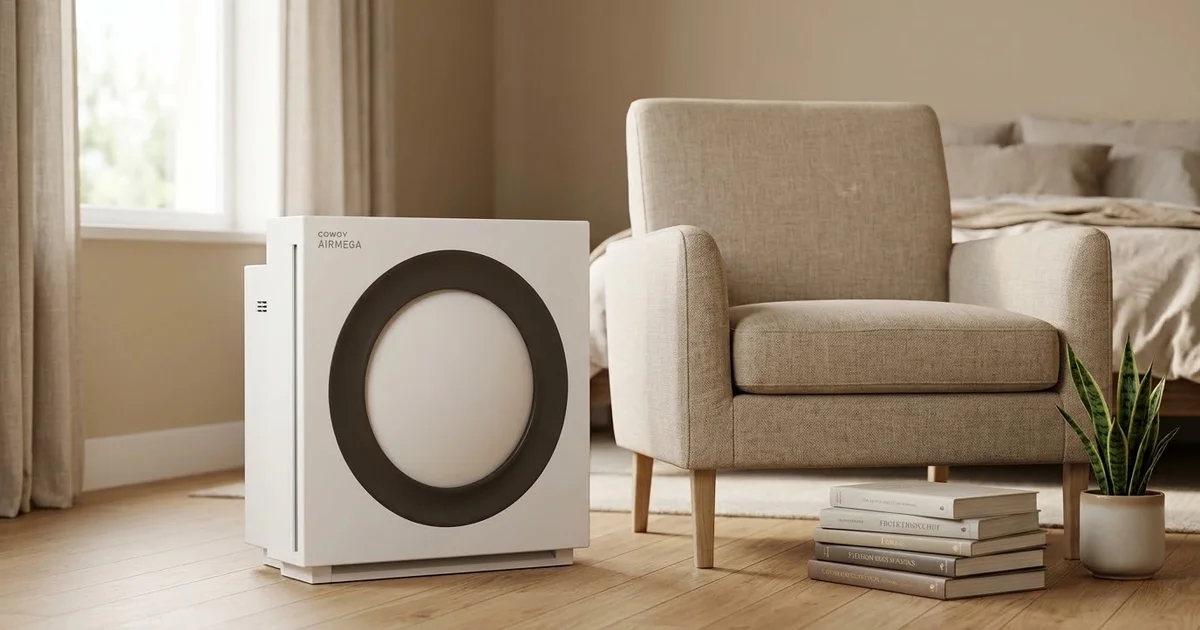
Coway Mighty2 vs AP-1512HH (2026)
Coway's Mighty2 replaced the AP-1512HH as Wirecutter's top pick. We compare CADR, noise, sensors, filter costs, and whether the older unit is still the smarter buy.
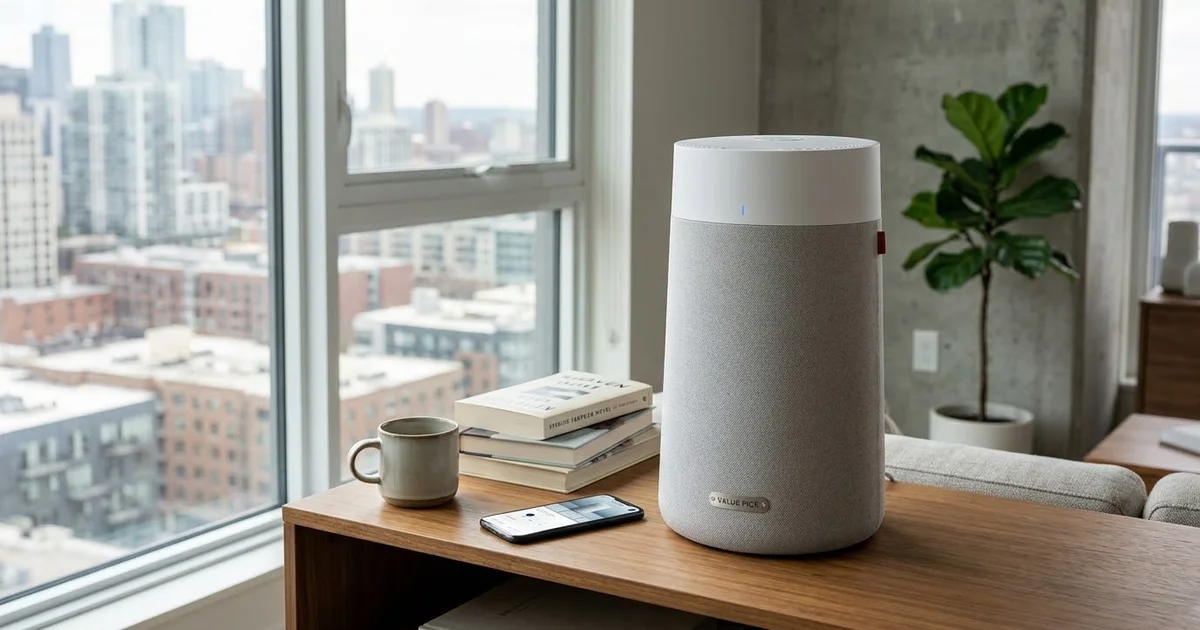
KNKA APH4000 Review: $150 Dark Horse
KNKA's APH4000 is one of Amazon's best-selling purifiers at $150. We check the AHAM certification, decode the 1,695 sq ft claim, and compare it to Levoit and Coway.
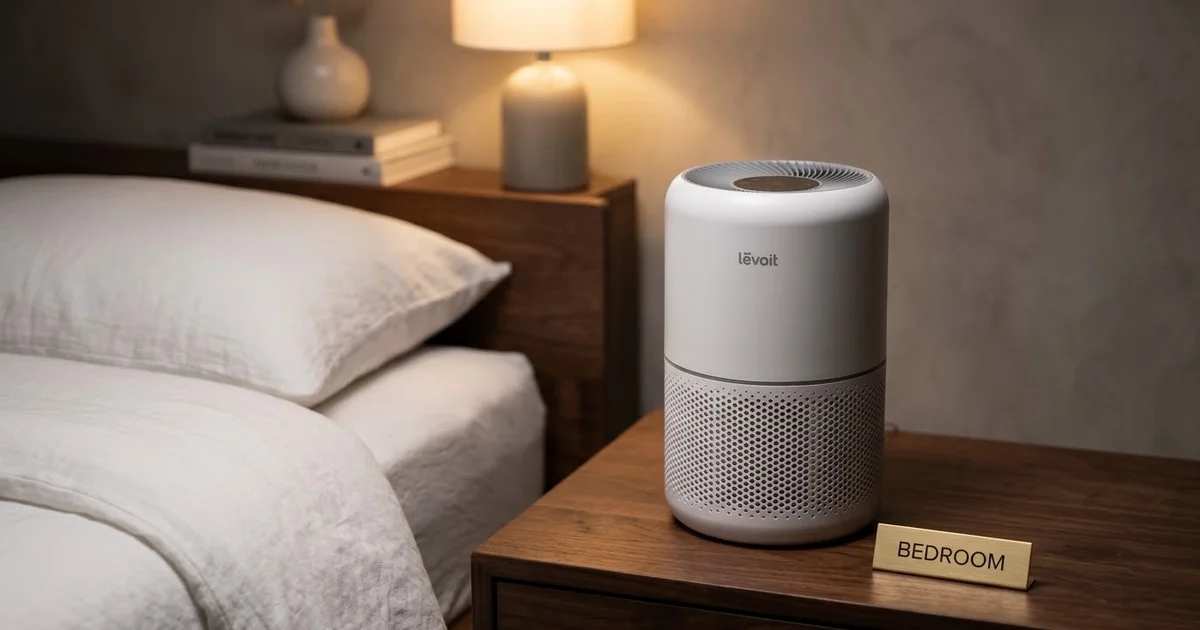
Levoit Core 300 vs 300-P: What Changed
Levoit quietly replaced the Core 300 with the Core 300-P. We explain the AHAM certification, whether filters still fit, and which one you should actually buy.
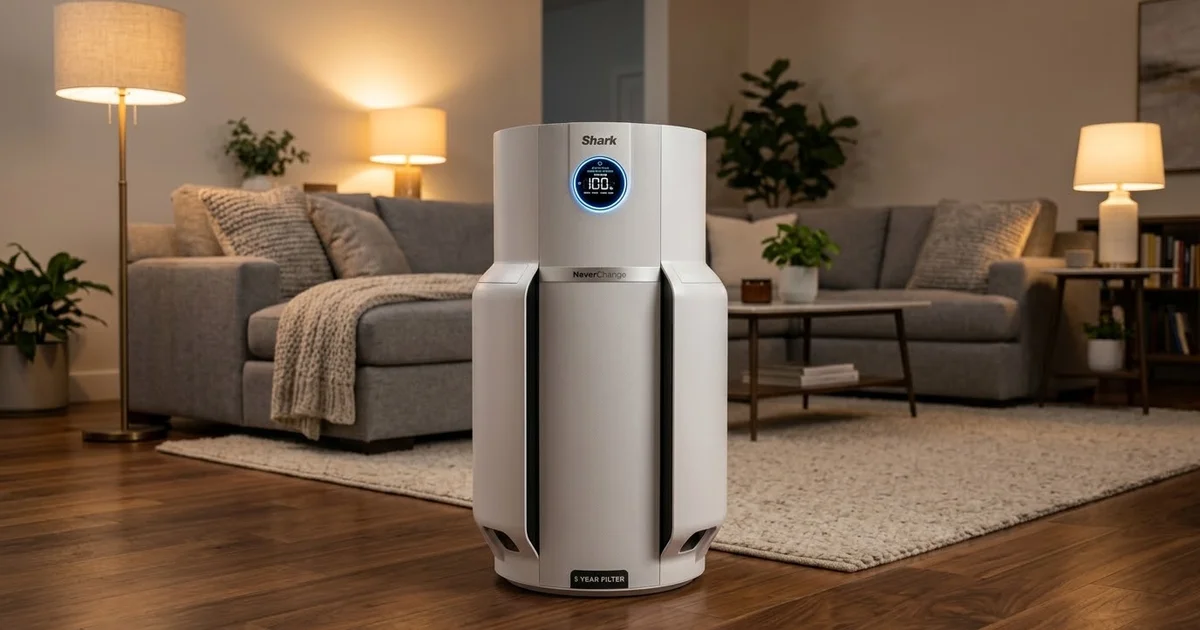
Shark NeverChange HP302 Review
Shark's NeverChange HP302 promises 5 years on one filter. We dig into the real running costs, the odor neutralizer catch, and whether it beats cheaper rivals.
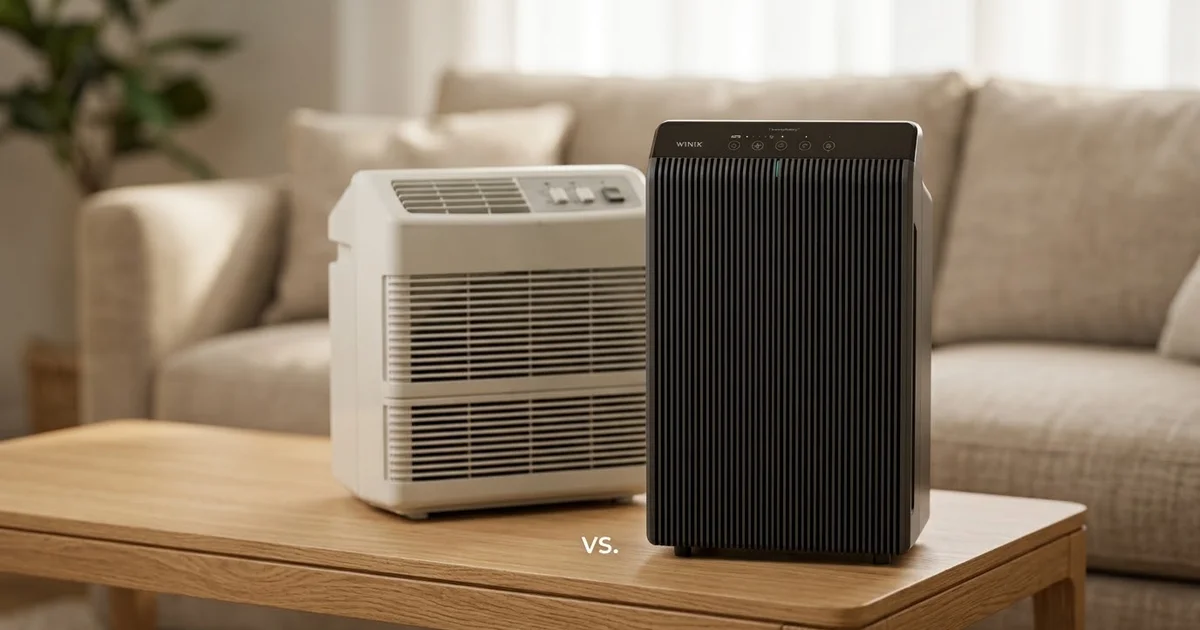
Winix 5510 vs 5500-2: 2026 Verdict
The Winix 5500-2 is discontinued and the 5510 takes over. We compare CADR, noise, filter costs, and the one compatibility problem nobody mentions.
🛒 Products Mentioned
As an Amazon Associate, we earn from qualifying purchases.
Runs side-by-side purifier comparisons, long-term ownership reports, and filter cost analysis.
View all articles by David →