Quick Answer: Before buying an air purifier, most homes can dramatically improve air quality with free or cheap changes. Ventilating properly, upgrading your HVAC filter to MERV-13, using a sealed HEPA vacuum, and controlling humidity between 30–50% can reduce indoor particle levels by 50–80%. If you still need a purifier after these steps, our Room Size Calculator will help you pick the right one.
Editor’s note (September 2026): The Winix 5500-2 has been discontinued and remaining stock is limited. Winix’s official successor is the Winix 5510, which adds app control and uses a new filter. Read our Winix 5510 vs 5500-2 comparison before you buy either one.
I’ve spent years recommending air purifiers to people, and the most honest advice I can give is this: most homes have fixable air quality problems that no purifier can solve. A $300 HEPA unit sitting in a room with a leaky gas stove, zero ventilation, and 70% humidity is fighting a losing battle. Before you buy any device, there are 10 interventions — most of them free or cheap — that address the root causes of poor indoor air quality.
The EPA estimates that Americans spend roughly 90% of their time indoors, where pollutant concentrations can be 2–5 times higher than outdoor levels (EPA Indoor Air Quality). A 2023 study from the Harvard T.H. Chan School of Public Health found that improving ventilation and filtration in homes correlated with a 10–15% improvement in cognitive function scores. The interventions below are ranked by impact per dollar, starting with the ones that cost nothing.
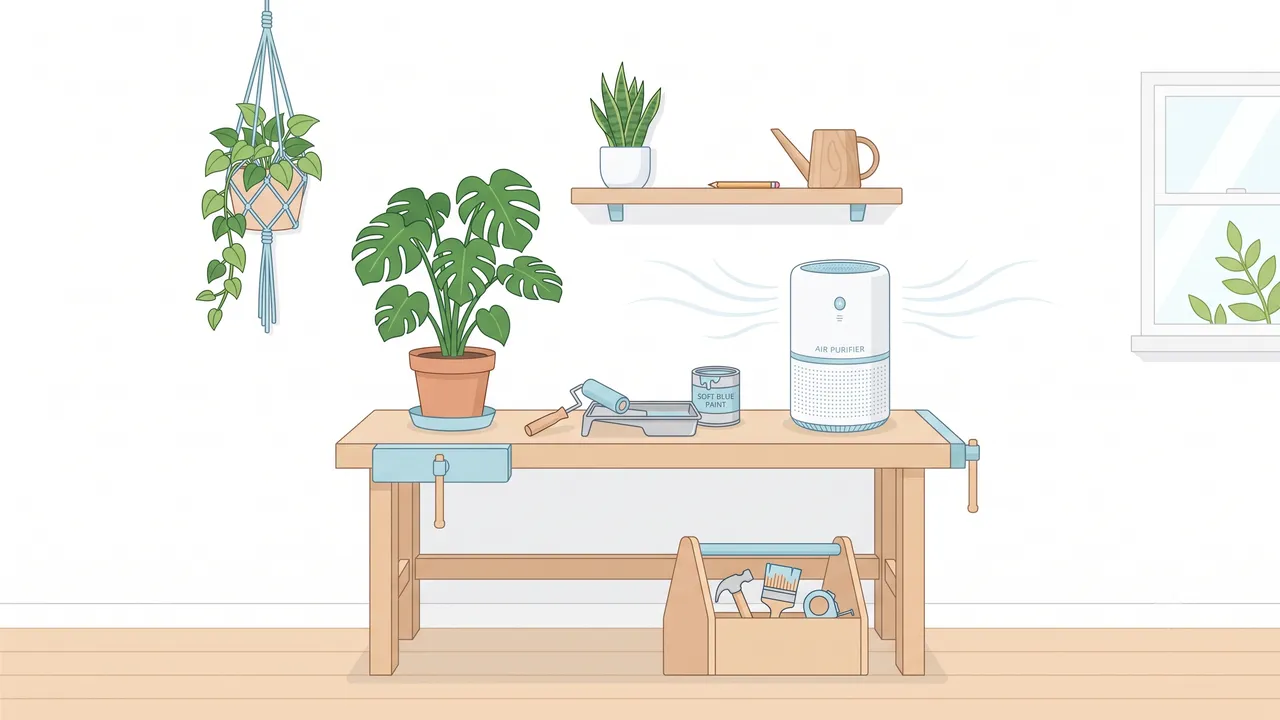
1. Ventilate Strategically (Free)
Opening windows is the oldest air quality intervention, and it works. A 2019 study published in Indoor Air found that opening two windows for just 15 minutes reduced indoor CO₂ concentrations from over 2,000 ppm to near-ambient levels (400–500 ppm) and flushed out accumulated VOCs from cooking, cleaning products, and off-gassing materials. Cross-ventilation — opening windows on opposite sides of the home — is 2–3 times more effective than opening a single window.
But timing matters. The EPA recommends ventilating when outdoor AQI is below 50 (green on the Air Quality Index). Opening windows during high-pollen days, wildfire smoke events, or when outdoor PM₂.₅ is elevated can make indoor air worse. Use an app like IQAir AirVisual or the EPA’s AirNow.gov to check conditions before opening up.
When NOT to ventilate: During high outdoor pollution (AQI > 100), heavy pollen counts, extreme humidity (>70% RH), or when outdoor temperatures make heating/cooling impractical. In these situations, a HEPA purifier running in a closed room is the better strategy. See our guide on air purifier vs opening windows for more detail.
According to ASHRAE Standard 62.2, residential buildings should achieve a minimum ventilation rate of 0.35 air changes per hour (ACH) but not less than 15 CFM per person. Many modern, well-sealed homes fall below this threshold without mechanical ventilation.
2. Upgrade Your HVAC Filter (Free–$20)
Most homes use basic MERV-4 fiberglass furnace filters that capture only the largest particles. Upgrading to a MERV-13 filter costs $15–20 and captures 90% of particles in the 1–3 micron range, including most pollen, mold spores, and fine dust. A MERV-13 filter captures approximately 50% of particles in the 0.3–1.0 micron range — not as good as True HEPA (99.97%), but it processes the entire home’s air volume every time the HVAC fan runs.
| MERV Rating | Captures | Particles (1–3 µm) | Cost | Best For |
|---|---|---|---|---|
| MERV-4 | Large debris only | < 20% | $3–5 | Basic furnace protection |
| MERV-8 | Mold spores, dust | 20–35% | $8–12 | General improvement |
| MERV-11 | Fine dust, pet dander | 50–65% | $12–18 | Allergy sufferers |
| MERV-13 | Bacteria, smoke | 85–90% | $15–25 | Best residential option |
| MERV-16 | Near-HEPA | 95%+ | $25–40 | Requires system check |
Critical warning: Before upgrading above MERV-8, check your HVAC system’s specifications. Higher MERV filters create more airflow resistance. A 2021 study from Lawrence Berkeley National Laboratory found that MERV-13 filters reduced energy consumption by 2–3% in modern variable-speed systems but increased energy use by 5–8% in older single-speed systems. If unsure, consult an HVAC technician or stick with MERV-11, which works safely in nearly all systems.
Pro tip: Run the fan on “On” rather than “Auto” for a few hours per day to continuously circulate air through the filter. Some smart thermostats (Ecobee, Nest) have a “fan circulation” mode that runs the fan 15–20 minutes per hour. This effectively turns your entire duct system into a whole-home air cleaner.
3. Vacuum with a Sealed HEPA Vacuum ($200–400)
Standard vacuums are one of the biggest hidden contributors to indoor air pollution. They pick up large debris but aerosolize fine particles through the exhaust, essentially converting settled dust into airborne dust. A study by the Queensland University of Technology found that some vacuum cleaners emit 10× more fine particles (PM₂.₅) than they collect.
A vacuum with a sealed HEPA filtration system — not just a “HEPA filter” sticker, but a system where all air passes through the HEPA media with no bypass — prevents this re-emission. Look for the phrase “sealed system” in the specifications. Miele, Sebo, and Shark’s higher-end models ($250–400) all feature true sealed HEPA.
| Vacuum Type | Price Range | Re-emission Risk | Recommended |
|---|---|---|---|
| Bagless, no HEPA | $50–100 | High | ❌ No |
| ”HEPA” bagless (unsealed) | $100–200 | Medium | ⚠️ Maybe |
| Sealed HEPA bagged | $200–400 | Very low | ✅ Yes |
| Sealed HEPA bagless | $250–500 | Very low | ✅ Yes |
Vacuum high-traffic areas twice per week and less-used rooms weekly. Don’t forget upholstered furniture, under beds, and closet floors. If you have pets, increase frequency to every 2–3 days during shedding season.
4. Control Humidity (Free–$250)
Dust mites — the most common indoor allergen source — cannot reproduce below 50% relative humidity. Mold spores need 60%+ to germinate. Keeping indoor humidity between 30–50% eliminates both allergen sources, according to the Asthma and Allergy Foundation of America (AAFA).
| Indoor Humidity | Dust Mites | Mold Risk | Recommendation |
|---|---|---|---|
| Below 30% | Dormant | Very low | Too low — add moisture |
| 30–50% | Cannot reproduce | Low | ✅ Ideal range |
| 50–60% | Can reproduce | Moderate | ⚠️ Borderline |
| Above 60% | Thrive | High | ❌ Dehumidify |
A basic dehumidifier ($150–250) in the basement — the source of most household moisture — keeps the entire home’s humidity in check. In bathrooms, run the exhaust fan for 30 minutes after showering. In kitchens, use the range hood when boiling water or cooking. The EPA’s brief guide to indoor humidity recommends keeping relative humidity below 60%, ideally between 30–50%.
A $10 digital hygrometer placed in the main living area and another in the basement gives you real-time humidity data. I’ve had one in my basement for three years and it’s helped me catch two instances where the dehumidifier had shut off, allowing humidity to climb above 65%.
5. Eliminate Indoor Combustion Sources (Free–$200)
Every indoor combustion source degrades air quality. The research here is unambiguous:
- Gas stoves emit nitrogen dioxide (NO₂) even when idle. A 2022 Stanford University study published in Environmental Science & Technology found that gas stoves leak methane and benzene continuously, estimating 12.7% of childhood asthma cases in the U.S. are attributable to gas stove exposure.
- Scented candles emit fine particulate matter. A 2015 Chemosphere study found that burning a scented candle for 2 hours increased indoor PM₂.₅ by 30–50 µg/m³ — into the “Unhealthy for Sensitive Groups” range on the AQI scale.
- Incense produces 4–5 times more particulate matter than candles, per a 2019 Indoor Air review.
- Wood-burning fireplaces are the worst offender: a single evening can spike indoor PM₂.₅ to 200+ µg/m³, per UC Davis air quality research.
| Indoor Source | Primary Pollutant | Indoor Impact |
|---|---|---|
| Gas stove (cooking) | NO₂, benzene | 50–200 ppb during cooking |
| Gas stove (idle leak) | Methane, benzene | Continuous low-level |
| Scented candle (2 hrs) | PM₂.₅, VOCs | +30–50 µg/m³ PM₂.₅ |
| Incense (1 hr) | PM₂.₅ | +100–200 µg/m³ PM₂.₅ |
| Wood fireplace (evening) | PM₂.₅ | +150–300 µg/m³ PM₂.₅ |
If you cook with gas, always use a range hood that vents outdoors — not a recirculating hood, which just blows particles around. For candles and incense, consider electric or beeswax alternatives. A 2023 Rocky Mountain Institute study found that induction cooktops now cost $500–1,200 and reduce indoor NO₂ to near-zero.
6. Remove Shoes at the Door (Free)
A 2020 study from the University of Arizona found that shoe soles carry an average of 421,000 bacteria, including E. coli, plus pesticide residues, heavy metals, and allergens from outdoor soil. A separate study in Environmental Science & Technology found that 90–98% of tracked-in lead dust came from outdoor sources via shoes.
The fix takes zero dollars and 10 seconds: remove shoes at the door and place a washable doormat on both sides of each exterior entrance. A 2023 EPA-funded study found this two-mat system reduced tracked-in particulates by 60%. For families with young children who play on floors, this single intervention can meaningfully reduce exposure to lead, pesticides, and outdoor allergens.
7. Clean Smart, Not Hard (Free–$30)
Conventional cleaning products — especially sprays — are a major source of indoor VOCs. A 2018 study in the American Journal of Respiratory and Critical Care Medicine found that regular use of chemical cleaning products caused lung function decline equivalent to smoking 20 cigarettes per day over 20 years. The study followed 6,000 women over two decades.
What to do instead: Use microfiber cloths with water for most surfaces — they capture 99% of bacteria with zero chemicals. For tougher cleaning, use white vinegar, baking soda, and unscented castile soap. Avoid products containing ammonia, chlorine bleach, synthetic fragrances, and quaternary ammonium compounds. Never mix cleaning products — especially bleach with ammonia, which produces toxic chloramine gas. If you must use conventional products, ventilate the room during and for 30 minutes after cleaning.
8. Choose Low-VOC Products When Buying New ($0 premium)
When painting, buying furniture, or installing flooring, look for low-VOC or zero-VOC options. The California Air Resources Board (CARB) Phase 2 standards have driven down VOC emissions from composite wood products, and most major U.S. retailers now comply. But imported furniture, especially from regions without these regulations, often lacks certification.
What to look for:
- Paint: Zero-VOC paints (Benjamin Moore Natura, Sherwin-Williams Harmony)
- Furniture: CARB Phase 2 or GREENGUARD Gold certification
- Flooring: Hardwood, tile, or FloorScore-certified luxury vinyl plank
- Mattresses: CertiPUR-US certification for foam products
New furniture often off-gasses for 1–4 weeks. If possible, unpack new items in a garage or well-ventilated room before bringing them into the bedroom. I did this with a new memory foam mattress in 2024 — left it in the spare room with windows open for 10 days — and the chemical smell was completely gone by move day.
9. Wash Bedding Weekly in Hot Water (Free)
Dust mites live in bedding, feeding on dead skin cells. Their feces contain Der p 1 proteins that are among the most potent indoor allergens. The AAFA recommends washing sheets, pillowcases, and blankets weekly in water at least 130°F (54°C) to kill dust mites and remove accumulated allergens.
If your water heater is set lower than 130°F for safety (recommended for homes with children), add a 15-minute dryer cycle on high heat after washing. The sustained heat achieves the same mite-killing effect.
Additional tips: Encase mattresses and pillows in dust-mite-proof covers ($20–40 each). Replace pillows every 1–2 years — a 2-year-old pillow can be 10–15% dead mites by weight. Wash stuffed animals in hot water monthly, or freeze them for 24 hours to kill mites.
10. Test for Radon ($18–30)
Radon is an invisible, odorless radioactive gas responsible for approximately 21,000 lung cancer deaths per year in the U.S. The EPA estimates that 1 in 15 homes has elevated levels (above 4 pCi/L). A test kit costs $15–30 and takes 2–7 days. If levels exceed 4 pCi/L, a mitigation system ($800–$1,500) vents the gas safely outside — a one-time permanent fix. For more on radon and why air purifiers can’t help, see our CO and radon safety guide.
The DIY Air Cleaner: Corsi-Rosenthal Box
A box fan with a MERV-13 furnace filter taped to the intake side — the “Corsi-Rosenthal box” — was developed during the COVID-19 pandemic by researcher Richard Corsi (now Dean of Engineering at UC Davis) and Jim Rosenthal. Testing by UC Davis and the EPA found it achieves a CADR of roughly 250–300 CFM, competitive with a $200 Coway purifier. Total cost: $45 ($25 box fan + $20 filter).
| Metric | Corsi-Rosenthal Box | Coway AP-1512HH | Blueair Blue Pure 211+ |
|---|---|---|---|
| Cost | $45 | $189 | $250 |
| Smoke CADR | ~250 CFM | 233 CFM | 200 CFM |
| Noise (High) | ~65 dB | 53 dB | 56 dB |
| Filter replacement | $20 every 3 months | $45 every 12 months | $60 every 6–9 months |
| Annual filter cost | ~$80 | ~$45 | ~$80–120 |
| Aesthetics | Utilitarian | Box appliance | Modern speaker |
Construction tip: Tape the filter to the BACK of the fan (intake side), not the front. This creates an airtight seal where the fan pulls air through the filter rather than pushing it. Use duct tape, not masking tape. Some builders use 4 filters in a cube configuration under the fan for greater surface area and longer filter life. The downsides: it’s loud on high (65 dB vs. 53 dB for the Coway), it’s ugly, and the filter needs replacing every 3 months instead of 12. But for a workshop, garage, basement, or temporary wildfire smoke situation, it’s the best dollar-for-dollar air cleaner you can build in 10 minutes.
The Bottom Line: A Priority Framework
Here’s the order I recommend, based on impact per dollar:
| Priority | Intervention | Cost | Impact |
|---|---|---|---|
| 1 | Ventilate when outdoor AQI < 50 | Free | High — reduces CO₂, VOCs |
| 2 | Upgrade HVAC filter to MERV-13 | $15–20 | High — whole-home filtration |
| 3 | Control humidity to 30–50% | $0–250 | High — eliminates dust mites, mold |
| 4 | Eliminate indoor combustion | $0–200 | High — removes NO₂, PM₂.₅ sources |
| 5 | Remove shoes at door | Free | Medium — reduces tracked-in pollutants |
| 6 | Switch to low-VOC cleaning products | $10–30 | Medium — reduces chemical exposure |
| 7 | Wash bedding weekly in hot water | Free | Medium — reduces dust mite allergens |
| 8 | Test for radon | $18–30 | High — identifies invisible cancer risk |
| 9 | Vacuum with sealed HEPA vacuum | $200–400 | Medium — prevents re-emission |
| 10 | Choose low-VOC furniture/paint | $0 premium | Low–Medium — reduces off-gassing |
Many people find that steps 1–7 alone resolve their air quality complaints. If symptoms persist — or if you live near a busy road, in a wildfire zone, or have pets — then adding a properly sized HEPA purifier targets whatever airborne particles remain. Use our CADR Calculator and Purifier Finder to pick the right model.
Disclosure: We may earn a commission from qualifying purchases.
You May Also Like
- Best Air Purifier for Garage and Workshop: Handling Sawdust, Paint Fumes, and Chemical Vapors
- Seasonal Indoor Air Quality Guide: Spring Allergies, Summer Humidity, Fall Wildfires, Winter Dry Air
- MERV Ratings Explained: Which HVAC Filter Should You Use for Better Indoor Air?
- How to Read the Air Quality Index (AQI): What the Numbers and Colors Actually Mean
Frequently Asked Questions
How much can HVAC filter upgrades actually improve indoor air quality?
A lot, if your system can handle it. Upgrading from MERV-4 to MERV-13 captures roughly 90% of particles in the 1–3 micron range versus less than 20% with a basic filter. A Lawrence Berkeley National Laboratory study found that MERV-13 filtration in residential HVAC systems reduced indoor PM₂.₅ by 30–50%. The catch: check your system’s manual or call an HVAC technician before upgrading above MERV-11, because higher MERV filters create more airflow resistance. If your system is rated for it, this is one of the highest-impact changes you can make for $15–20.
Is the Corsi-Rosenthal box a real replacement for a commercial air purifier?
For particle removal, yes — it genuinely works. UC Davis and EPA testing showed CADR values of 250–300 CFM, competitive with a $200 Coway. However, it has real drawbacks: it’s loud (65 dB on high vs. 53 dB for the Coway), needs filter changes every 3 months ($80/year vs. $45/year), and has no auto mode, air quality sensor, or carbon filter for odors. Excellent for temporary situations (wildfire smoke, post-renovation cleanup) or spaces where aesthetics don’t matter. For a bedroom or living room, a commercial purifier is the better long-term choice.
Can houseplants improve indoor air quality?
The popular claim is largely a myth. A 2019 study in the Journal of Exposure Science & Environmental Epidemiology analyzed decades of research and concluded that you would need 10–1,000 plants per square meter to match the air-cleaning capacity of even basic ventilation. Plants have psychological benefits and modest humidity effects, but don’t buy them expecting to replace ventilation or a purifier.
How often should I clean my home for best air quality?
Vacuum high-traffic areas twice per week and all floors at least weekly with a sealed HEPA vacuum. Dust surfaces with a damp microfiber cloth weekly. Wash bedding weekly in hot water (130°F+). Mop hard floors weekly. Deep-clean upholstered furniture monthly. If you have pets, increase vacuuming to every 2–3 days. Consistency matters — a single missed week during peak pollen season can allow allergen levels to rebound significantly.
Should I get an air purifier before trying these methods?
No — try the free and cheap interventions first. Most people who implement steps 1–7 see measurable improvement in symptoms. If problems persist, a properly sized HEPA purifier adds the final layer of particle protection. Buying a purifier to address a ventilation or humidity problem is treating the symptom while ignoring the cause. Use our Room Size Calculator and Purifier Finder when you’re ready to choose a purifier.
Support This Guide
Helpful? Add The Air Purifier Guide as a preferred source on Google so our guides show up in your search results.
Related Articles
Coway Mighty2 vs AP-1512HH (2026)
Coway's Mighty2 replaced the AP-1512HH as Wirecutter's top pick. We compare CADR, noise, sensors, filter costs, and whether the older unit is still the smarter buy.
Levoit Core 300 vs 300-P: What Changed
Levoit quietly replaced the Core 300 with the Core 300-P. We explain the AHAM certification, whether filters still fit, and which one you should actually buy.
Shark NeverChange HP302 Review
Shark's NeverChange HP302 promises 5 years on one filter. We dig into the real running costs, the odor neutralizer catch, and whether it beats cheaper rivals.
Winix 5510 vs 5500-2: 2026 Verdict
The Winix 5500-2 is discontinued and the 5510 takes over. We compare CADR, noise, filter costs, and the one compatibility problem nobody mentions.
Does an Air Purifier Dry Out the Air? The Honest Answer
If your throat feels dry after running a purifier, you're not imagining it — but it's probably not the purifier. Here's the humidifier-vs-purifier reality, with the measurements to prove it.
🛒 Products Mentioned
As an Amazon Associate, we earn from qualifying purchases.
Covers indoor air quality science, respiratory health, allergy management, and wildfire smoke protection.
View all articles by Sarah →