Editor’s note (September 2026): The Winix 5500-2 has been discontinued and remaining stock is limited. Winix’s official successor is the Winix 5510, which adds app control and uses a new filter. Read our Winix 5510 vs 5500-2 comparison before you buy either one.
The Short Answer: True HEPA (H13-H14) captures 99.97% of particles at 0.3 microns. The most penetrating particle size. “HEPA-type” or “HEPA-like” are unregulated marketing terms with no guaranteed efficiency. For air purifiers, always look for “True HEPA” or the specific H-grade (H13, H14). The filter media itself is standardized; what differentiates purifiers is the seal quality, fan power (CADR), and whether carbon is included for gas/VOC filtration.
The HEPA confusion
“True HEPA” is one of the most abused terms in consumer products. Walk through Amazon and you’ll find “HEPA-type,” “HEPA-like,” “HEPA-style,” and “99% HEPA.” None of which are regulated terms and none of which guarantee any particular filtration efficiency.
True HEPA is defined by standards: in the U.S., the DOE standard requires 99.97% efficiency at 0.3 microns. In Europe, the EN 1822 standard defines a classification system from E10 through H14 (and beyond, into ULPA U15-U17).
The EN 1822 classification system
| Class | Efficiency at MPPS | Common Name |
|---|---|---|
| E10 | >= 85% | EPA (Efficient Particulate Air) |
| E11 | >= 95% | EPA |
| E12 | >= 99.5% | EPA |
| H13 | >= 99.95% | HEPA |
| H14 | >= 99.995% | HEPA |
| U15 | >= 99.9995% | ULPA |
| U16 | >= 99.99995% | ULPA |
| U17 | >= 99.999995% | ULPA |
MPPS stands for Most Penetrating Particle Size. The particle size that’s hardest for the filter to capture, typically 0.1-0.3 microns. Counter-intuitively, HEPA filters are more efficient at capturing both smaller particles (via diffusion) and larger particles (via interception and impaction) than at the MPPS. The 0.3 micron test point is the filter’s weakest spot.
Most consumer air purifiers use H13 filters. Medical-grade purifiers (IQAir, Austin Air) use H14 or approach ULPA efficiency.
How HEPA actually works
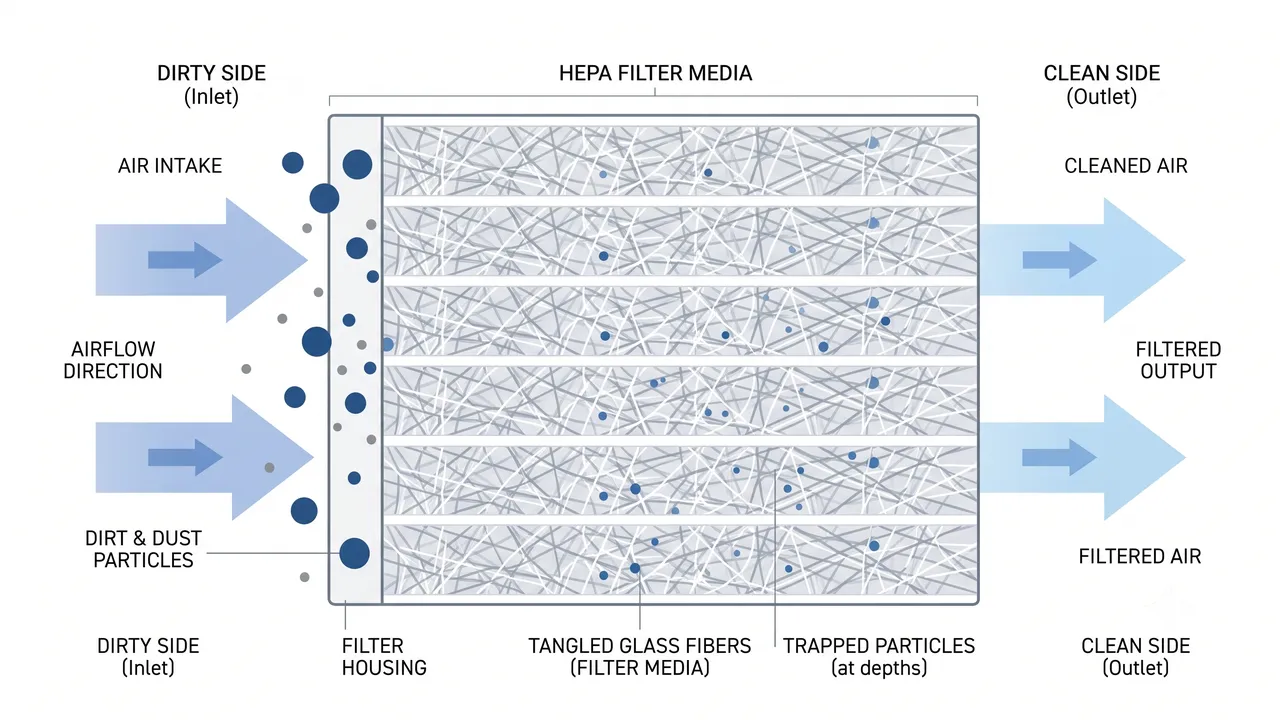
HEPA filtration isn’t a simple sieve. The spaces between fibers are much larger than the particles being captured (typically 5-50 microns between fibers, vs. 0.3 micron particles). Filtration occurs through four mechanisms:
- Interception, Particles following the airstream get close enough to a fiber that they stick to it (dominant for 0.1-1 micron particles)
- Impaction, Larger particles can’t follow the airstream as it curves around a fiber and collide directly (dominant for > 1 micron particles)
- Diffusion, Ultrafine particles (<0.1 microns) are buffeted by gas molecules in Brownian motion, increasing their probability of contacting a fiber
- Electrostatic attraction, Many HEPA fibers carry a static charge that attracts particles (the mechanism that water washing destroys)
This is why the “0.3 micron” number is so often quoted: it’s where interception and diffusion are both relatively weak, creating the MPPS. Above and below this point, efficiency is actually higher.
True HEPA vs. HEPA-type: what’s the difference?
True HEPA (H13/H14):
- Certified to capture >= 99.95% of particles at MPPS
- Tested and certified by an independent laboratory
- Filter media is borosilicate glass fibers or PTFE membrane
- Consistent performance across the filter’s rated lifespan
- Used in: Coway, Winix, Levoit Core series, Blueair, IQAir, Austin Air
HEPA-Type / HEPA-Like (typically E10-E12):
- Not certified to any specific standard
- May capture anywhere from 85% to 99% depending on the specific media and construction
- Often uses synthetic polymer fibers, which degrade faster than glass fiber
- Inconsistent quality between batches and manufacturers
- Used in: budget purifiers under $60, some IKEA models, generic Amazon brands
The practical difference: if your room has 10,000 airborne particles per cubic foot, a True HEPA (H13) filter leaves 5 particles. A HEPA-type (E11) filter leaves 500 particles. That hundredfold difference matters for allergy and asthma sufferers.
Read our allergy guide for more on why filter quality matters.
How to verify your purifier has True HEPA
- Look for “True HEPA” on the specification sheet, not just the marketing copy. “HEPA filtration” without “True” is a red flag.
- Check for AHAM certification, the AHAM Verifide seal means the purifier was independently tested.
- European EN 1822 class (H13, H14) is more reliable than marketing language.
- Avoid “HEPA-type,” “HEPA-like,” “HEPA-style”, these are unregulated terms.
- No purifier under $50 contains genuine HEPA, the filter media and seal construction cost more than that.
Read our budget purifier guide for examples of purifiers with genuine HEPA.
Filter construction matters: the seal
A HEPA filter in a housing that allows air to bypass around the edges of the filter media delivers HEPA-type performance, regardless of the filter quality. The gasket or seal around the filter frame is as important as the media itself. Premium brands (Coway, IQAir) use compression gaskets that form airtight seals. Budget brands often have loose-fitting filters with gaps that allow 10-20% air bypass.
When replacing a filter, verify that it seats firmly and that there are no visible gaps between the filter frame and the housing.
Read our filter replacement guide for more on filter maintenance.
Beyond HEPA: ULPA and HyperHEPA
IQAir uses “HyperHEPA” (their trademark) to describe filters that exceed HEPA standards, capturing particles down to 0.003 microns at >99.5% efficiency. This is between H14 and U15 on the EN 1822 scale.
Is this necessary for home use? For most people, no. The smallest common indoor particles (tobacco smoke, cooking aerosol) are 0.1-1.0 microns. Well within H13’s capture range. HyperHEPA matters for people with severe respiratory conditions, those living near heavy industrial pollution, or those seeking maximum protection against viral particles.
Read our COPD guide for more on medical-grade filtration.
HEPA vs ULPA: the real difference
HEPA (H13) captures 99.95% at 0.3 microns. ULPA (U15) captures 99.9995% at 0.12 microns. Roughly 100 times more efficient at the most penetrating particle size. But ULPA filters are denser, restrict airflow more, and require more powerful (and louder) fans. For consumer use, the airflow penalty of ULPA typically outweighs the efficiency gain. Your air gets cleaned more thoroughly per pass but passes through less often. And the net effect is often worse than HEPA.
IQAir’s HyperHEPA marketing claims “down to 0.003 microns” which sounds like ULPA territory, but it’s actually a modified HEPA media tested at a different particle size range. Independent testing confirms it captures nanoparticles effectively, but the real advantage is the filter’s physical thickness (4x standard HEPA) not a fundamentally different capture mechanism.
Filter grades by price range
| Price Range | Typical Filter Grade | Examples |
|---|---|---|
| Under $50 | HEPA-type (E10-E12) | Generic Amazon brands |
| $50-100 | True HEPA (H13) | Levoit Core 300, GermGuardian |
| $100-200 | True HEPA (H13) | Coway AP-1512HH, Winix 5500-2 |
| $200-500 | True HEPA (H13-H14) | Blueair 211i Max, Coway Airmega |
| $500+ | HyperHEPA / H14 | IQAir HealthPro Plus, Austin Air |
Can I wash a HEPA filter?
No, never wash a True HEPA filter. Water destroys the electrostatic charge that captures particles. Washing permanently reduces filtration efficiency. You can wash pre-filters and some carbon filters, but never the HEPA media itself.
To extend HEPA filter life, vacuum the exterior every 2-4 weeks with a brush attachment. This removes surface debris that causes airflow restriction without damaging the filter media.
Read our filter replacement guide for more on filter maintenance.
Filter replacement frequency
| User Type | HEPA Filter Life | Pre-filter Cleaning |
|---|---|---|
| Average user | 8-12 months | Monthly |
| Allergy sufferers | 6-8 months | Every 2 weeks |
| Pet owners | 6-8 months | Weekly |
| Smokers | 4-6 months | Weekly |
| Wildfire areas | 3-4 months | Weekly |
The bottom line
For most people, H13 True HEPA is sufficient. It captures 99.95% of particles at the most penetrating particle size. H14 and HyperHEPA offer marginal improvements that matter only for severe respiratory conditions or medical applications.
My recommendation: Always buy True HEPA (H13 or better). Avoid HEPA-type and HEPA-like filters. The price difference is small ($20-30) but the filtration difference is enormous.
Related Articles
- HEPA Filter vs Carbon Filter
- Air Purifier Placement Guide
- Air Purifier vs Opening Windows
- How Long Should You Run an Air Purifier?
Frequently Asked Questions
How long should I run my air purifier each day?
For best results, run your air purifier 24/7 on medium speed. Air purification works by continuously removing particles—turning it off allows them to accumulate again. Modern purifiers use 30-80W on medium (similar to a light bulb), making continuous operation energy-efficient.
Where is the best place to put an air purifier?
Place the purifier 3-5 feet from your breathing zone, near pollution sources, with unobstructed airflow on all sides. Avoid corners, curtains, and furniture that block intake or output. For bedrooms, position near the bed but not blowing directly on you.
How do I know when to replace the filter?
Most purifiers have filter indicator lights. Without indicators, replace HEPA filters every 6-12 months and carbon filters every 3-6 months. Signs of a clogged filter: reduced airflow, visible discoloration, increased noise, or the purifier seeming less effective.
Are air purifiers noisy?
Noise levels vary by model and fan speed. Sleep modes (20-25 dB) are quieter than a whisper. Medium speeds (35-45 dB) are similar to background music. High speeds (50-60 dB) are conversation level. For bedrooms, look for sleep modes under 25 dB.
Do air purifiers use a lot of electricity?
No. Most purifiers use 30-80W on medium and 5-15W on sleep mode. Running 24/7 on medium costs $2-8/month at average US electricity rates. Energy Star models use 15-40% less electricity. The main ongoing cost is filter replacement ($30-120/year).
Disclosure: We may earn a commission from qualifying purchases. Technical information from EN 1822-1:2019 and DOE-STD-3020.
Support This Guide
Helpful? Add The Air Purifier Guide as a preferred source on Google so our guides show up in your search results.
Related Articles
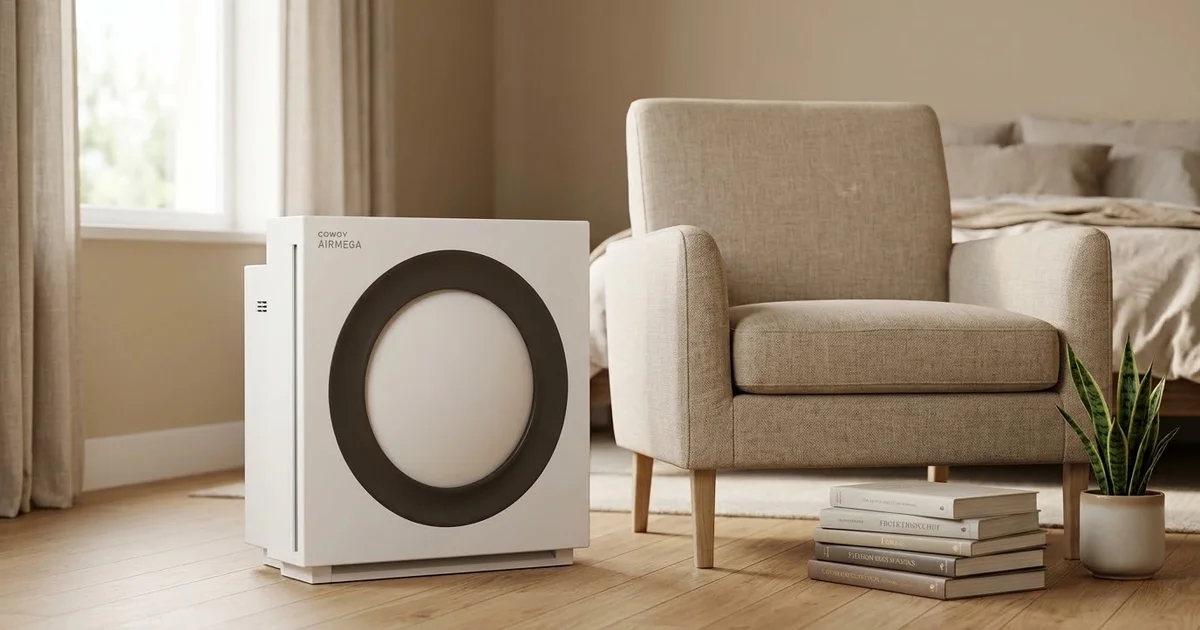
Coway Mighty2 vs AP-1512HH (2026)
Coway's Mighty2 replaced the AP-1512HH as Wirecutter's top pick. We compare CADR, noise, sensors, filter costs, and whether the older unit is still the smarter buy.
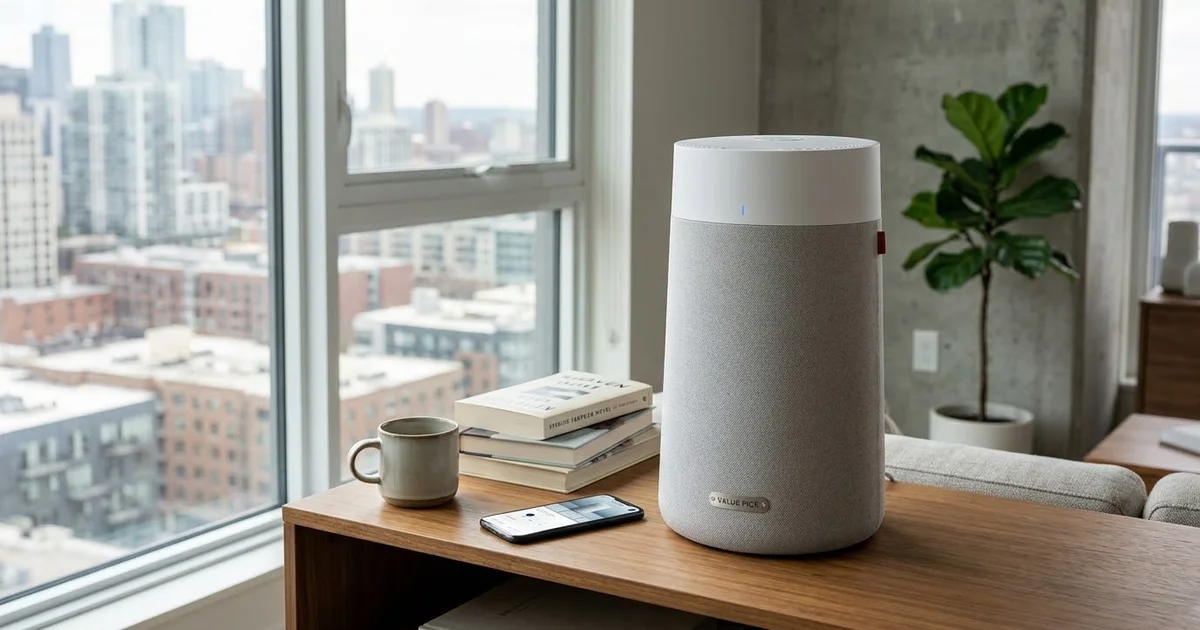
KNKA APH4000 Review: $150 Dark Horse
KNKA's APH4000 is one of Amazon's best-selling purifiers at $150. We check the AHAM certification, decode the 1,695 sq ft claim, and compare it to Levoit and Coway.
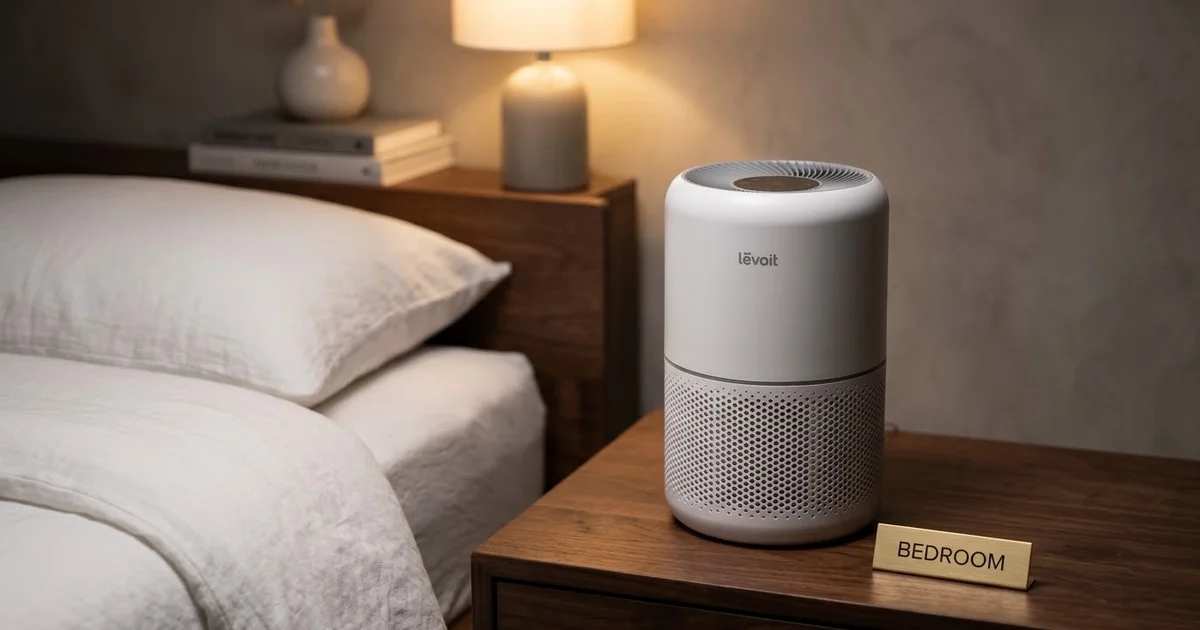
Levoit Core 300 vs 300-P: What Changed
Levoit quietly replaced the Core 300 with the Core 300-P. We explain the AHAM certification, whether filters still fit, and which one you should actually buy.
Shark NeverChange HP302 Review
Shark's NeverChange HP302 promises 5 years on one filter. We dig into the real running costs, the odor neutralizer catch, and whether it beats cheaper rivals.
Winix 5510 vs 5500-2: 2026 Verdict
The Winix 5500-2 is discontinued and the 5510 takes over. We compare CADR, noise, filter costs, and the one compatibility problem nobody mentions.
🛒 Products Mentioned
As an Amazon Associate, we earn from qualifying purchases.
Covers indoor air quality science, respiratory health, allergy management, and wildfire smoke protection.
View all articles by Sarah →