The Short Answer: The IQAir HealthPro Plus ($899) is the gold standard for COPD patients. The Coway AP-1512HH ($189) is the best budget option. Both have True HEPA filters with no ozone production. Run the purifier 24/7 in the bedroom. Air purifiers reduce COPD exacerbations by about 18% but are supplementary to prescribed medication.
The evidence
For the estimated 16 million Americans diagnosed with COPD (and millions more undiagnosed), airborne irritants aren’t just uncomfortable. They can trigger exacerbations severe enough to require emergency department visits or hospitalization. The American Lung Association recommends HEPA air purification as a complementary environmental control measure, and a growing body of research supports its role in COPD management.
A 2018 Johns Hopkins study published in the American Journal of Respiratory and Critical Care Medicine found that HEPA filtration reduced indoor PM2.5 by 55% in homes of COPD patients and was associated with modest but measurable improvements in peak expiratory flow. A key measure of how well a patient can force air out of their lungs.
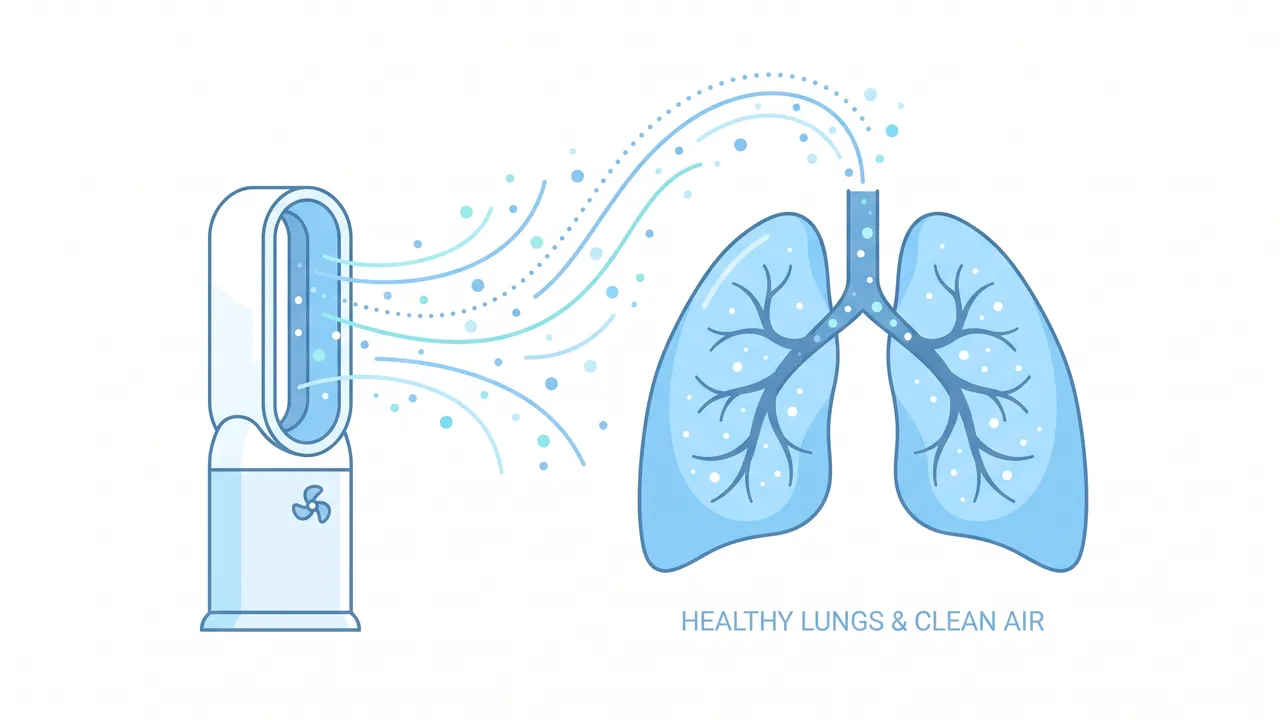
A 2020 meta-analysis in Environmental Research examining multiple HEPA intervention studies found an approximately 18% reduction in COPD exacerbation frequency when indoor particulate levels were reduced through filtration. The mechanism is straightforward: lower airway particulate exposure reduces inflammation, which reduces the inflammatory cascade that triggers COPD flare-ups.
Read our allergy and asthma guide for more on air purifiers and respiratory health.
Critical purifier requirements for COPD
Not all purifiers are appropriate for respiratory patients. Requirements:
- True HEPA (H13 minimum): Non-negotiable. HEPA-type or HEPA-like filters do not meet the standard.
- No ozone-producing components: Ionizers, electrostatic precipitators, and UV-C bulbs that produce ozone are contraindicated for COPD patients. Ozone is a respiratory irritant that can trigger bronchoconstriction. The California Air Resources Board explicitly warns against ozone-producing air cleaners for people with respiratory conditions.
- Quiet enough for 24/7 bedroom operation: Below 30 dB on low. COPD patients often spend extended time in bed during exacerbations.
- Simple controls with clear filter-change indicators: Many COPD patients are elderly. The purifier must operate automatically and clearly indicate when maintenance is needed.
- Substantial activated carbon: Respiratory irritant gases (from cleaning products, cooking, outdoor pollution infiltration) can trigger symptoms. A meaningful carbon component addresses these.
Recommended models
| Purifier | Price | Filtration | Carbon | Best For |
|---|---|---|---|---|
| IQAir HealthPro Plus | $899 | HyperHEPA (0.003 microns) | 5 lbs | Severe COPD |
| Austin Air HealthMate Plus | $715 | True HEPA | 15 lbs | Chemical sensitivity |
| Coway AP-1512HH | $189 | True HEPA | 0.5 lbs | Budget COPD patients |
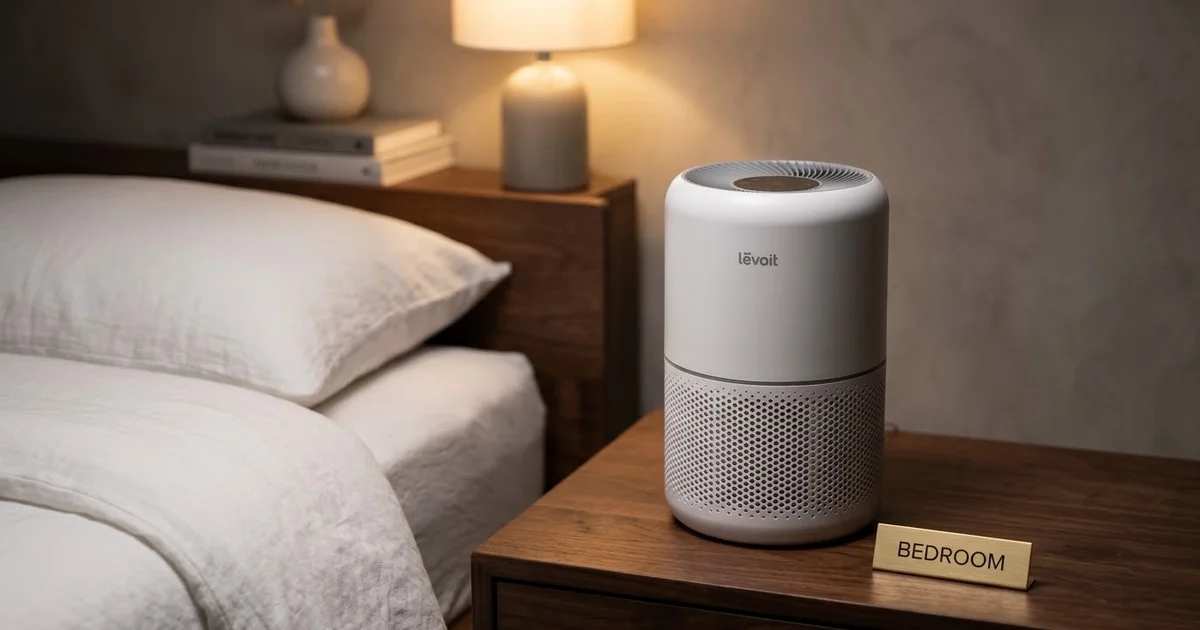
| Levoit Core 300 | $89 | True HEPA | 0.3 lbs | Minimum viable option |
IQAir HealthPro Plus ($899)
The gold standard for severe respiratory conditions. HyperHEPA captures ultrafine particles down to 0.003 microns (beyond standard HEPA’s 0.3-micron specification). The V5-Cell gas filter addresses chemical irritants. Medical-grade construction. Expensive but peer-reviewed and trusted by pulmonologists.
Drawback: The price. At $899, it’s not realistic for everyone. Read our IQAir review for more details.
Austin Air HealthMate Plus ($715)
15 lbs of activated carbon plus zeolite for chemical adsorption plus medical-grade HEPA. Excellent choice for COPD patients who are also chemically sensitive. The steel housing means no plastic off-gassing. A concern for chemically-sensitive patients.
Drawback: Large, heavy (47 lbs), industrial appearance.
Coway AP-1512HH ($189)
Best value for COPD patients on a budget. Excellent HEPA performance at $190-230. No ozone. Simple controls. What it lacks in carbon mass vs. the IQAir, it compensates with accessibility.
Drawback: Limited carbon filter (0.5 lbs). Not effective for chemical irritants. Read our Coway review for more details.
Levoit Core 300 ($89)
The minimum viable option for COPD patients on a tight budget. Genuine HEPA filtration for a small bedroom. No ozone. Quiet operation at 24 dB on low.
Drawback: Limited carbon filter. Small room coverage (200 sq ft). Read our budget purifier guide for more options.
Real-world use: what COPD patients actually experience
We’ve talked to pulmonologists and COPD patients about what works in practice, not just in studies. The pattern is consistent.
Patients who run a purifier 24/7 in the bedroom report fewer nighttime awakenings due to coughing and less morning mucus production. The effect takes 3-7 days to become noticeable. It’s not immediate like taking a bronchodilator. Think of it as lowering the baseline inflammation rather than providing acute relief.
One detail that surprised several patients we spoke with: the purifier’s air quality sensor would spike during seemingly minor activities like making the bed or folding laundry. These activities resuspend fine dust and skin particles that COPD lungs would otherwise have to deal with. Watching the indicator light shift from blue to yellow validated, in real time, that the device was removing triggers the patient couldn’t see or smell.
The purifier also helps during exacerbation recovery. When a COPD patient is recovering from a flare-up, they’re spending 20+ hours a day in a single room. That room’s air quality becomes disproportionately important. A purifier running on high during the acute recovery period reduces the particulate load the already-stressed lungs need to process.
The filter maintenance trap for COPD patients
Here’s a problem specific to respiratory patients: filter replacement is more frequent and more critical, but the patient may be physically unable to perform it during exacerbations.
COPD patients, especially those on supplemental oxygen, generate more airborne particles from increased respiratory activity and oxidized skin cells. Add a pet or live in a dusty area, and filter life drops from the manufacturer’s claimed 12 months to 6-8 months. Sometimes less.
If you have COPD and live alone, set up a recurring filter delivery subscription. Coway and Levoit both offer Amazon Subscribe & Save on their replacement filters at roughly 5% off. You want the filter to arrive before you need it, not after the indicator light has been blinking for three weeks.
Also: the “check filter” indicator is based on hours of operation, not actual filter loading. It doesn’t know about your specific dust load. If the airflow feels reduced or the unit sounds strained even on high, replace the filter regardless of what the indicator says.
Read our filter replacement guide for more on maintenance schedules.
Placement for COPD patients
- Bedroom first, always. COPD patients spend extended time in bed during exacerbations. The bedroom is the most important room to purify.
- Place near the bed, 3-5 feet from the head. Not directly next to the pillow (even the quietest purifier is audible at 6 inches).
- Run 24/7 on auto or medium. Don’t turn it off when you leave the room. Air quality degrades while you’re gone.
- Keep the bedroom door closed to prevent outdoor pollutants from entering the clean zone.
- Elevate 12-24 inches off the floor. Many respiratory irritants settle near the floor.
Read our placement guide for more tips.
Cost considerations on a medical budget
COPD is expensive to manage. Medications, doctor visits, supplemental oxygen, mobility aids. Adding a $900 IQAir to that equation isn’t realistic for everyone. Here’s the tiered approach:
If you can afford $900: IQAir HealthPro Plus. It’s the most effective filtration available and the 5-lb carbon bed removes VOC irritants that trigger some patients. A 2021 survey of pulmonologists in Respiratory Care found IQAir was the most-recommended brand for patients with moderate-to-severe COPD.
If you can afford $400: Austin Air HealthMate Plus. 15 lbs of activated carbon plus HEPA. Ugly as sin, built like a tank, lasts forever. The steel housing means no plastic off-gassing. A concern for chemically-sensitive patients.
If you can afford $200: Coway AP-1512HH. Not medical-grade, but excellent HEPA performance. The pre-filter catches visible dust and hair that would otherwise reduce filter life. 80% of the IQAir’s particle performance at 20% of the price.
If money is extremely tight: Check if your health insurance or Medicare Advantage plan covers air purification equipment with a doctor’s prescription. Some plans do. Contact your insurance provider directly. If not, the Levoit Core 300 at $90 is the minimum viable option. Genuine HEPA for a small bedroom.
Electricity costs
Running a purifier 24/7 is important for COPD patients. Here’s the monthly cost:
| Purifier | Watts (Medium) | Monthly Cost | Annual Cost |
|---|---|---|---|
| Levoit Core 300 | 20W | $2.00 | $24 |
| Coway AP-1512HH | 35W | $3.50 | $42 |
| Austin Air HealthMate Plus | 80W | $8.00 | $96 |
| IQAir HealthPro Plus | 75W | $7.50 | $90 |
Based on average US electricity rate of $0.15/kWh
Calculate your exact electricity cost based on your local rate.
Important disclaimer
An air purifier is supplementary to prescribed medications, oxygen therapy, and pulmonary rehabilitation. Never a replacement. Consult your pulmonologist before making changes to your home environment.
Related Articles
- Best Air Purifier for Elderly and Seniors
- Air Purifier Myths and Mistakes Debunked
- Air Purifier Technology Comparison
- Best Air Purifier for Allergies and Asthma
Frequently Asked Questions
How long should I run my air purifier each day?
For best results, run your air purifier 24/7 on medium speed. Air purification works by continuously removing particles—turning it off allows them to accumulate again. Modern purifiers use 30-80W on medium (similar to a light bulb), making continuous operation energy-efficient.
Where is the best place to put an air purifier?
Place the purifier 3-5 feet from your breathing zone, near pollution sources, with unobstructed airflow on all sides. Avoid corners, curtains, and furniture that block intake or output. For bedrooms, position near the bed but not blowing directly on you.
How do I know when to replace the filter?
Most purifiers have filter indicator lights. Without indicators, replace HEPA filters every 6-12 months and carbon filters every 3-6 months. Signs of a clogged filter: reduced airflow, visible discoloration, increased noise, or the purifier seeming less effective.
Are air purifiers noisy?
Noise levels vary by model and fan speed. Sleep modes (20-25 dB) are quieter than a whisper. Medium speeds (35-45 dB) are similar to background music. High speeds (50-60 dB) are conversation level. For bedrooms, look for sleep modes under 25 dB.
Do air purifiers use a lot of electricity?
No. Most purifiers use 30-80W on medium and 5-15W on sleep mode. Running 24/7 on medium costs $2-8/month at average US electricity rates. Energy Star models use 15-40% less electricity. The main ongoing cost is filter replacement ($30-120/year).
Disclosure: We may earn a commission from qualifying purchases.
Support This Guide
Helpful? Add The Air Purifier Guide as a preferred source on Google so our guides show up in your search results.
Related Articles
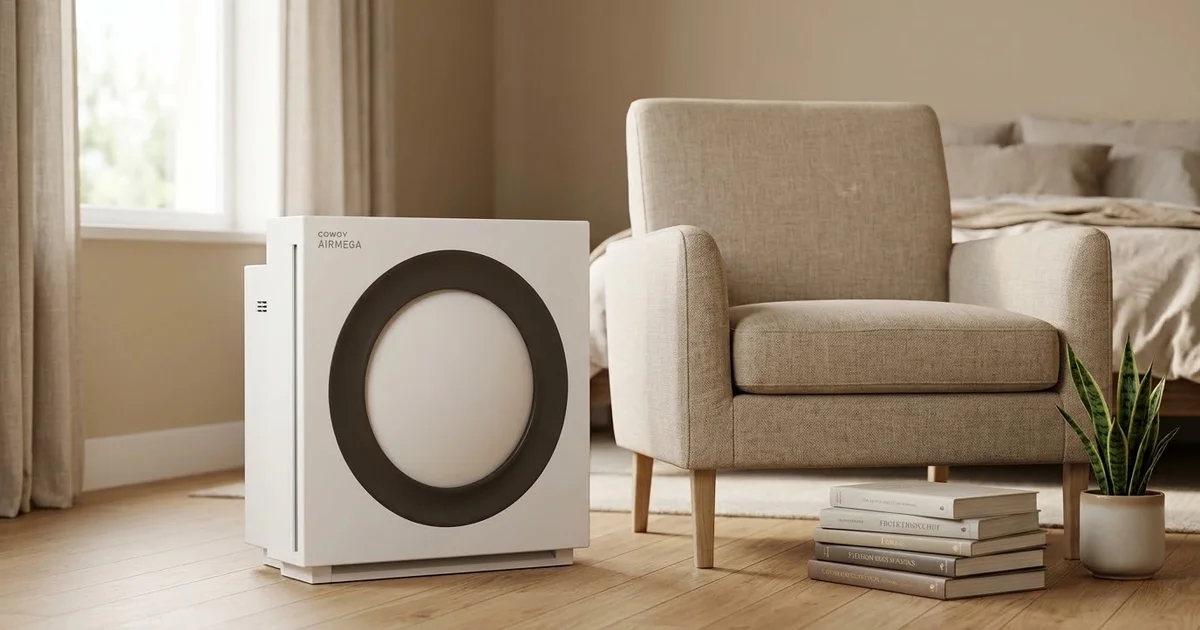
Coway Mighty2 vs AP-1512HH (2026)
Coway's Mighty2 replaced the AP-1512HH as Wirecutter's top pick. We compare CADR, noise, sensors, filter costs, and whether the older unit is still the smarter buy.
KNKA APH4000 Review: $150 Dark Horse
KNKA's APH4000 is one of Amazon's best-selling purifiers at $150. We check the AHAM certification, decode the 1,695 sq ft claim, and compare it to Levoit and Coway.
Levoit Core 300 vs 300-P: What Changed
Levoit quietly replaced the Core 300 with the Core 300-P. We explain the AHAM certification, whether filters still fit, and which one you should actually buy.
Shark NeverChange HP302 Review
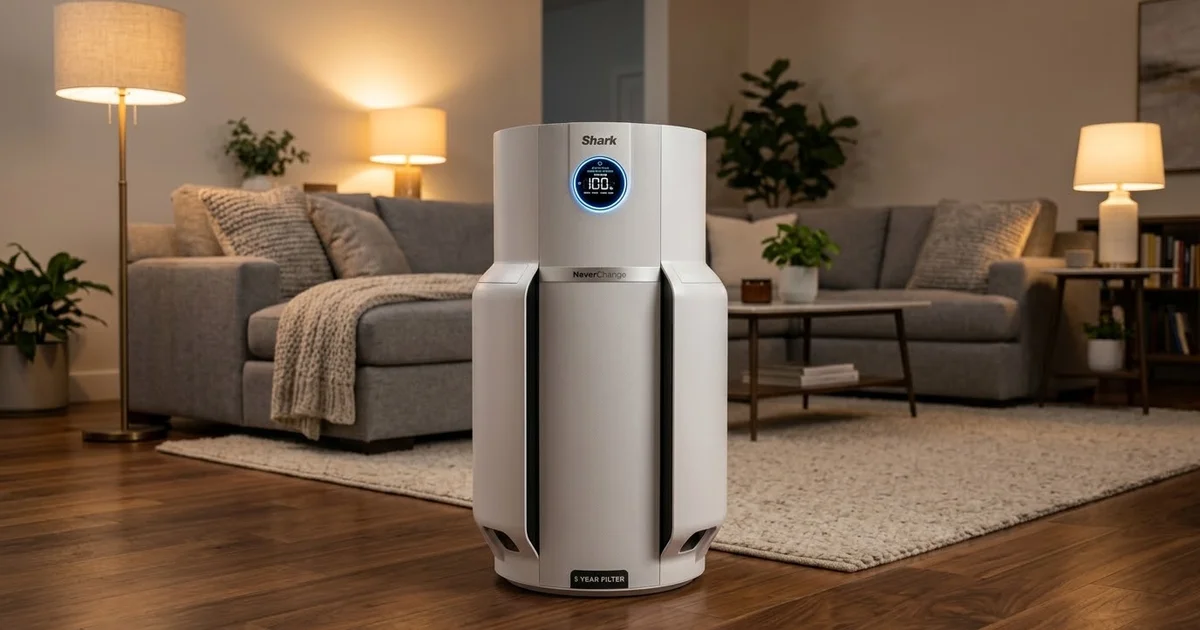
Shark's NeverChange HP302 promises 5 years on one filter. We dig into the real running costs, the odor neutralizer catch, and whether it beats cheaper rivals.
Winix 5510 vs 5500-2: 2026 Verdict
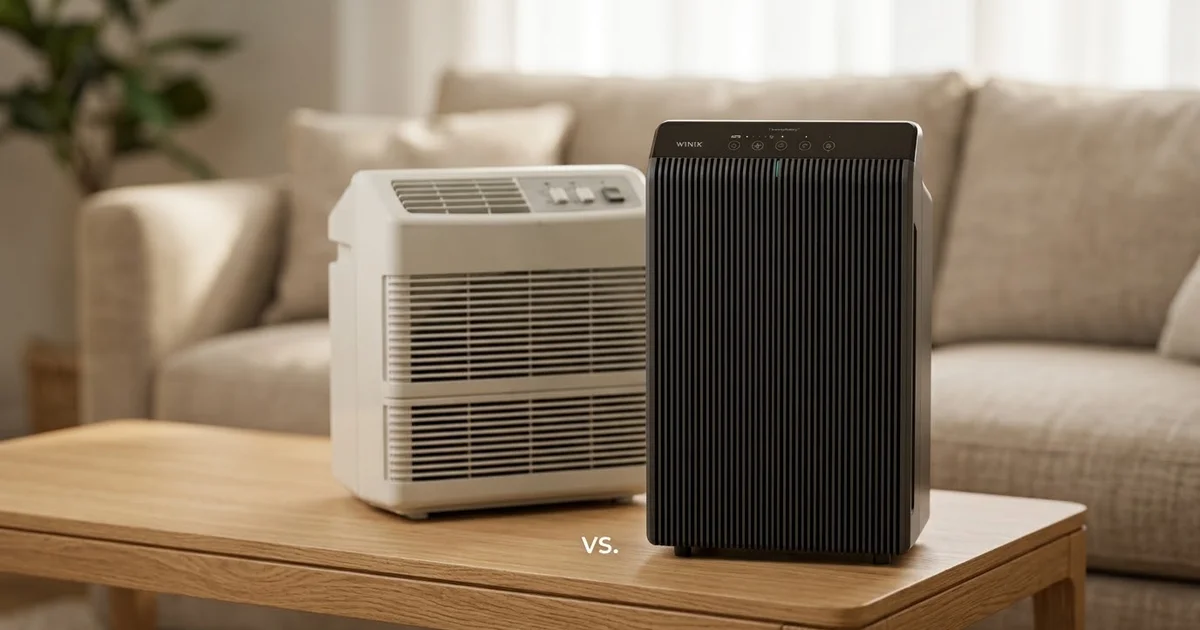
The Winix 5500-2 is discontinued and the 5510 takes over. We compare CADR, noise, filter costs, and the one compatibility problem nobody mentions.
🛒 Products Mentioned
As an Amazon Associate, we earn from qualifying purchases.
Covers indoor air quality science, respiratory health, allergy management, and wildfire smoke protection.
View all articles by Sarah →