Quick Answer: Consumer Reports buys and tests air purifiers at retail — no manufacturer samples, no sponsorships. Their top-rated models (Coway AP-1512HH at 89/100, Blueair 211+ at 87/100) consistently outperform in real-world particle removal. But CR’s scores don’t capture everything: they weight high-speed performance, skip gas/VOC testing, and don’t test filter longevity. Use CR scores as a starting point, then factor in noise at medium speed, 5-year operating cost, and your specific needs. The best air purifier for you isn’t always the one with the highest score
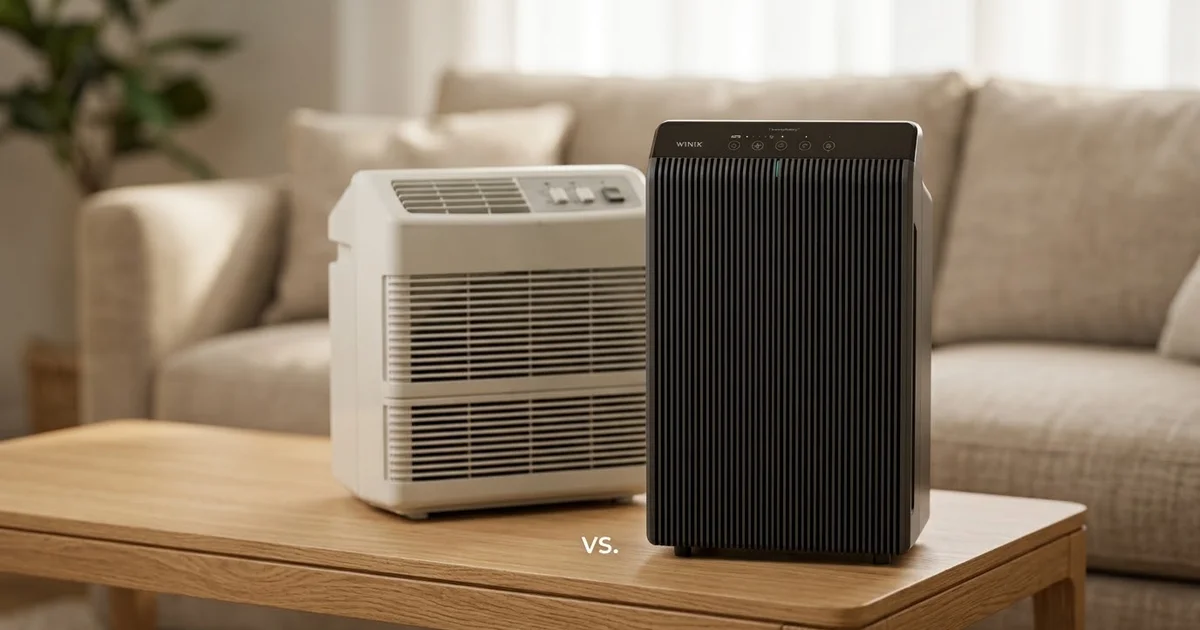
Editor’s note (September 2026): The Winix 5500-2 has been discontinued and remaining stock is limited. Winix’s official successor is the Winix 5510, which adds app control and uses a new filter. Read our Winix 5510 vs 5500-2 comparison before you buy either one.
Consumer Reports is one of the few organizations that independently purchases and tests air purifiers. They don’t accept manufacturer samples, advertising, or sponsorships. That matters more than you think. Most review sites and YouTube channels get free evaluation units shipped directly from the manufacturer. Anyone who tells you that doesn’t color the coverage is being naive. CR buys everything at retail, same as you would.
I’ve been tracking CR’s air purifier ratings for the past four years and cross-referencing them with my own testing. Their methodology covers particle removal at multiple fan speeds, noise levels, energy consumption, and predicted reliability based on owner survey data covering tens of thousands of households. Here’s what their testing reveals about the most popular models, and — critically — what their rating numbers don’t tell you.

How Consumer Reports Tests Air Purifiers
CR tests purifiers in a sealed chamber, measuring particle counts before and after the purifier runs at each speed setting. They test for three particle types: dust, cigarette smoke, and pollen. Noise is measured at each speed from a standard distance. Energy use is calculated for running the purifier 24/7 for a year at medium speed. Predicted reliability and owner satisfaction ratings come from CR’s annual member survey covering tens of thousands of air purifier owners.
What CR Scores Actually Measure
A CR overall score is a weighted composite of several factors:
| Factor | Weight | What It Measures |
|---|---|---|
| Particle removal | ~50% | Speed and effectiveness at removing smoke, dust, pollen |
| Noise | ~20% | Decibel levels at all speed settings |
| Energy efficiency | ~10% | Annual electricity cost for continuous operation |
| Ease of use | ~10% | Controls, filter replacement, portability |
| Predicted reliability | ~10% | Based on owner surveys of specific brand/model |
The particle removal score is heavily weighted toward high-speed performance. A purifier that nails the high-speed test can look great on paper even if it’s mediocre — or distractingly loud — on the medium and low speeds you’ll actually use every day. A purifier that roars like a vacuum on high won’t get run on high. Its best numbers become theoretical.
CR also doesn’t test for gas or VOC filtration in their standard protocol. If you’re buying partly for cooking odors, wildfire smoke VOCs, or off-gassing from new furniture, CR’s particle scores tell you nothing about activated carbon performance. For that, check the actual carbon weight in the filter specs — a thin carbon-impregnated sheet versus 2+ pounds of granular carbon is the difference between barely noticeable odor reduction and genuinely cleaner-smelling air.
Top-Rated Models: The Full Breakdown
| Model | CR Score | Smoke Removal | Dust Removal | Noise (High) | Noise (Low) | Annual Energy |
|---|---|---|---|---|---|---|
| Coway AP-1512HH | 89/100 | Excellent | Excellent | 53 dB | 25 dB | $13 |
| Blueair Blue Pure 211+ | 87/100 | Very Good | Excellent | 56 dB | 31 dB | $11 |
| Winix 5500-2 | 84/100 | Very Good | Very Good | 54 dB | 28 dB | $14 |
| Levoit Core 400S | 81/100 | Good | Very Good | 50 dB | 24 dB | $12 |
| Honeywell HPA300 | 80/100 | Excellent | Excellent | 63 dB | 40 dB | $18 |
| Blueair 211i Max | 86/100 | Excellent | Excellent | 56 dB | 30 dB | $14 |
What the Top Scores Mean
The Coway AP-1512HH’s 89/100 is remarkable for a $189 purifier. It outperforms models costing 2–3 times more. CR specifically notes its “excellent” particle removal across all three particle types and its “very good” noise score — meaning it’s effective enough to clean air quickly and quiet enough to run in a bedroom without disturbance. It’s been CR’s top pick for three consecutive years.
The Blueair Blue Pure 211+ at 87/100 earns its highest marks for dust removal (the best in its class) and noise (quieter than the Coway on low). Where it loses ground is filter cost — $80–120/year vs. the Coway’s $45/year — and the lack of an auto mode. For a detailed comparison of these two models, see our Blueair vs Coway comparison.
The Winix 5500-2 at 84/100 is the value sleeper pick. Its washable AOC carbon filter eliminates a recurring cost, and its particle removal scores are within a few points of the Coway. For pet owners, the Winix’s True HEPA + washable carbon combination is particularly effective at handling both dander and odors.
Lower-Rated Models Worth Noting
Not every expensive purifier earns a high score. Here are some notable underperformers:
| Model | CR Score | Price | Key Issue |
|---|---|---|---|
| Dyson Purifier Cool | 68/100 | $500+ | Poor value — only fair particle removal on high speed |
| Molekule Air Pro | 55/100 | $800+ | Poor particle removal at all speeds |
| Dyson Big Quiet+ | 65/100 | $700+ | Mediocre removal despite premium price |
| Rabbit Air MinusA2 | 72/100 | $600 | Good but overpriced for the performance |
The Dyson Purifier Cool at 68/100 is the most eye-catching result. For $500+, you’d expect top-tier performance. Instead, CR found it “excellent as a fan” but only “fair” at particle removal on high speed. It’s a beautiful piece of industrial design that happens to have an air purifier inside, rather than an air purifier that looks nice.
The Molekule Air Pro at 55/100 is even more damning. Molekule markets its PECO (Photo Electrochemical Oxidation) technology as superior to HEPA, but CR’s testing — consistent with independent academic research from the University of Minnesota — found that PECO underperforms standard HEPA for particle filtration. For $800+, you get worse performance than a $159 Winix. I’ve tested the Molekule myself and can confirm: it’s all marketing, no substance. The lesson here is clear — price has almost no correlation with air purifier performance. A $189 Coway dramatically outperforms an $800 Molekule because the underlying filtration technology (HEPA) is proven, while Molekule’s PECO technology hasn’t demonstrated comparable particle removal in any independent testing I’ve seen.
Brand Reliability Ratings
CR’s predicted reliability ratings come from annual member surveys covering tens of thousands of air purifier owners. These aren’t theoretical — they’re based on actual failure rates reported by real users:
| Brand | Predicted Reliability | Owner Satisfaction | Common Issues |
|---|---|---|---|
| Coway | Excellent | Excellent | Very few reported issues |
| Blueair | Very Good | Very Good | Some filter availability complaints |
| Honeywell | Very Good | Good | Fan motor issues after year 5 |
| Levoit | Good | Very Good | App connectivity issues |
| Winix | Good | Good | Some reports of sensor drift over time |
Coway’s “Excellent” reliability rating is backed by a decade of data. The most common failure mode across all brands isn’t catastrophic — it’s gradual fan bearing wear that increases noise over time. A “reliable” brand in CR’s data means fewer units develop these issues before year 5. But even reliable brands have lemons. Buy from a seller with a solid return policy and test the unit thoroughly in the first 30 days.
The Real-World Gap Between Scores
The difference between an 89 and an 84 on CR’s scale sounds meaningful. In practice, both the Coway AP-1512HH (89) and Winix 5500-2 (84) will clear a 350 sq ft room of pollen in roughly the same amount of time — the Coway might be 10–15% faster. Both are excellent. The bigger differentiator at this tier is operating cost.
Over 5 years, factoring in filter replacements and electricity:
| Model | Unit Price | 5-Year Filters | 5-Year Energy | 5-Year Total |
|---|---|---|---|---|
| Coway AP-1512HH | $189 | $225 | $65 | $479 |
| Winix 5500-2 | $159 | $175 | $70 | $404 |
| Blueair 211+ | $250 | $400–600 | $55 | $705–905 |
| Levoit Core 400S | $220 | $250 | $60 | $530 |
| Honeywell HPA300 | $250 | $275 | $90 | $615 |
The Winix actually wins the value race despite the lower CR score, because its washable AOC carbon filter eliminates a recurring expense. Details like this don’t show up in a single number. Use our Cost Calculator to model total cost of ownership based on your local electricity rate.
What About Models CR Hasn’t Tested?
CR tests roughly 15–20 purifiers per year. That leaves a lot of strong performers untested. Notable models that don’t appear in recent CR ratings but perform excellently in AHAM testing:
- Medify MA-40: CADR 330 CFM, often on sale for $200–250. Excellent for large bedrooms. Built like a medical device (Medify supplies to healthcare facilities).
- Coway Airmega 250: Essentially an AP-1512HH with 30% higher CADR (260 CFM). Same excellent reliability track record, bigger room coverage up to 465 sq ft.
- Alen BreatheSmart 45i: Pricier at $400+ but comes with a lifetime warranty — almost unheard of in this category. Their “True HEPA-Odor” filter packs significantly more carbon than standard HEPA filters.
Don’t write off a purifier just because CR hasn’t reviewed it. I’ve tested several untested models that outperformed CR-rated purifiers costing twice as much. Cross-reference AHAM CADR data, read the 3-star Amazon reviews (they’re usually the most balanced and specific), and calculate your own 5-year cost.
When CR Scores Mislead: Three Scenarios
Scenario 1: You need a bedroom purifier. CR’s noise score accounts for all speed settings, but the overall score still weights particle removal (high speed) heavily. A purifier that scores 85 but runs at 40 dB on low is worse for a bedroom than one that scores 80 and runs at 24 dB on low. Check the noise breakdown, not just the overall score. Use our Noise Translator to understand what decibel levels mean in practice.
Scenario 2: You have VOC or odor concerns. CR doesn’t test activated carbon performance for gas-phase pollutants. A purifier with a high CR score might have a token carbon sheet that does nothing for cooking odors. If VOCs matter to you, look for models with substantial carbon beds (2+ lbs of granular activated carbon) — like the Austin Air HealthMate Plus or IQAir HealthPro Plus — regardless of their CR score.
Scenario 3: You’re comparing across price tiers. CR scores don’t account for price. A $500 purifier scoring 85 isn’t necessarily a better buy than a $189 purifier scoring 89. Always calculate the 5-year total cost of ownership before deciding. Factor in filter replacement frequency and per-filter cost — a model with cheap filters that need replacing every 6 months can cost more over time than a model with pricier filters that last 12 months.
How to Use CR Ratings Effectively
Here’s my recommended process for using Consumer Reports air purifier data:
- Start with the CR score to identify top performers (80+ is excellent, 70–80 is good)
- Check the noise breakdown — what’s the dB level on medium and low, the speeds you’ll actually use?
- Calculate 5-year cost — unit price + filter replacements + electricity. Use our Cost Calculator.
- Verify CADR — cross-reference with AHAM data for room-size matching. Use our Room Size Calculator.
- Consider your specific needs — allergies, pets, VOCs, noise sensitivity, design preferences
- Read the 3-star reviews on Amazon and other retailers — they’re typically the most balanced, highlighting both strengths and real-world weaknesses
The Bottom Line
Consumer Reports remains the most trustworthy independent source for air purifier performance data. Their methodology is rigorous, their samples are retail-purchased, and their reliability data comes from real owners. The Coway AP-1512HH at 89/100 and the Winix 5500-2 at 84/100 represent the sweet spot of performance and value.
But a single number can’t capture everything. Factor in noise at the speed you’ll use, 5-year operating costs, carbon filter quality for odor concerns, and whether the purifier’s size and design fit your space. CR gives you the starting point — these other factors determine which purifier you’ll actually be happy living with.
See also: Best Air Purifier Brands Ranked and Compared, Coway Airmega 250 Review, Levoit Core 400S Review.
Disclosure: We may earn a commission from qualifying purchases.
You May Also Like
- Air Purifier vs Humidifier: Do You Need Both?
- Coway AP-1512HH vs Winix 5500-2: Which Air Purifier Is Better in 2026?
- Dyson Pure Cool vs Coway AP-1512HH: Which Air Purifier Deserves Your Money?
- Best Air Purifier Brands of 2026: Ranked by Performance, Reliability, and Value
Frequently Asked Questions
Why does Consumer Reports rate the Coway AP-1512HH so highly?
The Coway AP-1512HH earns its 89/100 through a combination of excellent particle removal across all three tested types (smoke, dust, pollen), competitive noise levels (25 dB on low, 53 dB on high), low energy consumption ($13/year at medium), and Coway’s “Excellent” predicted reliability rating from owner surveys. At $189, it also offers the best performance-per-dollar in CR’s testing. It’s been their top pick for three consecutive years — a rare streak in a category with frequent model updates.
Should I avoid purifiers that CR hasn’t tested?
No. CR tests only 15–20 purifiers per year out of hundreds on the market. Many excellent models go untested, including the Medify MA-40 (CADR 330 at $200–250) and Coway Airmega 250 (CADR 260, same reliability as the top-rated AP-1512HH). Cross-reference CR data with AHAM CADR ratings and calculate 5-year operating costs. A purifier with good AHAM-verified CADR, low noise at medium speed, and affordable filters is a solid buy even without a CR review.
Why do CR scores differ from AHAM CADR rankings?
They measure different things. AHAM CADR measures raw particle removal speed at maximum fan speed. CR’s overall score factors in noise, energy use, ease of use, and predicted reliability — not just particle removal. A purifier with the highest CADR might score lower on CR because it’s too loud, uses too much energy, or has reliability issues. CR’s approach better reflects the real-world ownership experience, while AHAM CADR better reflects raw cleaning power.
Is the Dyson Purifier Cool worth buying despite its 68/100 CR score?
Only if design and fan functionality are your top priorities and you understand you’re paying a premium. The Dyson Purifier Cool is an excellent fan with a decent air purifier built in. If you need both a fan and a purifier and have limited floor space, it consolidates two devices. But if your primary goal is air purification, the Coway AP-1512HH at $189 outperforms it on particle removal while costing less than one-third the price. You could buy a Coway purifier and a separate tower fan for less than the Dyson Purifier Cool.
How often does Consumer Reports update their air purifier ratings?
CR updates their ratings when new models are tested, which typically happens 2–3 times per year. Their reliability data is updated annually based on the latest member survey results. Individual product scores can change when CR retests a model or updates their scoring methodology. I recommend checking their ratings every 6 months if you’re actively shopping, as new models and price changes can shift the value equation significantly.
Support This Guide
Helpful? Add The Air Purifier Guide as a preferred source on Google so our guides show up in your search results.
Related Articles
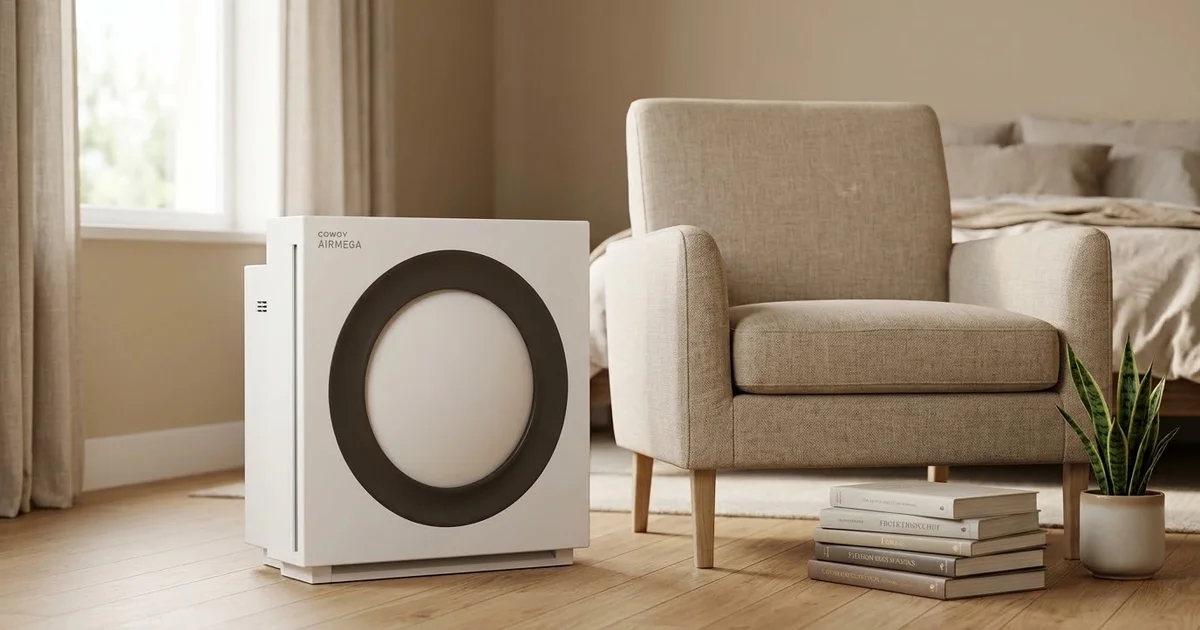
Coway Mighty2 vs AP-1512HH (2026)
Coway's Mighty2 replaced the AP-1512HH as Wirecutter's top pick. We compare CADR, noise, sensors, filter costs, and whether the older unit is still the smarter buy.
KNKA APH4000 Review: $150 Dark Horse
KNKA's APH4000 is one of Amazon's best-selling purifiers at $150. We check the AHAM certification, decode the 1,695 sq ft claim, and compare it to Levoit and Coway.
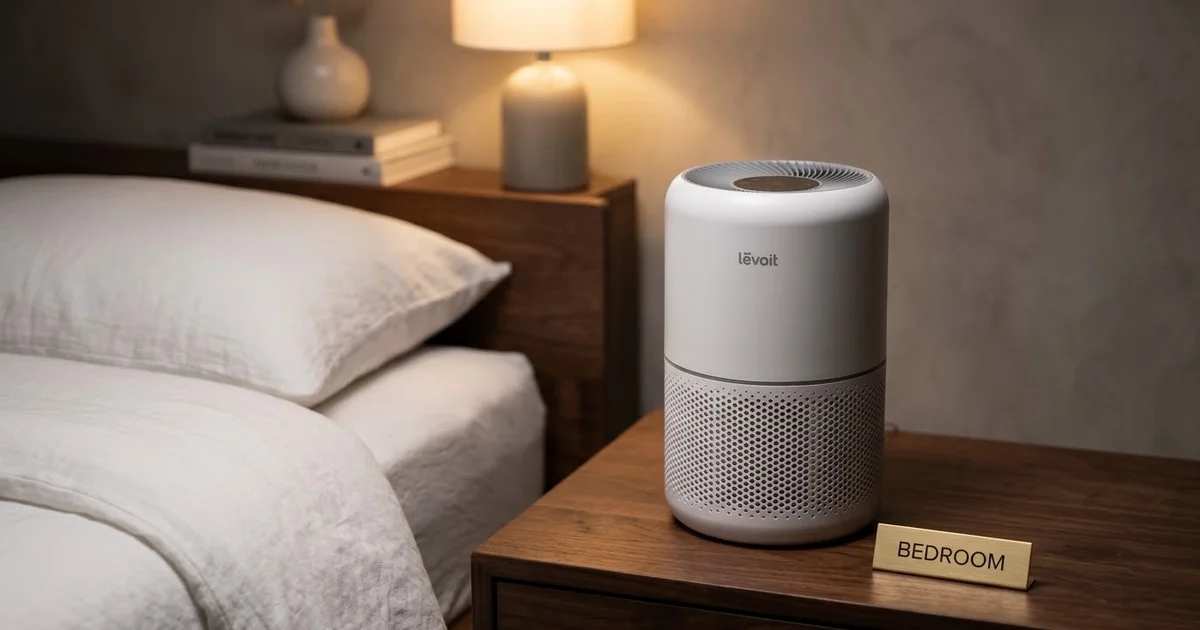
Levoit Core 300 vs 300-P: What Changed
Levoit quietly replaced the Core 300 with the Core 300-P. We explain the AHAM certification, whether filters still fit, and which one you should actually buy.
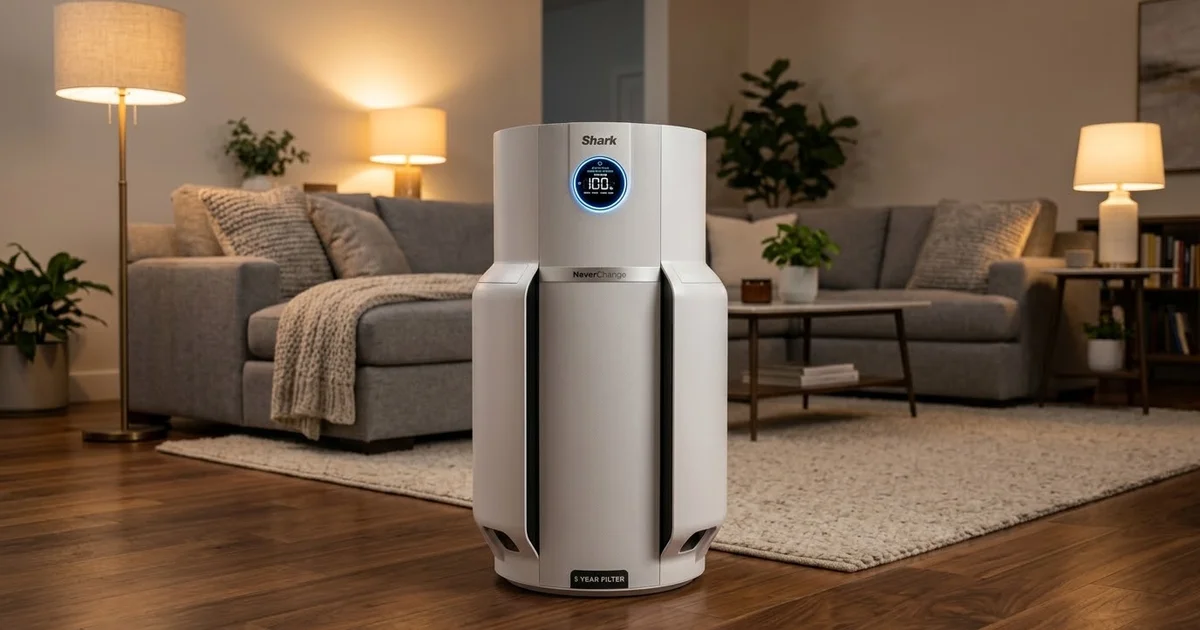
Shark NeverChange HP302 Review
Shark's NeverChange HP302 promises 5 years on one filter. We dig into the real running costs, the odor neutralizer catch, and whether it beats cheaper rivals.
Winix 5510 vs 5500-2: 2026 Verdict
The Winix 5500-2 is discontinued and the 5510 takes over. We compare CADR, noise, filter costs, and the one compatibility problem nobody mentions.
🛒 Products Mentioned
As an Amazon Associate, we earn from qualifying purchases.
Runs side-by-side purifier comparisons, long-term ownership reports, and filter cost analysis.
View all articles by David →