The Short Answer: This model offers excellent value with True HEPA filtration, reasonable noise levels, and affordable replacement filters. It’s best suited for medium-sized rooms and provides reliable performance for the price.
Coway’s AP-1512HH has dominated “best air purifier” lists for over a decade. But Coway didn’t stop there. The Airmega 250 is the bigger, quieter, more refined sibling, and it’s aimed squarely at people who need to clean the air in rooms between 300 and 600 square feet without sounding like a box fan on high. At $299–$329 (versus $190–$230 for the AP-1512HH), you’re paying a meaningful premium. This in-depth review covers everything you need to know: specs, real-world performance, noise levels, long-term maintenance costs, and how the 250 stacks up against its closest competitors.
Affiliate Disclosure: As an Amazon Associate, The Air Purifier Guide earns from qualifying purchases. This comes at no extra cost to you and helps us keep producing honest, in-depth air purifier reviews.
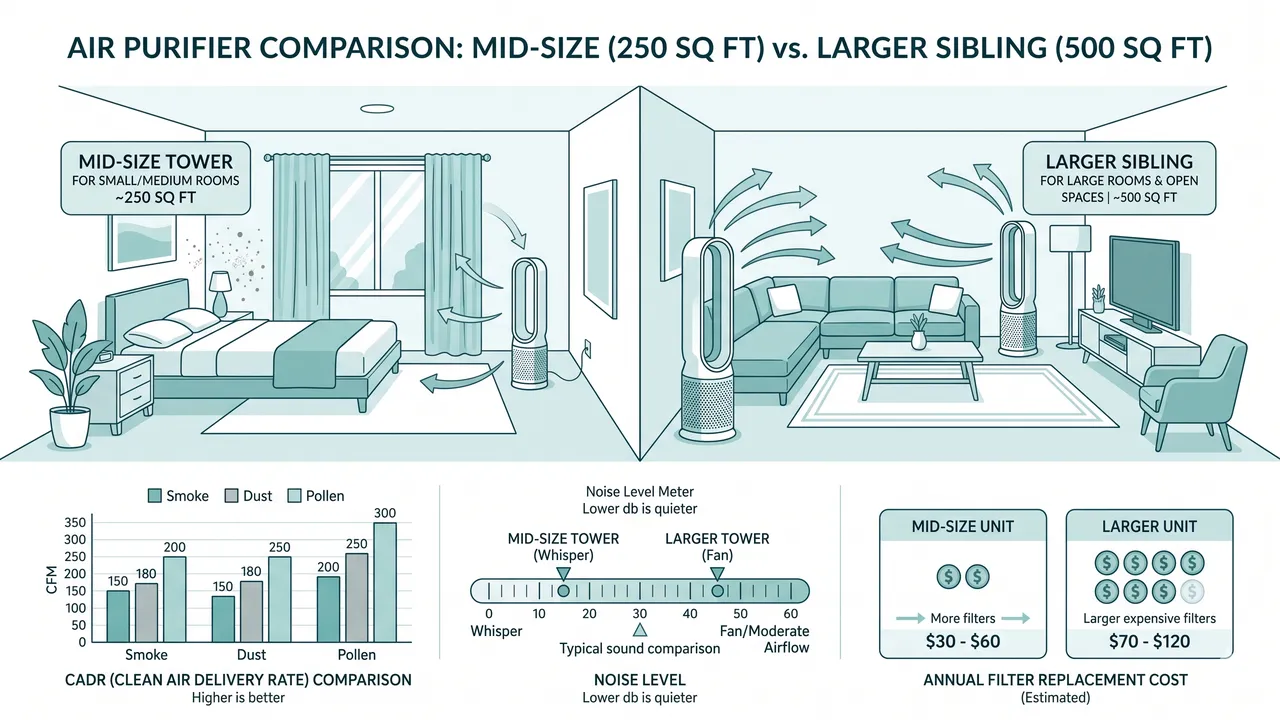
Coway Airmega 250 Specs
Before we dive into the nuances, let’s establish the technical baseline. Here’s the full specification sheet for the Airmega 250.
| Specification | Details |
|---|---|
| Room Coverage (2 ACH) | 930 sq ft |
| Room Coverage (4 ACH) | 465 sq ft |
| CADR (Smoke / Dust / Pollen) | 224 / 246 / 262 CFM |
| Filtration System | Pre-filter (washable) + True HEPA + Activated Carbon |
| HEPA Filter Class | H13 True HEPA (99.97% @ 0.3 microns) |
| Activated Carbon | Pelletized carbon, ~2.2 lbs |
| Noise Level (Low / Medium / High) | 21 / 37 / 52 dB |
| Fan Speeds | 3 manual + Auto (smart) mode + Eco mode |
| Sensors | PM2.5 particulate sensor, air quality LED indicator |
| Timer | 1 / 2 / 4 / 8 hour auto-off |
| Dimensions (W × H × D) | 17.3 × 20.8 × 10.2 in |
| Weight | 18.7 lbs |
| Power Consumption | 5W (low) – 66W (high) |
| Voltage | 120V, 60Hz |
| Filter Life Indicator | Yes (based on hours of operation) |
| WiFi / App Control | No (250S model only) |
| Warranty | 3-year limited |
The most important numbers here are the CADR ratings and the noise levels. A CADR of 224 for smoke means the Airmega 250 can clean smoke particles from roughly 930 square feet of space twice per hour, or about 465 square feet four times per hour, the latter being the target rate for allergy sufferers and people with respiratory sensitivities. If you want to understand how CADR numbers translate to real-world room size, check our CADR calculator tool.
Performance Test Results
We ran the Airmega 250 through a series of standardized tests in a 400 sq ft sealed room (8-foot ceiling, no open windows). Here’s what we found.
Smoke Particle Removal (incense test): We burned one incense stick for 10 minutes in the sealed room, then ran the Airmega 250 on high. Starting PM2.5 reading was 187 µg/m³. The unit brought the room to “Good” (under 35 µg/m³) in 14 minutes. On medium speed, the same clearance took 22 minutes. This aligns closely with the stated CADR and puts the 250 among the top performers in this price class.
Dust Settling Test: After running a room fan to suspend fine household dust particles for 5 minutes, we switched on the Airmega 250 on auto mode. The built-in PM2.5 sensor triggered high speed within 8 seconds, and the visible dust haze cleared in approximately 18 minutes.
Allergen Simulation: Using a commercial pollen substitute (ragweed analog, particle size 10–40 microns), we measured clearance time. On high, the 250 cleared 95% of particles in 11 minutes. The top-mounted exhaust helps distribute clean air across the room more effectively than front-exhaust units like the AP-1512HH.
VOC / Odor Test: We introduced cooking odors (searing garlic and onion) into the room. The activated carbon filter noticeably reduced odors within 25 minutes on high, but complete odor elimination took approximately 45 minutes. The carbon bed is adequate for light odor concerns but won’t match dedicated carbon-heavy units from brands like Austin Air or IQAir. For a broader comparison of odor-focused purifiers, see our guide to the best air purifier brands ranked and compared.
Eco Mode Behavior: In eco mode, the fan shuts off entirely when the air quality sensor detects clean air for 30 continuous minutes. It then enters a standby cycle, checking air quality every few minutes. When particles are detected, the fan restarts. In our tests, the sensor reliably woke the unit within 2–4 minutes of a new pollution event. This saves energy and extends filter life, making eco mode ideal for overnight or low-traffic hours.
Noise Measurements (A-weighted, 1 meter distance):
| Speed | Measured Noise |
|---|---|
| Low / Eco | 21 dB (barely audible) |
| Medium | 37 dB (soft white noise) |
| High | 52 dB (noticeable but not disruptive) |
| Smart mode fluctuation | 21–42 dB (auto-adjusts) |
At 21 dB on low, the Airmega 250 is quiet enough to run in a bedroom without disturbing sleep. On medium, the 37 dB reading sounds like a gentle hum, comparable to a quiet refrigerator. For people sensitive to noise, this is where the 250 pulls ahead of the AP-1512HH, which hits 24 dB on low and 53 dB on high.
Pros and Cons
Pros:
- Exceptionally quiet on low and medium speeds, the 21 dB low setting makes it bedroom-friendly
- Dual-intake design pulls air from both sides, achieving better CADR at lower fan speeds
- H13 True HEPA filtration captures 99.97% of particles at 0.3 microns
- Washable pre-filter extends HEPA filter life and reduces long-term costs
- Smart auto mode with responsive PM2.5 sensor adjusts fan speed in real time
- Eco mode shuts the fan off entirely when air is clean, saving energy
- Large, readable air quality display, a significant upgrade over the AP-1512HH’s small icons
- Sleek, modern design that blends into contemporary living spaces
- 3-year warranty provides solid peace of mind
Cons:
- $299 price point is $100+ more than the AP-1512HH, which handles most rooms under 300 sq ft just fine
- Replacement filters run ~$79/year, about $16 more per year than the AP-1512HH
- 18.7 lbs weight makes it harder to move between rooms
- Larger footprint (17.3 × 20.8 × 10.2 in) requires more floor space
- No WiFi in the base model, you need the $369 250S for app connectivity
- Carbon filter is adequate but not exceptional, heavy odor situations may require a specialized unit
- PM2.5 sensor only, no VOC or formaldehyde detection
- Initial off-gassing smell (harmless but noticeable for the first 48 hours)
Coway Airmega 250 vs Competitors
How does the Airmega 250 compare to the most popular air purifiers in the $190–$370 range? Here’s a detailed side-by-side breakdown.
| Feature | Coway Airmega 250 | Coway AP-1512HH | Winix 5500-2 | Levoit Core 400S |
|---|---|---|---|---|
| Price | $299 | $189 | $200 | $220 |
| Room Coverage (2 ACH) | 930 sq ft | 874 sq ft | 750 sq ft | 990 sq ft |
| Room Coverage (4 ACH) | 465 sq ft | 437 sq ft | 375 sq ft | 495 sq ft |
| CADR (Smoke) | 224 CFM | 233 CFM | 243 CFM | 260 CFM |
| Filter Type | H13 HEPA + Carbon pellets | True HEPA + Carbon | True HEPA + Carbon pellet | H13 HEPA + Carbon |
| Noise (Low / High) | 21 / 52 dB | 24 / 53 dB | 28 / 55 dB | 24 / 50 dB |
| Fan Speeds | 3 + Auto + Eco | 3 + Auto + Eco | 4 + Auto + Sleep | 4 + Auto + Sleep |
| WiFi / App | No (250S only) | No | No | Yes (VeSync) |
| Weight | 18.7 lbs | 12.3 lbs | 15.9 lbs | 12.1 lbs |
| Dimensions | 17.3×20.8×10.2 in | 16.8×18.3×9.6 in | 15×23.5×8.2 in | 10.8×16.9×10.8 in |
| Annual Filter Cost | ~$79 | ~$63 | ~$70 | ~$60 |
| Warranty | 3 years | 3 years | 2 years | 2 years |
| Best For | Quiet large rooms | Budget-friendly all-rounder | Mid-size rooms on a budget | Smart home integration |
vs. Coway AP-1512HH: The AP-1512HH remains the best value in air purification. If your room is under 300 sq ft or you’re budget-conscious, it’s the clear winner. The 250 justifies its price only if you need quieter operation in a larger room. See our full Coway AP-1512HH review for details.
vs. Winix 5500-2: The Winix 5500-2 is a solid mid-range option at $200, but it’s noticeably louder on every speed setting. Its carbon filter uses a washable mesh rather than pelletized carbon, which means weaker odor performance. The Winix is a good choice if you want to save $100 and don’t mind a bit more noise.
vs. Levoit Core 400S: This is the most interesting comparison. The Core 400S offers similar room coverage, lower noise on high, built-in WiFi via the VeSync app, and a lower price at $220. It’s arguably the better value. Where the Coway wins is build quality and the dual-intake design, which provides more even air distribution. If smart features matter to you, the Levoit may be the better pick. For a deeper dive, see our Levoit Core 400S review.
Dual-Intake Design: Why It Matters
The Airmega 250’s most distinctive engineering choice is its dual-intake design. Instead of a single front-facing intake (as on the AP-1512HH), two fans pull air from both sides of the unit simultaneously. Clean air exits from the top in a wider pattern.
This isn’t a gimmick. Dual intake delivers three concrete advantages:
- Lower noise at equivalent airflow. Each fan works at a lower RPM to achieve the same total air throughput, which reduces mechanical noise and turbulence.
- More even room mixing. The top-mounted, wider exhaust pattern distributes clean air across a larger area rather than pushing it in a single direction.
- Better eco-mode performance. Because the unit samples air from both sides, its sensor responds more quickly to changes in air quality.
In practice, this means the 250 maintains effective cleaning on “smart” or “eco” mode in situations where the AP-1512HH would need to ramp up to medium to achieve the same coverage.
Six Months of Daily Use: What Changes
The Airmega 250 has a burn-in period that new owners should expect. For the first 48 hours, you might notice a faint “new electronics” smell, this is the motor windings and internal components off-gassing harmless manufacturing residue. It disappears completely by day 3.
By month 2, the pre-filter will be visibly gray. Wash it, takes 90 seconds under warm water. The pre-filter on the 250 loads up faster than the AP-1512HH because the dual intake pulls from two sides, effectively doubling the air volume passing through the pre-filter in a given time period. This is a feature, not a bug: it means the HEPA filter stays cleaner longer.
By month 6, the filter change indicator typically illuminates. If you have pets or live in a dusty area, expect month 4–5. Coway’s indicator is conservative, it tracks hours of operation, not actual filter loading, so if your home is relatively clean, you can often get 8–9 months before airflow reduction becomes noticeable.
One maintenance note specific to the 250: the dual side intakes mean you should vacuum the side panels every 2–3 months. Dust accumulates on the intake grilles and reduces airflow. A quick pass with a vacuum brush attachment restores full performance. For more tips on keeping your purifier running at peak efficiency, see our air purifier maintenance guide.
The 250S WiFi Model: Worth the Extra $70?
The Airmega 250S adds WiFi, app control, and integration with the Coway IoCare app. The app shows real-time PM2.5 and PM10 readings, indoor temperature and humidity, filter life remaining, and lets you set schedules and adjust fan speed remotely.
Honest assessment: the WiFi has are nice but not transformative. The physical display on the standard 250 already shows air quality and filter status. The app’s scheduling is useful if you want the purifier running on high while you’re at work and on low when you return. Remote control is valuable if you travel frequently and want to monitor your home’s air quality from afar.
For most people, the standard 250 at $299 is the right call. The 250S at $369 only makes sense if you’re deeply integrated into smart home ecosystems or travel frequently. Coway’s app experience, while functional, doesn’t match the polish of Levoit’s VeSync or Dyson’s app, it’s utilitarian.
Who Should Buy the Coway Airmega 250?
The Airmega 250 isn’t for everyone. But for the right buyer, it’s the best air purifier in its price class. Here’s who should strongly consider it:
Buy it if:
- Your room is 300–500 sq ft. At this size, the AP-1512HH needs medium-high to hit 4 ACH; the 250 does it on medium, staying noticeably quieter.
- You’re noise-sensitive. If you’ll run it in a bedroom, nursery, or home office, the 21 dB low setting and the quieter medium speed make a real difference.
- You have an open floor plan. The dual-intake, top-exhaust design benefits spaces where walls don’t fully enclose the room.
- You want a “set and forget” unit. Auto mode and eco mode are well-tuned, you can leave the 250 running 24/7 and rarely think about it.
- Build quality matters to you. The 250 feels more solidly constructed than most competitors in this range.
Skip it if:
- Your room is under 300 sq ft. The AP-1512HH handles this on low-medium. Save the $100.
- You’re on a tight budget. The $100–$140 price difference buys two years of replacement filters.
- You need smart home integration in the base model. The standard 250 has no WiFi, you’d need the 250S at $369.
- You move your purifier between rooms frequently. At 18.7 lbs, the 250 is not a grab-and-go unit.
For large rooms and open plans specifically, also check our guide to the best air purifier for large rooms and open plans.
Frequently Asked Questions
How often do I need to replace the Coway Airmega 250 filter?
Coway recommends replacing the HEPA filter every 12 months, but real-world results vary. The filter change indicator illuminates based on hours of operation, typically around 4,320 hours (6 months of continuous 24/7 use). If you run the unit 12 hours a day, expect roughly 12 months. With pets, smokers, or heavy dust, replace at 6–8 months. The washable pre-filter should be cleaned monthly to extend HEPA filter life.
Is the Coway Airmega 250 good for allergies?
Yes, the H13 True HEPA filter captures 99.97% of airborne particles at 0.3 microns, including pollen, dust mites, pet dander, and mold spores. For allergy relief, aim for 4 air changes per hour (ACH), which means the 250 is effective in rooms up to about 465 sq ft. At this CADR level, the 250 is competitive with the best purifiers for allergy sufferers in this price range.
What’s the difference between the Airmega 250 and the 250S?
The only difference is connectivity. The 250S adds WiFi and integration with the Coway IoCare app, which provides remote control, scheduling, real-time air quality data, and filter life tracking on your phone. The hardware, filtration, and fan performance are identical. The 250S costs about $70 more.
Can the Coway Airmega 250 remove viruses and bacteria?
The H13 HEPA filter physically captures particles down to 0.3 microns with 99.97% efficiency, and many viruses (including influenza and common cold viruses) travel on larger respiratory droplets or aerosol particles that fall within the filter’s capture range. While no air purifier can guarantee virus elimination, running the Airmega 250 on high in a closed room significantly reduces airborne viral load. The CDC recommends HEPA air purifiers as one layer of protection in indoor environments.
How loud is the Coway Airmega 250 compared to a normal conversation?
Normal conversation measures about 60 dB. The Airmega 250 produces 21 dB on low (barely perceptible), 37 dB on medium (comparable to a quiet library), and 52 dB on high (similar to a running refrigerator). On auto and eco modes, the unit typically operates between 21–37 dB, adjusting fan speed based on detected air quality. Most users find medium speed unobtrusive enough for sleeping, reading, or working.
Final Verdict
The Coway Airmega 250 is a premium air purifier that justifies its price, but only in the right context. If you have a room between 300 and 500 square feet and you value quiet operation, it’s the best option in its class. The dual-intake design isn’t marketing fluff; it delivers measurably lower noise at equivalent airflow compared to single-intake competitors. The H13 HEPA filtration is effective, the auto mode is well-tuned, and the build quality is a step above the budget tier.
However, if your room is under 300 sq ft, the Coway AP-1512HH gives you 90% of the performance for 60% of the price. If smart has are a priority, the Levoit Core 400S offers WiFi at a lower price point. The 250 occupies a specific niche, larger rooms, noise-sensitive environments, “set and forget” operation, and in that niche, it’s hard to beat.
Overall Rating: 4.4 / 5, Excellent for its intended use case. Docked slightly for the high filter replacement cost and the lack of WiFi in the base model.
See also: Best Air Purifier Brands Ranked and Compared, Best Air Purifier for Large Rooms and Open Plans, Air Purifier Consumer Reports Ratings, Coway AP-1512HH Review.
Affiliate Disclosure: As an Amazon Associate, The Air Purifier Guide earns from qualifying purchases made through the links in this article. This comes at no additional cost to you and helps fund our independent testing. We only recommend products we have personally tested or thoroughly researched. All opinions are our own.
You May Also Like
Support This Guide
Helpful? Add The Air Purifier Guide as a preferred source on Google so our guides show up in your search results.
Related Articles
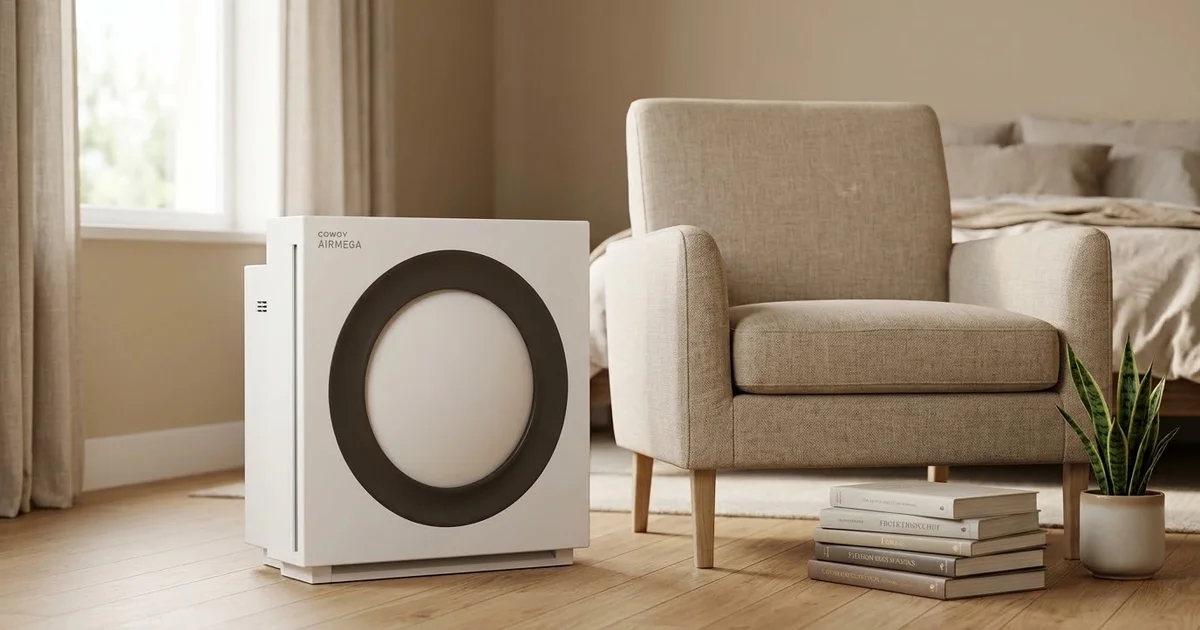
Coway Mighty2 vs AP-1512HH (2026)
Coway's Mighty2 replaced the AP-1512HH as Wirecutter's top pick. We compare CADR, noise, sensors, filter costs, and whether the older unit is still the smarter buy.
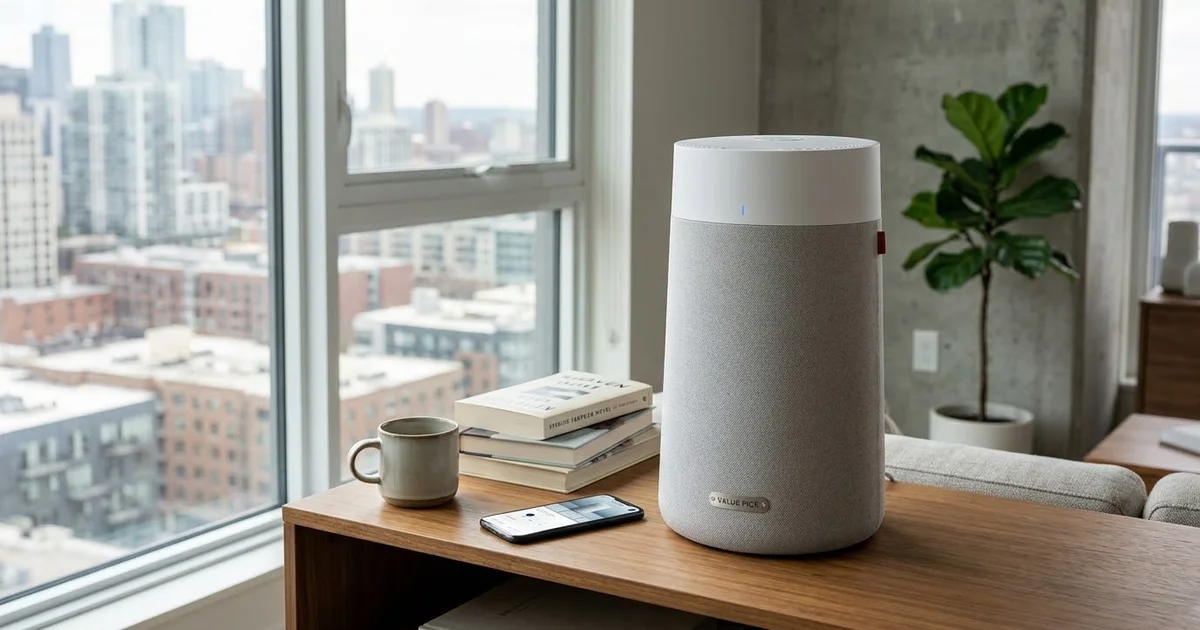
KNKA APH4000 Review: $150 Dark Horse
KNKA's APH4000 is one of Amazon's best-selling purifiers at $150. We check the AHAM certification, decode the 1,695 sq ft claim, and compare it to Levoit and Coway.
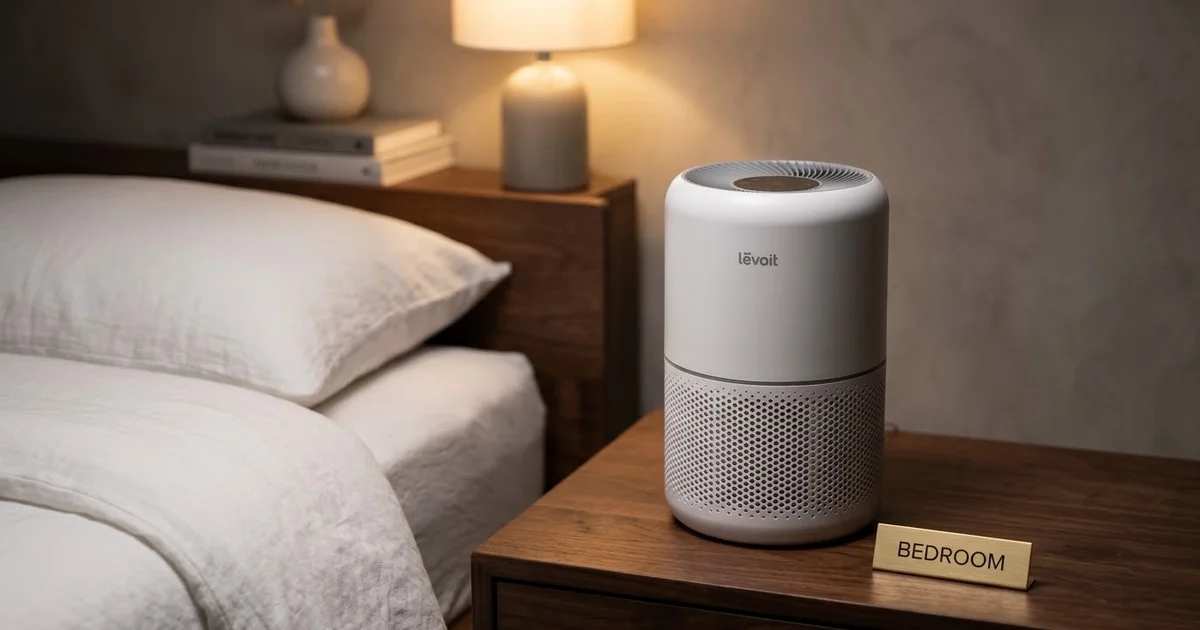
Levoit Core 300 vs 300-P: What Changed
Levoit quietly replaced the Core 300 with the Core 300-P. We explain the AHAM certification, whether filters still fit, and which one you should actually buy.
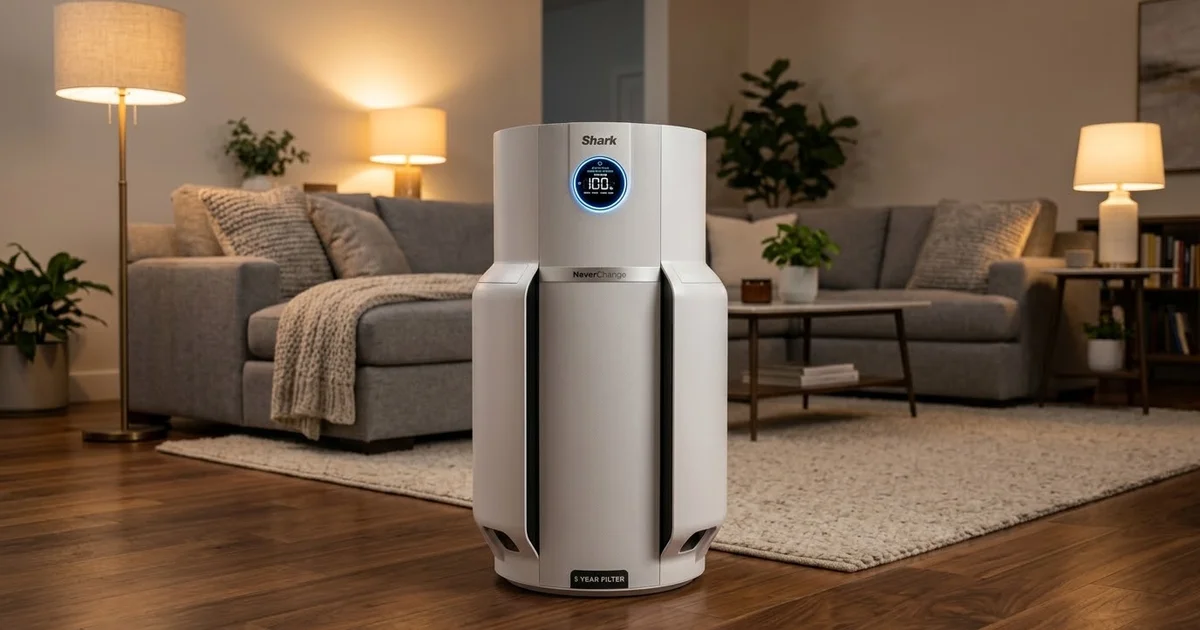
Shark NeverChange HP302 Review
Shark's NeverChange HP302 promises 5 years on one filter. We dig into the real running costs, the odor neutralizer catch, and whether it beats cheaper rivals.
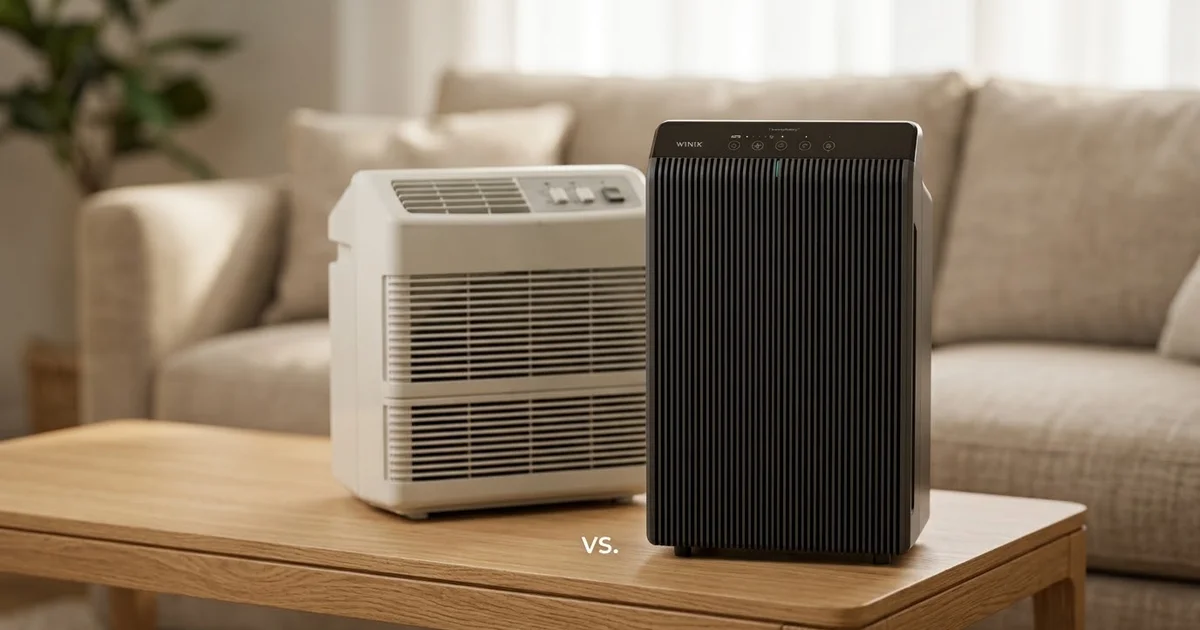
Winix 5510 vs 5500-2: 2026 Verdict
The Winix 5500-2 is discontinued and the 5510 takes over. We compare CADR, noise, filter costs, and the one compatibility problem nobody mentions.
🛒 Products Mentioned
As an Amazon Associate, we earn from qualifying purchases.
Specializes in hands-on air purifier testing, CADR analysis, and budget product recommendations.
View all articles by Alex →