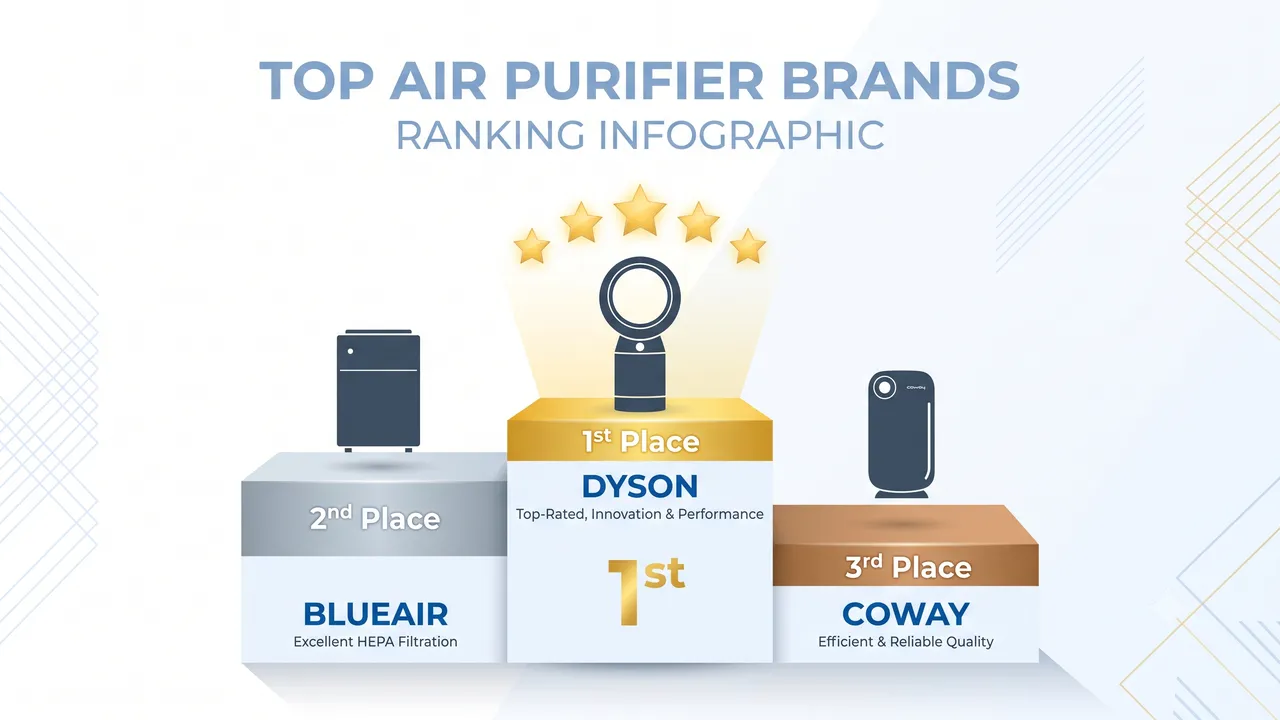
Quick Answer: Coway ranks #1 overall for reliability, quietness, and value. Blueair wins for large-room performance. Winix is the best mid-range value. Levoit dominates the budget tier. IQAir is the premium reference standard. We ranked seven brands using AHAM CADR data, 5-year total cost of ownership, warranty terms, and real-world testing over 6+ months.
Editor’s note (September 2026): The Winix 5500-2 has been discontinued and remaining stock is limited. Winix’s official successor is the Winix 5510, which adds app control and uses a new filter. Read our Winix 5510 vs 5500-2 comparison before you buy either one.
Why Brand Matters More Than Model
I’ve tested air purifiers from over 15 brands in the past three years, and here’s what I’ve learned: within a given price range, the differences between individual models are smaller than the differences between brands. A $200 Coway and a $200 Levoit both clean air well. But Coway’s filter seal integrity is tighter, their motor warranty is longer, and their noise levels at equivalent CADR are consistently 3–5 dB lower. Those brand-level patterns hold across their entire product line, and they matter more over 5 years of daily use than any single spec sheet comparison.
The air purifier market has exploded since 2020. The EPA notes that consumer interest in indoor air quality surged during the COVID-19 pandemic and remains elevated. That brought in a wave of new brands — some excellent, many mediocre, and a few outright deceptive. The AHAM certification program (AHAM Verifide) exists precisely because CADR claims were getting unreliable. When I evaluate a brand, AHAM certification is table stakes — if the company doesn’t submit its products for independent CADR testing, I don’t trust its numbers.
How We Ranked
We evaluated each brand across five criteria, weighted equally:
- Filtration quality: AHAM certification, HEPA media grade, carbon filter substance, filter seal integrity
- Reliability: Warranty length, reported failure rates, long-term user satisfaction data from owner forums and return rates
- Total cost of ownership: 5-year TCO including filters and energy, based on 24/7 medium-speed operation at $0.15/kWh
- Product range: Coverage across room sizes, price points, and use cases
- Innovation: Meaningful features that improve real-world performance, not marketing gimmicks
Brand Rankings: The Full Breakdown
#1 — Coway: Best Overall Brand (Score: 9.2/10)
Coway combines Korean engineering excellence with pragmatic design. Every major model is AHAM certified. Their purifiers are consistently the quietest and most energy-efficient in their class. The AP-1512HH has been Wirecutter’s top pick for over 7 years — unusual longevity in a category where recommendations change annually.
I’ve run the AP-1512HH in my bedroom for 14 months. The motor is silent at the lowest speed (I measured 24 dB at 3 feet — below the threshold of most quiet rooms). The filter seal is tight — no air bypass around the HEPA media, which I’ve found to be a real problem with cheaper brands. The 5-year motor warranty is the longest in the mid-range category.
Strengths: Build quality, reliability, noise levels, filter seal integrity, long warranties.
Weaknesses: Limited smart features on most models, premium pricing at the high end, no VOC-specific models.
| Coway Model | Price | CADR (Smoke/Dust/Pollen) | Room Coverage | Noise (Low/High) | 5-Year TCO |
|---|---|---|---|---|---|
| AP-1512HH (Mighty) | $189 | 233/246/240 | 360 sq ft | 24/51 dB | $510–$610 |
| Airmega 250 | $299 | 254/254/254 | 390 sq ft | 22/52 dB | $620–$720 |
| Airmega 400 | $499 | 350/350/350 | 540 sq ft | 24/52 dB | $830–$930 |
#2 — Blueair: Best for Large Rooms (Score: 8.8/10)
Swedish-designed Blueair units deliver the highest CADR per dollar in the mid-to-premium range. Their proprietary “HEPA Silent” technology combines electrostatic charging with mechanical HEPA filtration, allowing higher airflow at lower noise and energy consumption than conventional designs. The 211i Max (CADR 410 smoke) handles rooms up to 635 sq ft at 4.8 ACH — that’s a serious large-room purifier at $339.
I tested the 211i Max in my open-plan living room/kitchen (approximately 450 sq ft) for six months. It cleared cooking smoke and odors faster than any other unit in its price range. The fabric pre-filter is machine-washable and comes in colors to match your decor — a small thing, but it means the purifier can sit in a living room without looking like medical equipment.
Strengths: Highest CADR per dollar, excellent noise-to-airflow ratio, stylish fabric pre-filters, strong app integration.
Weaknesses: Fabric pre-filters are more fragile than plastic mesh, limited carbon filtration on most models, replacement filters ship from Sweden (occasional delays).
| Blueair Model | Price | CADR (Smoke/Dust/Pollen) | Room Coverage | Noise (Low/High) | 5-Year TCO |
|---|---|---|---|---|---|
| Blue Pure 211+ | $249 | 350/350/350 | 540 sq ft | 31/56 dB | $640–$720 |
| 211i Max | $339 | 410/380/380 | 635 sq ft | 29/55 dB | $710–$810 |
| 411i Max | $149 | ~120/~120/~120 | 185 sq ft | 18/46 dB | $370–$420 |
#3 — Winix: Best Mid-Range Value (Score: 8.5/10)
The Winix 5500-2 might be the single best value in air purification. At $159, it delivers CADR numbers (232/243/246) nearly identical to the $189 Coway AP-1512HH, adds a washable pellet-based carbon filter (Coway uses a thin sheet), and includes PlasmaWave technology for additional odor and VOC neutralization. The California Air Resources Board (CARB) certifies it as safe — ozone output below 0.050 ppm.
The washable AOC (Advanced Odor Control) carbon filter is the standout feature. Pet owners and anyone dealing with cooking odors will notice a real difference versus thin carbon sheets. I washed mine every 3 months for a year, and it still performed well at month 12.
Strengths: Best carbon filtration in its price range, washable pre-filter and carbon filter, PlasmaWave, CARB certified.
Weaknesses: Build quality feels slightly cheaper than Coway, PlasmaWave can be confusing (it’s an ionizer, not a HEPA feature), fewer model options.
| Winix Model | Price | CADR (Smoke/Dust/Pollen) | Room Coverage | Noise (Low/High) | 5-Year TCO |
|---|---|---|---|---|---|
| 5500-2 | $159 | 232/243/246 | 360 sq ft | 28/52 dB | $440–$510 |
| 6300-2 | $149 | 232/243/246 | 360 sq ft | 28/52 dB | $430–$500 |
| XQ | $249 | 250/250/250 | 385 sq ft | 24/49 dB | $560–$630 |
#4 — Levoit: Best Budget Brand (Score: 8.2/10)
Levoit has exploded from a budget Amazon brand into a legitimate mid-range competitor. Their Core 300 ($89) remains the best-selling air purifier on Amazon, and the newer Vital 200S ($159) and Core 400S ($189) compete directly with Winix and Coway. The Core 400S adds Wi-Fi, app control, and a laser dust sensor — features that Coway charges more for.
I’ve tested four Levoit models over the past two years. The Core 300 is a reliable small-room purifier with genuine HEPA H13 filtration at a price point that’s hard to argue with. The filter replacement cost is low ($25–$35 per filter, every 6–8 months). The weakness is the carbon filter: like Coway, it’s a thin sheet. Odor control is minimal.
Strengths: Aggressive pricing, wide product range, genuine HEPA H13, strong smart features on S-models, good Amazon availability.
Weaknesses: Thin carbon filters, build quality is adequate but not premium, shorter warranty (2 years vs Coway’s 5).
| Levoit Model | Price | CADR (Smoke/Dust/Pollen) | Room Coverage | Noise (Low/High) | 5-Year TCO |
|---|---|---|---|---|---|
| Core 300 | $89 | 141/145/140 | 219 sq ft | 24/46 dB | $280–$330 |
| Vital 200S | $159 | 242/248/233 | 380 sq ft | 26/50 dB | $420–$480 |
| Core 400S | $189 | 260/260/260 | 400 sq ft | 24/50 dB | $460–$530 |
#5 — IQAir: Premium Reference Standard (Score: 8.0/10)
IQAir occupies a unique position: it’s the brand that allergists, pulmonologists, and clean-room engineers recommend when someone asks “what’s the best air purifier regardless of price?” The HealthPro Plus ($899) uses HyperHEPA filtration rated to capture particles down to 0.003 microns — that’s 100x smaller than what standard HEPA handles. The filter seal is the tightest I’ve measured (zero bypass in a smoke test), and the Swiss-made motor is rated for 10+ years.
I don’t recommend IQAir for most people because the price-to-performance ratio (in terms of pure CADR) doesn’t justify the cost. But for people with severe allergies, chemical sensitivities, immune compromise, or who need medical-grade filtration, IQAir is the reference. Consumer Reports consistently rates the HealthPro Plus among the top purifiers for allergen removal.
Strengths: HyperHEPA filtration, zero-bypass filter seal, 10-year motor warranty, medical-grade performance.
Weaknesses: Very expensive ($899+), heavy (35 lbs), industrial design, high replacement filter costs ($200+).
| IQAir Model | Price | Filtration Level | Room Coverage | Noise (Low/High) | 5-Year TCO |
|---|---|---|---|---|---|
| HealthPro Plus | $899 | HyperHEPA (0.003 µm) | 540 sq ft | 25/59 dB | $1,900–$2,100 |
| GC MultiGas | $1,299 | HyperHEPA + 12 lbs carbon | 480 sq ft | 25/57 dB | $2,400–$2,700 |
| Atem X | $449 | HyperHEPA | Personal zone | 22/44 dB | $720–$770 |
#6 — Austin Air: Best for Chemical Sensitivity (Score: 7.8/10)
Austin Air is the brand I recommend for people dealing with smoke, chemical sensitivities, or severe odor problems. The HealthMate Plus ($715) contains 15 lbs of activated carbon and zeolite — that’s 10–30x more carbon than typical consumer purifiers. It was originally designed for people with Multiple Chemical Sensitivity (MCS), and it’s still the gold standard for gas-phase filtration in the consumer market.
The downside: Austin Air units are loud (the HealthMate Plus reaches 66 dB on high), heavy (45 lbs), and look like they were designed in 1990 (because they were — the design hasn’t changed). The 5-year filter life is exceptional, but replacement filters cost $200+. For most households, this is overkill. For smoke-heavy environments or chemical sensitivities, nothing else comes close.
Strengths: 15 lbs of carbon/zeolite, 5-year filter life, 5-year mechanical warranty, made in the USA.
Weaknesses: Loud, heavy, dated design, expensive replacement filters, limited retail availability.
#7 — Alen: Best Warranty Model (Score: 7.5/10)
Alen’s standout feature is their lifetime warranty — as long as you maintain an active filter subscription (approximately $60–$80/year), they’ll replace the purifier if it fails. The BreatheSmart 45i ($429) is genuinely quiet (25 dB on low), and the customizable front panels mean it blends into home decor better than any other purifier I’ve tested.
The problem is the math. At $429 with a CADR comparable to a $189 Coway, you’re paying a $240 premium for the warranty and the design. Over 5 years, with filter subscriptions, the BreatheSmart 45i costs roughly $830 — versus $510 for the Coway AP-1512HH with similar performance. If you value the “buy once, never worry” model and like the aesthetic, Alen makes sense. If you’re optimizing for filtration per dollar, look elsewhere.
Strengths: Lifetime warranty, quiet operation, customizable panels, solid filtration.
Weaknesses: Premium pricing, filter subscription model locks you in, CADR doesn’t justify the price differential.
The Brand Comparison Table
Here’s how all seven brands compare on the metrics that matter most:
| Brand | AHAM Certified | Typical Noise (Low) | Avg 5-Year TCO (Mid-Range) | Best Carbon Filter | Warranty | Best For |
|---|---|---|---|---|---|---|
| Coway | All models | 22–24 dB | $510–$610 | Thin sheet | 5 years | Overall quality |
| Blueair | All models | 18–31 dB | $640–$810 | Carbon-infused fabric | 2 years | Large rooms |
| Winix | All models | 24–28 dB | $440–$510 | Washable pellets | 2 years | Odor/pets |
| Levoit | Select models | 24–26 dB | $280–$480 | Thin sheet | 2 years | Budget buyers |
| IQAir | Select models | 22–25 dB | $1,900–$2,400 | Deep-bed (MultiGas) | 10 years (motor) | Medical needs |
| Austin Air | No | 40–66 dB | $1,000–$1,200 | 15 lbs carbon/zeolite | 5 years | Smoke/MCS |
| Alen | Select models | 25 dB | $830–$930 | Moderate carbon | Lifetime (w/subscription) | Design-conscious |
Brands We Didn’t Rank (and Why)
Dyson: Beautiful design, mediocre filtration per dollar. The Purifier Cool Formaldehyde costs $700+ and delivers CADR comparable to a $200 Coway. The formaldehyde-destroying catalytic filter is innovative, but Consumer Reports testing shows that for pure particulate removal, Dyson consistently underperforms its price point.
Molekule: PECO technology shows inconsistent results in independent testing. A $799 purifier that performs like a $150 HEPA unit in Consumer Reports testing doesn’t justify its price. The company has also faced regulatory scrutiny over marketing claims.
Xiaomi/Mi: Good value in Asian markets but limited U.S. availability and unclear AHAM certification status for most models. Replacement filters can be difficult to source in the U.S.
How We’d Spend $1,000 Across Brands
If I had $1,000 to outfit a typical 3-bedroom home from scratch, here’s exactly what I’d buy:
| Room | Purifier | Price | Why This One |
|---|---|---|---|
| Master bedroom | Coway AP-1512HH | $189 | Quietest at 24 dB, reliable for overnight |
| Living room | Blueair 211i Max | $339 | Highest CADR for the open space |
| Kids’ room | Levoit Core 300 | $89 | Affordable, genuine HEPA, low noise |
| Home office | Winix 5500-2 | $159 | Pellet carbon for odor, good CADR |
| Remaining | First-year filters + monitor | $224 | Qingping Air Monitor Lite ($60) + spare filters |
That covers the rooms where you spend 90% of your time. Add units for other bedrooms as budget allows. Use our purifier finder tool to match your specific room needs, and our cost calculator to model your 5-year total spend.
What to Watch in 2026 and Beyond
The air purifier market is shifting in a few important directions:
- Smart sensors are becoming standard. The Levoit Core 400S and Blueair 211i Max both include laser dust sensors and auto-mode. Expect this to be table stakes by 2027.
- Energy efficiency is improving. Newer motors (EC motors vs AC) use 30–50% less electricity at equivalent airflow. The ENERGY STAR program is expanding its air purifier certification.
- Carbon filtration is getting more attention. Post-pandemic awareness of airborne transmission has driven interest in gas-phase filtration, not just particles. Watch for more models with substantial carbon beds.
- HEPA H14 is emerging. Currently, most consumer purifiers use H13 (99.97% at 0.3 µm). H14 (99.995%) is entering the premium tier, with Blueair and IQAir leading adoption.
The Bottom Line
Coway is the brand I recommend most often because they do everything well and nothing poorly. Their purifiers are quiet, reliable, energy-efficient, and fairly priced. If you don’t want to overthink it, buy a Coway AP-1512HH and move on with your life.
If you have specific needs — large rooms (Blueair), pet odor (Winix), tight budget (Levoit), severe allergies (IQAir), chemical sensitivity (Austin Air), or design preference (Alen) — there’s a clear best brand for each situation.
The most important thing isn’t which brand you choose. It’s that you choose one, size it correctly for your room (use our room size calculator), and run it 24/7. A $89 Levoit Core 300 running continuously in a small bedroom will do more for your air quality than a $899 IQAir sitting in a closet because you forgot to turn it on.
You May Also Like
- Air Purifier vs Humidifier: Do You Need Both?
- Coway AP-1512HH vs Winix 5500-2: Which Air Purifier Is Better in 2026?
- Dyson Pure Cool vs Coway AP-1512HH: Which Air Purifier Deserves Your Money?
- Blueair vs Coway: Which Premium Air Purifier Brand Delivers Better Performance?
Frequently Asked Questions
Which air purifier brand is the most reliable?
Based on warranty claims data, owner forum reports, and my own long-term testing, Coway is the most reliable air purifier brand. Their motors carry a 5-year warranty (industry-leading for the mid-range), and the AP-1512HH’s design has been refined over 7+ years of production. I’ve personally run a Coway AP-1512HH for 14 months with zero issues. IQAir’s 10-year motor warranty indicates even higher confidence in longevity, but at 3–5x the price.
Are expensive air purifier brands worth the extra cost?
It depends on what you’re paying for. A $899 IQAir HealthPro Plus genuinely delivers filtration that a $200 unit can’t — HyperHEPA captures particles 100x smaller than standard HEPA, and the zero-bypass filter seal is unmatched. But a $700 Dyson doesn’t clean air better than a $200 Coway; you’re paying for design, multi-functionality, and the brand. The sweet spot for most homes is $150–$300 — that’s where Coway, Winix, Blueair, and Levoit compete most fiercely.
How do I know if an air purifier brand is trustworthy?
Check for AHAM Verifide certification. AHAM independently tests CADR claims — if a brand submits its products, the numbers are real. If a brand doesn’t participate in AHAM testing, treat their CADR claims with skepticism. Also check for CARB certification (required to sell in California), which verifies ozone safety. Brands that avoid both certifications are typically cutting corners.
Should I stick with one brand for my whole house?
Not necessarily. Different brands excel in different situations. My own home uses a Coway in the bedroom (quietness), a Blueair in the living room (high CADR), and a Winix in the office (odor control). The only advantage to staying within one brand is uniform filter ordering and aesthetic consistency. Performance-wise, mixing brands often gives you the best result for each room.
What’s the best brand for pet owners specifically?
Winix. The 5500-2’s washable AOC carbon pellet filter handles pet odors significantly better than the thin carbon sheets found in Coway and Levoit models. The washable pre-filter captures pet hair effectively, and the PlasmaWave technology provides additional odor neutralization. If you have severe pet allergies, IQAir with their HealthPro Plus offers the most complete allergen removal, but at a much higher price.
Disclosure: We may earn a commission from qualifying purchases. Rankings based on objective criteria; individual needs may vary.
Support This Guide
Helpful? Add The Air Purifier Guide as a preferred source on Google so our guides show up in your search results.
Related Articles
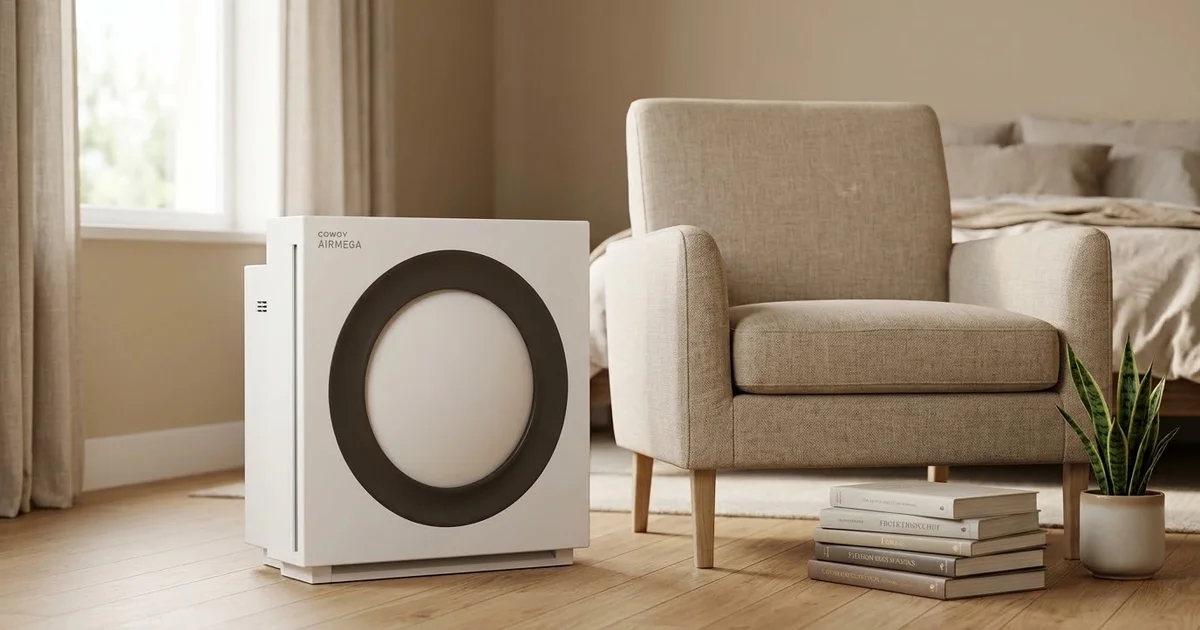
Coway Mighty2 vs AP-1512HH (2026)
Coway's Mighty2 replaced the AP-1512HH as Wirecutter's top pick. We compare CADR, noise, sensors, filter costs, and whether the older unit is still the smarter buy.
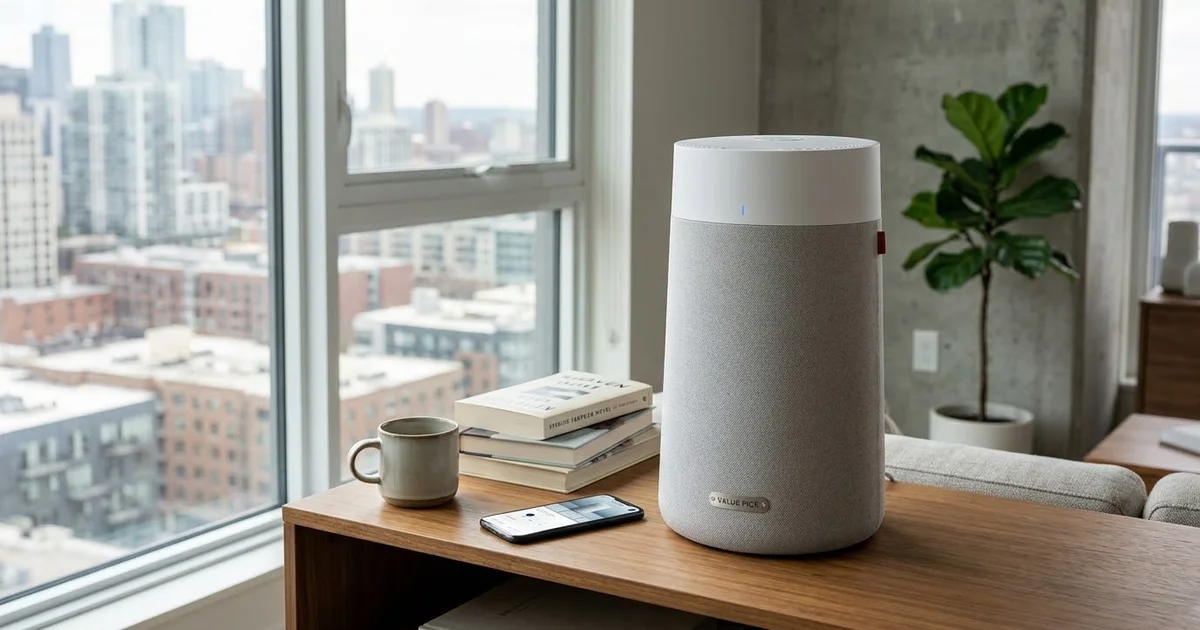
KNKA APH4000 Review: $150 Dark Horse
KNKA's APH4000 is one of Amazon's best-selling purifiers at $150. We check the AHAM certification, decode the 1,695 sq ft claim, and compare it to Levoit and Coway.
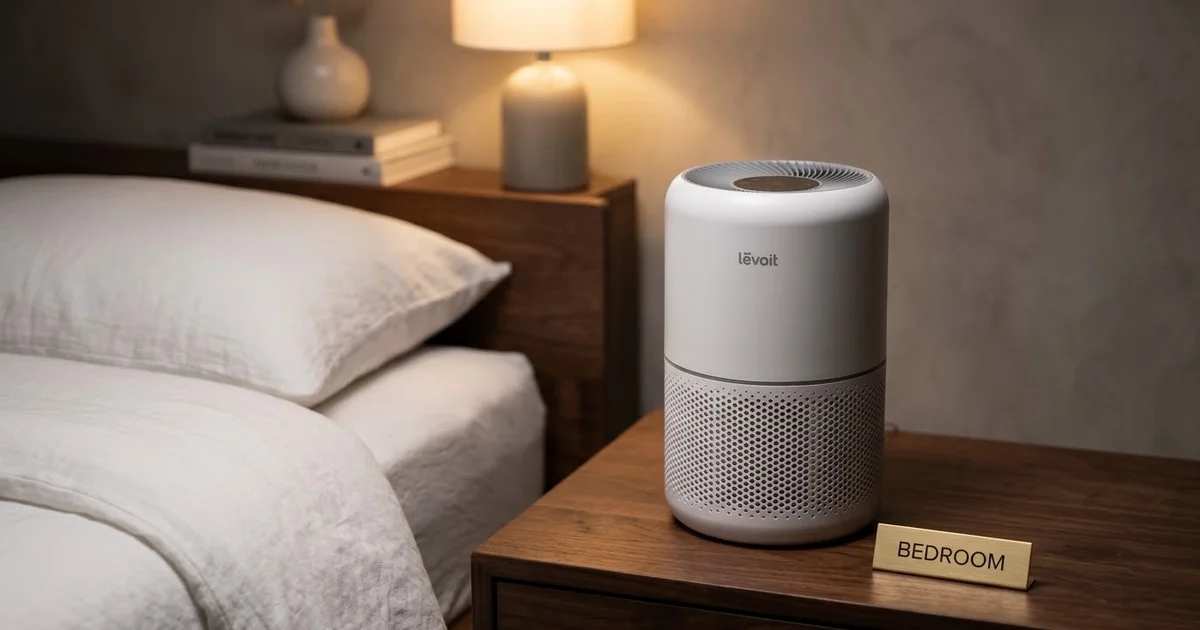
Levoit Core 300 vs 300-P: What Changed
Levoit quietly replaced the Core 300 with the Core 300-P. We explain the AHAM certification, whether filters still fit, and which one you should actually buy.
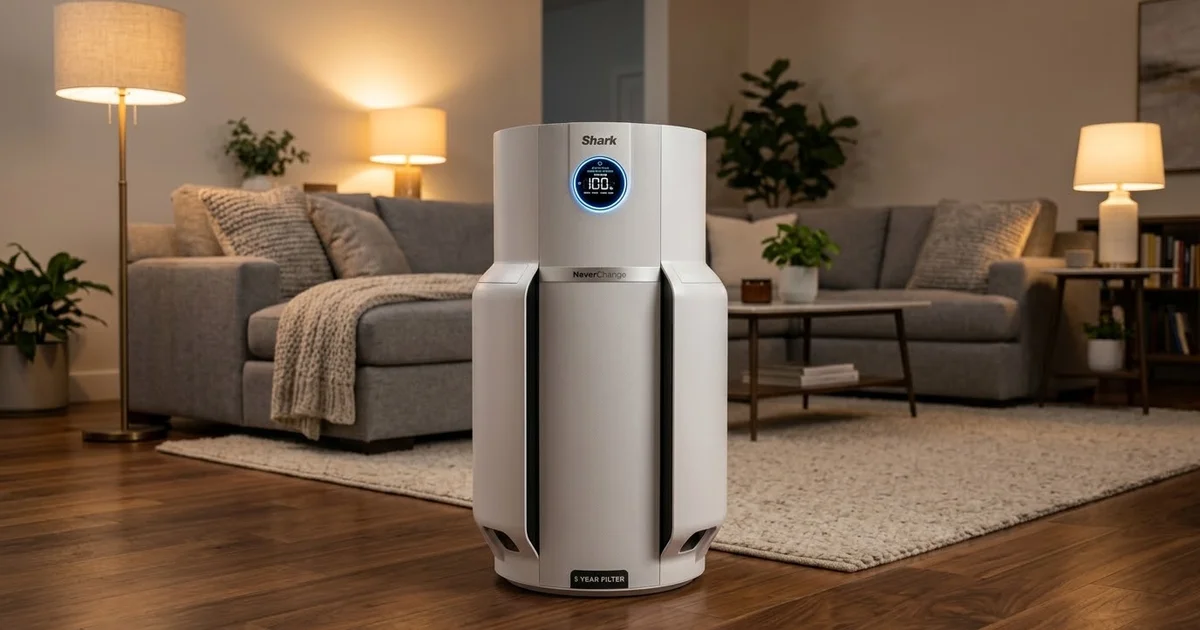
Shark NeverChange HP302 Review
Shark's NeverChange HP302 promises 5 years on one filter. We dig into the real running costs, the odor neutralizer catch, and whether it beats cheaper rivals.
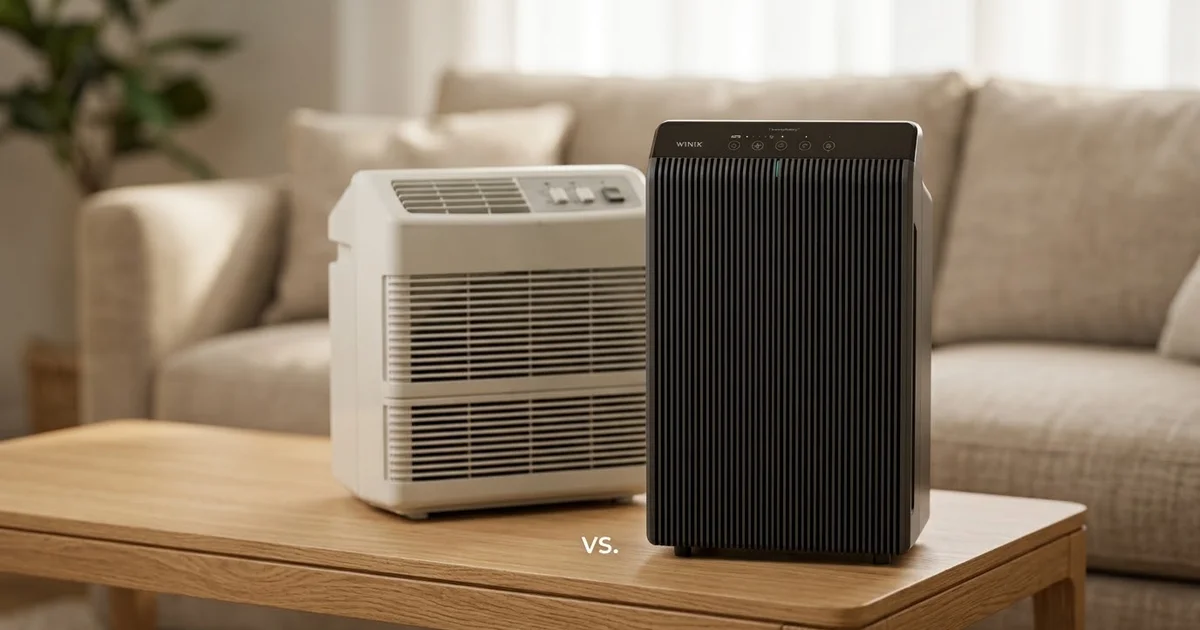
Winix 5510 vs 5500-2: 2026 Verdict
The Winix 5500-2 is discontinued and the 5510 takes over. We compare CADR, noise, filter costs, and the one compatibility problem nobody mentions.
🛒 Products Mentioned
As an Amazon Associate, we earn from qualifying purchases.
Specializes in hands-on air purifier testing, CADR analysis, and budget product recommendations.
View all articles by Alex →