Quick Answer: Box breathing — also called square breathing — is a slow, structured pattern where you inhale for 4 seconds, hold for 4, exhale for 4, and hold for 4, then repeat. Each “side” of the box is equal, which is what makes the pattern so easy to remember under pressure. It works by slowing your breathing rate and lengthening the exhale-hold, which nudges your autonomic nervous system out of “fight-or-flight” mode and toward “rest-and-digest.” Navy SEALs use it before high-stakes missions, and clinicians teach it for anxiety, panic, and performance stress. You can start feeling calmer in as little as 4–6 rounds (about 90 seconds). The best part: it’s free, invisible, and works anywhere.
Open our free interactive breathing timer and tap the “Box Breathing” mode — the animated circle expands as you inhale, holds steady, and contracts as you exhale, so you never have to count in your head. Follow along for the exercises below.
When you’re stressed, your breathing is one of the very few parts of your nervous system you can consciously control. You can’t will your heart rate down or tell your adrenal glands to stop pumping cortisol — but you can change how you breathe, and that single lever quietly resets everything downstream. Box breathing is the most reliable, easy-to-teach version of that reset. I’ve taught it to nervous first-time speakers, tested it against 4-7-8 breathing during deadline crunches, and used it myself in the dentist’s chair. This guide covers exactly what it is, the physiology behind why it works, a clean step-by-step walkthrough, and when to reach for it.

What Is Box Breathing?
Box breathing gets its name from the shape you can picture while doing it: a square with four equal sides. Each side represents one four-second phase of the breath cycle:
- Side 1 — Inhale for 4 seconds
- Side 2 — Hold (lungs full) for 4 seconds
- Side 3 — Exhale for 4 seconds
- Side 4 — Hold (lungs empty) for 4 seconds
Then you trace the box again. One complete “lap” takes 16 seconds, which works out to roughly 3–4 breaths per minute — dramatically slower than the 12–20 breaths per minute most adults take at rest. That slowdown is the whole point.
The technique is sometimes called square breathing, four-square breathing, or tactical breathing. That last name comes from its adoption by the U.S. military. Former Navy SEAL commander Mark Divine popularized it as a way for operators to stay clear-headed in genuinely life-or-death situations, and it has since spread to first responders, athletes, surgeons, and anyone who needs to think straight while their body is screaming panic.
What makes box breathing special compared to just “taking a deep breath” is the symmetry and the holds. The equal timing gives your mind a simple, repeatable structure to lock onto — you’re never wondering “how long was that?” — and the two pauses are where a lot of the calming magic happens.
Why Box Breathing Works: The Physiology of Calm
Stress isn’t just a feeling; it’s a full-body cascade. When your brain perceives a threat — a hostile email, a merging semi-truck, a job interview — the sympathetic nervous system fires. Your heart rate climbs, blood pressure rises, muscles tense, and the adrenal glands release stress hormones including cortisol and adrenaline. This is the classic “fight-or-flight” response. It’s brilliant for escaping predators and useless for answering a tough question in a meeting.
The counterbalance is the parasympathetic nervous system, often summarized as “rest-and-digest.” A key player here is the vagus nerve, which runs from the brainstem to the heart and gut. When vagal activity is high, your heart rate slows and your body reads the situation as safe. Box breathing is essentially a manual override switch for this system.
Here’s the mechanism, step by step:
-
Slow breathing raises vagal tone. Research consistently shows that breathing at roughly 5–6 breaths per minute maximizes heart rate variability (HRV) — the beat-to-beat variation in your heartbeat that serves as a proxy for parasympathetic (vagal) activity. Higher HRV is associated with better stress resilience and emotional regulation. A body of work published across peer-reviewed physiology journals (including titles in the Journal of neuroscience and applied psychophysiology literature) has mapped this “resonance frequency” of slow breathing.
-
The exhale and the empty-hold do the heavy lifting. Your heart rate naturally rises slightly on the inhale and falls on the exhale (a phenomenon called respiratory sinus arrhythmia). Extending the exhale — and box breathing’s four-second empty pause afterward — biases the system toward that heart-rate-lowering, calming phase.
-
Slow breathing lowers cortisol and perceived stress. Controlled-breathing interventions have been shown to reduce salivary cortisol and self-reported stress. A frequently cited study on diaphragmatic breathing, published in Frontiers in Psychology, found that a structured breathing practice reduced cortisol and improved attention in healthy adults. Findings like these are why breathing exercises now appear in clinical stress-management protocols.
-
It occupies the “worry” part of your brain. Counting to four, four times, gives your prefrontal cortex a simple task. That crowds out rumination and interrupts the anxious feedback loop where your racing thoughts feed your racing body and vice versa.
Public-health bodies have taken note. The CDC lists slow, deep breathing among recommended coping strategies for managing stress, and the WHO includes structured breathing exercises in its widely distributed stress-management guidance (its illustrated Doing What Matters in Times of Stress guide teaches a “slow breathing” practice built on exactly this principle). None of this requires special equipment or belief — it’s mechanical.
A note, not a promise: Breathing techniques are a well-supported tool for everyday stress and mild anxiety, but they are not a treatment for panic disorder, PTSD, cardiovascular disease, or any medical condition. If you experience frequent panic attacks, chest pain, or overwhelming anxiety, please talk to a doctor or licensed mental-health professional.
How to Do Box Breathing: 4 Steps, 4 Seconds Each
Sit upright in a chair with your feet flat on the floor, or lie down. Rest one hand on your belly so you can feel it rise — you want the breath to come from your diaphragm (belly out on the inhale), not your shoulders. If it helps, imagine your finger tracing the four sides of a square as you go.
Step 1 — Inhale (4 seconds). Trace up the left side of the box. Breathe in slowly and smoothly through your nose for a count of four. Feel your belly expand first, then your lower ribs. Don’t gulp — the inhale should be quiet and controlled. By the count of four, your lungs are comfortably (not maximally) full.
Step 2 — Hold full (4 seconds). Trace across the top of the box. Keep the air in without straining. Your throat and jaw should stay relaxed — you’re pausing, not clamping down. This top hold lets oxygen exchange settle and adds to the deliberate, unhurried rhythm.
Step 3 — Exhale (4 seconds). Trace down the right side of the box. Release the breath slowly through your nose or gently pursed lips over four counts. Let your belly fall. Aim for a steady, even stream of air rather than a sudden whoosh — a controlled exhale is where much of the parasympathetic calming happens.
Step 4 — Hold empty (4 seconds). Trace across the bottom, back to the start. Rest with your lungs empty for four counts. This is the phase beginners often skip, but it’s a signature feature of box breathing. It should feel calm, not like you’re starving for air. If four seconds feels like too long here, that’s normal at first — see the beginner tip below.
Then start over at Step 1. Repeat for 4 to 6 rounds to interrupt an acute stress spike (about 60–90 seconds), or 5 to 10 minutes for a deeper daily practice. Our breathing timer tool animates all four sides so you can keep your eyes closed and simply follow the expanding and contracting circle.
When to Use Box Breathing
The beauty of box breathing is that it’s completely invisible — no one at the conference table knows you’re doing it. Reach for it in these situations:
Acute Work Stress
Got a brutal email, a surprise escalation, or a meeting that’s going sideways? Do 4 rounds before you respond. You’ll answer from your prefrontal cortex instead of your amygdala — clearer, less reactive, and far less likely to be something you regret.
Before a Performance or Competition (“Pre-Game” Nerves)
Athletes, speakers, musicians, and test-takers all face the same problem: adrenaline that’s too high to perform well. Box breathing for two to three minutes beforehand brings arousal down into the “focused but calm” sweet spot. This is precisely the tactical-breathing use case the military trains for.
At the First Sign of Panic
When you notice the early warning signs — tight chest, racing heart, a flush of dread — box breathing can help you catch the spiral before it takes off. The empty-hold phase, in particular, counteracts the fast, shallow over-breathing that fuels panic. (Again: recurrent panic attacks warrant professional support.)
To Sharpen Focus
Feeling scattered before deep work? A few rounds acts like a reset button for attention. Many people use it as a two-minute transition ritual between tasks, or before sitting down to write, code, or study.
As Part of a Wind-Down Routine
Paired with a clean, quiet sleep environment, box breathing makes an excellent bedtime cue. Cleaner air and slower breathing work on the same goal from two directions — see our deep dive on how air purifiers and sleep quality reinforce each other. If the air you’re breathing all night is loaded with dust and dander, your nervous system never fully stands down; a quiet bedroom purifier removes that low-grade irritant load so your breathing practice can actually land.
Box Breathing vs. 4-7-8 Breathing: Which Should You Use?
These two are the most popular structured breathing patterns, and people often ask which is “better.” They’re built for slightly different jobs.
| Feature | Box Breathing (4-4-4-4) | 4-7-8 Breathing |
|---|---|---|
| Pattern | Inhale 4, hold 4, exhale 4, hold 4 | Inhale 4, hold 7, exhale 8 |
| Symmetry | Equal on all four sides | Exhale-dominant (long out-breath) |
| Empty hold | Yes | No |
| Best for | Staying calm and alert under pressure | Winding down, falling asleep |
| Feel | Steady, grounding, focused | Sedating, deeply relaxing |
The key difference: box breathing keeps you calm but alert, which is why it’s the tactical choice for high-pressure moments where you still need to think and act. 4-7-8 has a much longer exhale and no empty pause, making it more sedating — ideal for bedtime or true relaxation. If you want to learn the sleep-focused cousin, see our full 4-7-8 breathing technique guide. And if breathing is one part of a broader anxiety toolkit you’re building, our guide on how to stop anxiety with breathing walks through choosing the right pattern for the moment.
A simple rule of thumb: use box breathing when you need to perform; use 4-7-8 when you need to rest.
Common Box Breathing Mistakes
Even a technique this simple has a few reliable pitfalls. Avoiding them makes the difference between “meh” and genuinely effective.
- Breathing from the chest, not the belly. Shallow chest breathing keeps you in a stress posture. Put a hand on your stomach and make sure it — not your shoulders — moves first.
- Straining during the holds. The pauses should feel like a gentle rest, not like you’re holding your breath underwater. If you feel tension in your throat, chest, or face, you’re gripping too hard. Ease off.
- Going too fast. Anxiety makes us rush everything, including relaxation. If four seconds feels impossibly slow, that’s a sign you need it. Use a timer so you don’t unconsciously speed up.
- Forcing a maximal inhale. You want comfortably full lungs (around 70–80%), not a strained, over-inflated chest. Over-breathing can actually make you lightheaded.
- Giving up after one round. A single cycle rarely does much. The nervous-system shift builds over 4–6 rounds. Be patient.
- Doing it standing up the first few times. If you’re prone to lightheadedness, practice seated until the empty-hold feels natural.
Advanced: Extending to 5-5-5-5 and Beyond
Once 4-4-4-4 feels easy — usually after a week or two of regular practice — you can lengthen the box to deepen the effect. The most common progression is 5-5-5-5: inhale 5, hold 5, exhale 5, hold 5. That drops you to three breaths per minute and pushes you closer to the “resonance frequency” range where HRV benefits peak.
Some experienced practitioners go to 6-6-6-6 or extend just the exhale and empty-hold (for example, 4-4-6-6) for an even more calming, 4-7-8-like effect while keeping the box structure. There’s nothing magic about the exact numbers — the principles are what matter: slow the rate, keep it smooth, and never strain. If any longer count makes you gasp on the next inhale, drop back down. The goal is calm, not endurance.
Whatever length you choose, consistency beats intensity. Two minutes every day builds a more resilient baseline than one occasional twenty-minute session. Many people anchor it to an existing habit — first thing after sitting at their desk, or right before they close their eyes at night.
Clean Air Amplifies the Payoff
Here’s a connection that’s easy to miss: the quality of the air you’re breathing shapes how well any breathing practice works. Box breathing asks you to breathe deeply and deliberately. If each of those deep breaths delivers pollen, fine particulate matter, or pet dander deep into your airways, you’re pairing a calming ritual with a low-grade irritant. That’s especially relevant for older adults, whose respiratory resilience declines with age — our guide on air purifiers for elderly and senior health explains why clean indoor air matters more as we get older, and for allergy sufferers, our roundup of the best air purifiers for allergies covers which units clear the airborne triggers that keep your nervous system on edge.
For a calm-breathing corner at home or your desk, you don’t need anything fancy. A compact, quiet HEPA unit like the Levoit Core 300 is nearly silent on its lowest setting — ideal for a meditation nook — while the proven Coway AP-1512HH handles larger living rooms and home offices. Cleaner air plus slower breathing tackle stress from two angles: one removes the physical irritants that keep your body subtly alert, the other tells your nervous system it’s safe to stand down.
Frequently Asked Questions
How long does it take for box breathing to work?
Most people feel a noticeable shift within 4–6 rounds — about 60 to 90 seconds. The effect deepens with a few minutes of practice, and regular daily use builds a calmer baseline over weeks.
How many times a day should I do box breathing?
There’s no strict limit. A common approach is a short 2–3 minute session once or twice a day, plus “as needed” rounds whenever stress spikes. Even a single round before a difficult conversation helps.
Is box breathing safe?
For most healthy people, yes — it’s gentle and low-risk. If you feel dizzy, shorten the counts or skip the empty-hold at first. If you have a respiratory or cardiovascular condition, are pregnant, or experience recurrent panic attacks, check with your doctor before starting a breath-hold practice.
Why do Navy SEALs use box breathing?
Because it keeps them calm and alert. In high-stakes situations, they need to lower adrenaline enough to think clearly without becoming drowsy. Box breathing’s balanced, symmetrical structure hits that “focused calm” state, which is why it’s also called tactical breathing.
Can box breathing help with anxiety?
It’s a well-supported tool for everyday stress and mild anxiety, and it can interrupt the early stages of a panic spiral. It is not a substitute for professional treatment of an anxiety disorder — see our guide on how to stop anxiety with breathing for a fuller toolkit, and consult a professional for persistent symptoms.
Should I breathe through my nose or mouth?
Nose breathing is generally preferred for both the inhale and exhale because it’s slower, more controlled, and filters the air. Some people find a gently pursed-lip exhale easier at first — either is fine as long as the breath stays smooth.
What’s the difference between box breathing and meditation?
Box breathing is a specific structured breathing pattern; meditation is a broader practice of directing attention. You can use box breathing as a meditation anchor, but you don’t have to meditate to benefit from it — it works purely on the physiology.
Box breathing is proof that the simplest tools are often the most powerful. Four seconds in, four to hold, four out, four to hold — a square you can trace anywhere, anytime, with nothing but your own breath. Pair it with clean, quiet air and a couple of minutes of consistency, and you’ve got a stress-management practice that costs nothing and travels everywhere you do. Fire up the breathing timer, choose Box Breathing, and take your first lap around the square.
Support This Guide
Helpful? Add The Air Purifier Guide as a preferred source on Google so our guides show up in your search results.
Related Articles
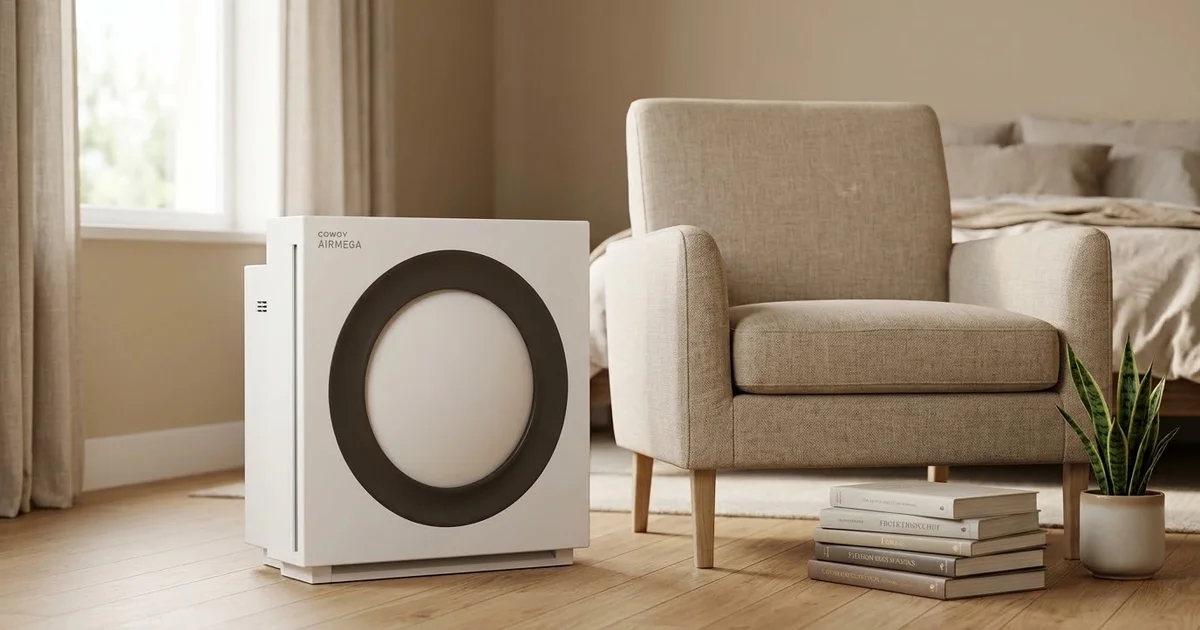
Coway Mighty2 vs AP-1512HH (2026)
Coway's Mighty2 replaced the AP-1512HH as Wirecutter's top pick. We compare CADR, noise, sensors, filter costs, and whether the older unit is still the smarter buy.
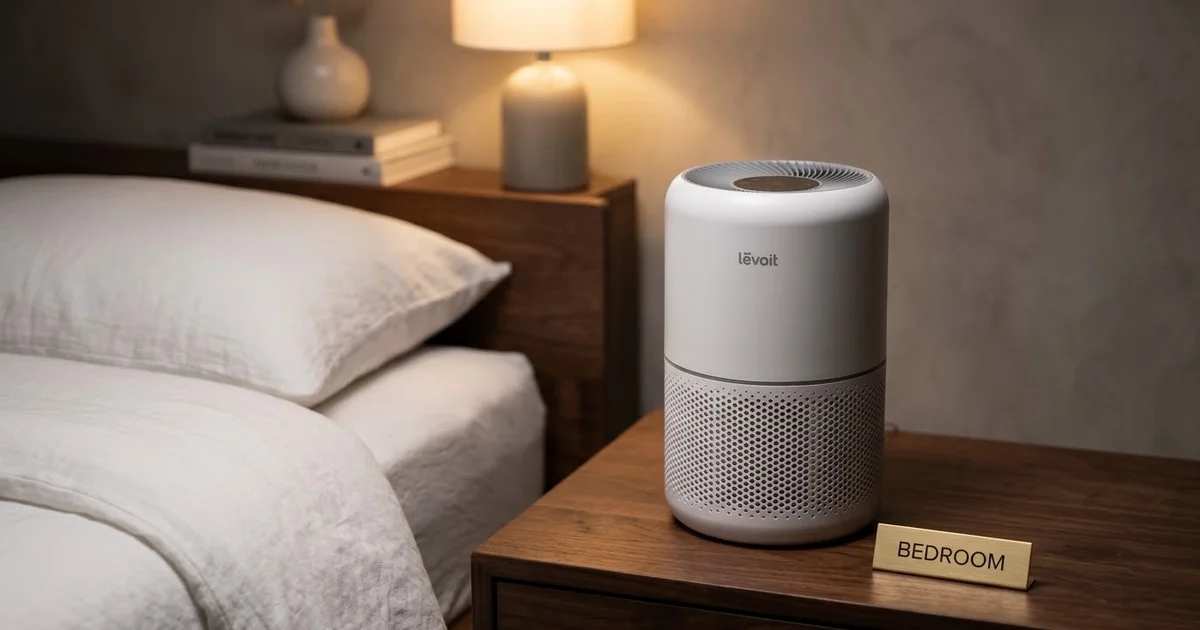
Levoit Core 300 vs 300-P: What Changed
Levoit quietly replaced the Core 300 with the Core 300-P. We explain the AHAM certification, whether filters still fit, and which one you should actually buy.
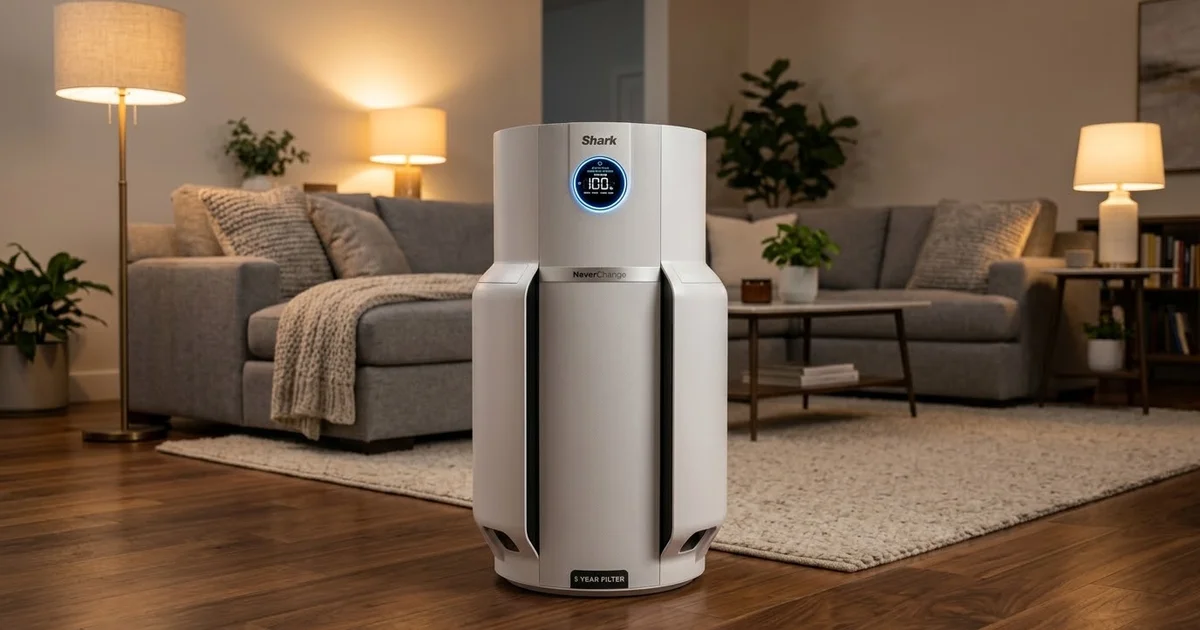
Shark NeverChange HP302 Review
Shark's NeverChange HP302 promises 5 years on one filter. We dig into the real running costs, the odor neutralizer catch, and whether it beats cheaper rivals.
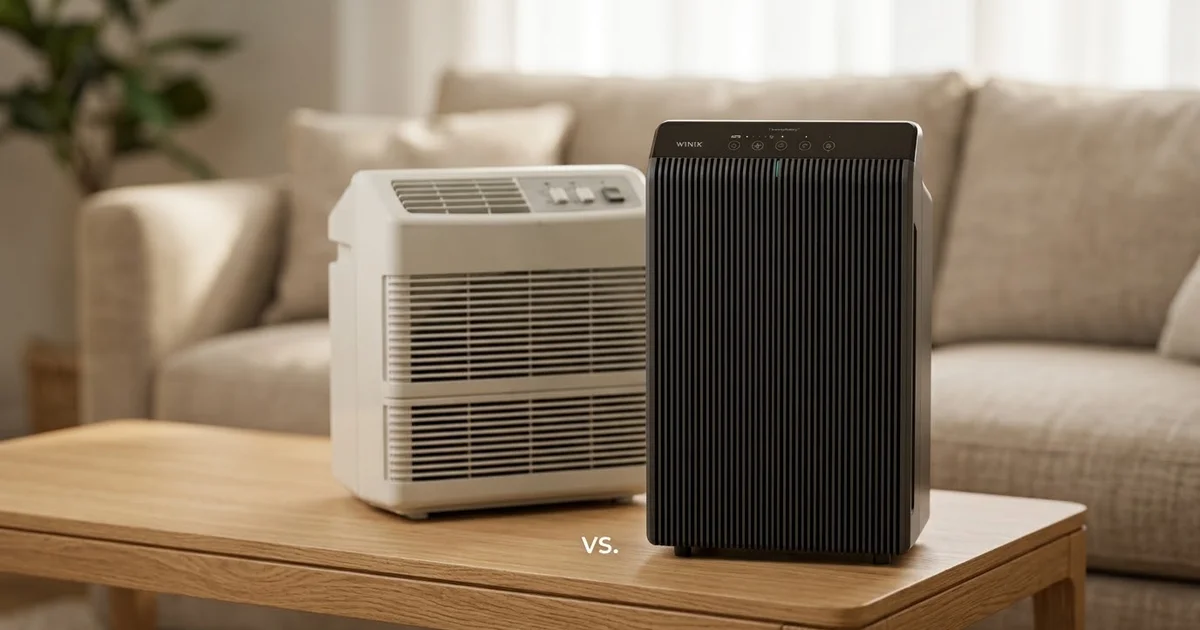
Winix 5510 vs 5500-2: 2026 Verdict
The Winix 5500-2 is discontinued and the 5510 takes over. We compare CADR, noise, filter costs, and the one compatibility problem nobody mentions.
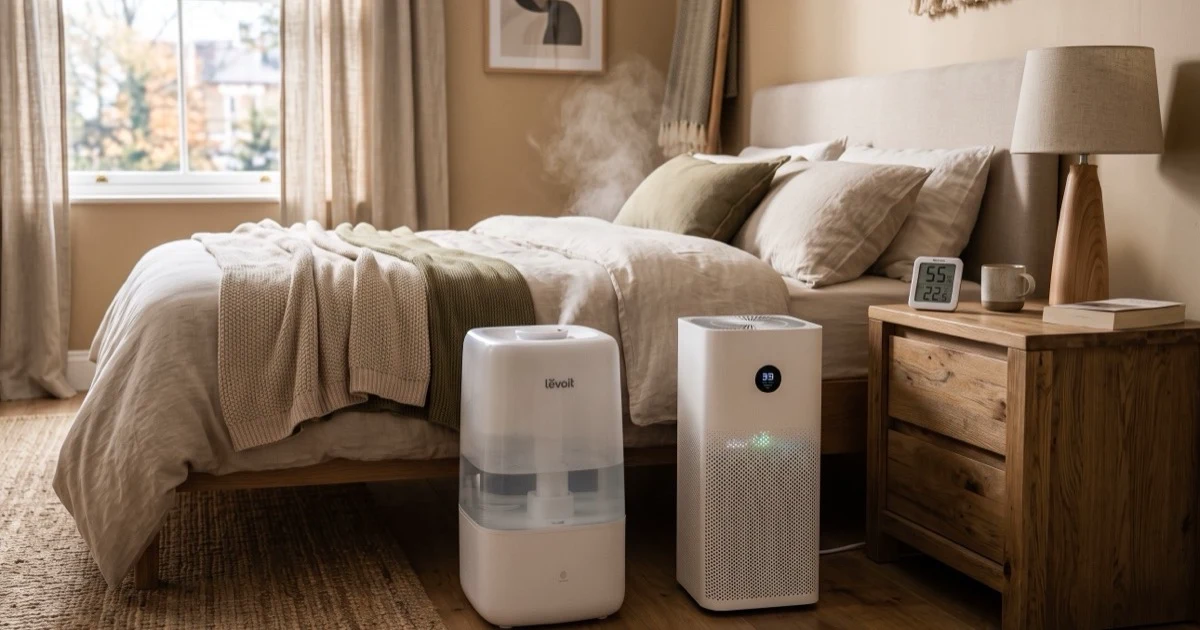
Does an Air Purifier Dry Out the Air? The Honest Answer
If your throat feels dry after running a purifier, you're not imagining it — but it's probably not the purifier. Here's the humidifier-vs-purifier reality, with the measurements to prove it.
🛒 Products Mentioned
As an Amazon Associate, we earn from qualifying purchases.
Covers indoor air quality science, respiratory health, allergy management, and wildfire smoke protection.
View all articles by Sarah →