Quick Answer: When anxiety spikes, your breathing becomes fast and shallow, which keeps your fight-or-flight system switched on. You can interrupt that loop by deliberately slowing your breath. The single most evidence-backed technique is Coherent Breathing (also called resonance breathing): inhale gently for 5.5 seconds, exhale for 5.5 seconds, roughly 5–6 breaths per minute. Within 60–90 seconds this activates the vagus nerve, raises heart rate variability, and shifts you toward the calming parasympathetic state. Practice 5 minutes, twice a day — and use it in the moment when you feel anxious. Use the timer below (set it to Coherent mode) so you don’t have to count.
Anxiety is one of the most physical experiences the mind can produce. Your chest tightens, your heart races, your thoughts sprint ahead of you — and your breathing turns quick, shallow, and high in the chest. That last part matters more than most people realize, because breathing is the one branch of your autonomic nervous system you can take manual control of. You cannot simply decide to lower your heart rate or relax your gut, but you can decide how fast and how deeply you breathe. And when you change your breathing, the rest of your nervous system follows.
According to the World Health Organization (WHO), an estimated 301 million people worldwide were living with an anxiety disorder in 2019, making it the most common category of mental health condition on the planet. The Global Burden of Disease analysis published in Lancet Psychiatry confirms anxiety disorders as a leading cause of disability globally. Most of those people are never taught the simplest, cheapest, always-available tool for calming the body: slow, structured breathing.
This guide walks through exactly what happens in your body during anxiety, why slow breathing physically interrupts it, and how to practice Coherent Breathing step by step. We’ll also cover backup techniques (4-7-8, box breathing, and the physiological sigh), what to do during a full panic attack, a simple daily practice plan, and — importantly — the red-flag signs that mean you should talk to a doctor rather than rely on breathing alone.
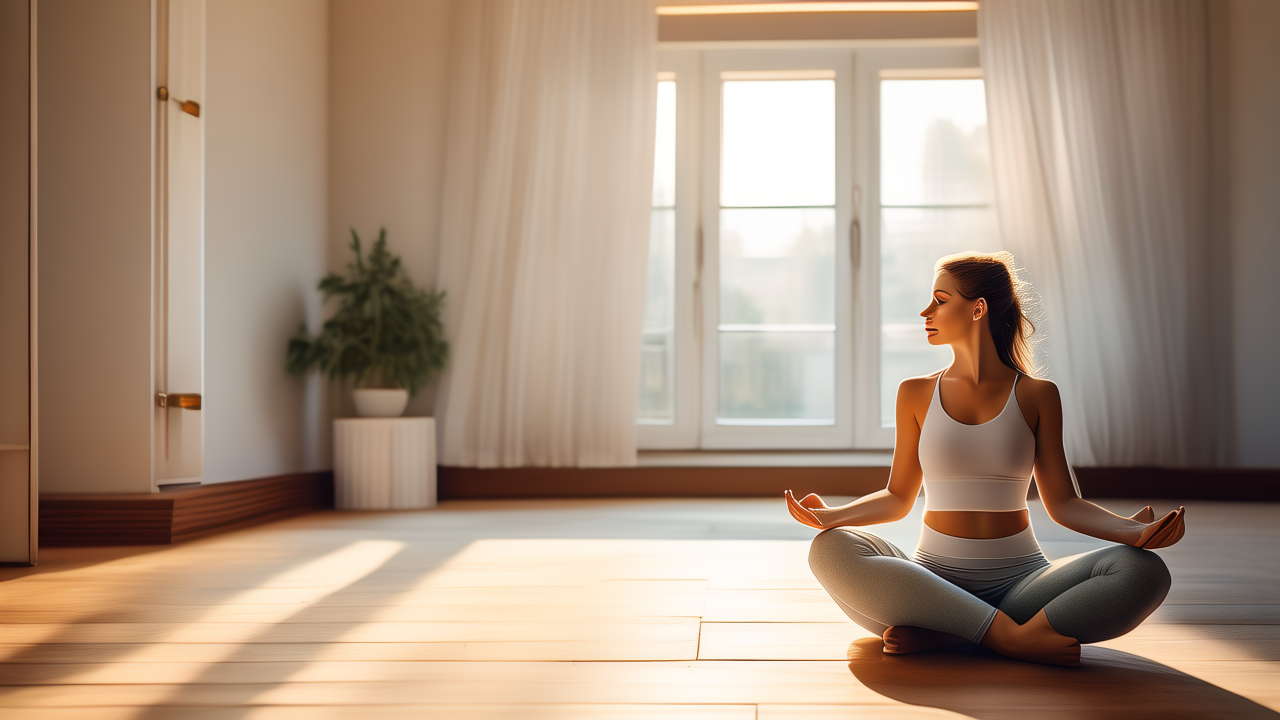
What Actually Happens in Your Body During Anxiety
When your brain perceives a threat — real or imagined — the amygdala triggers your sympathetic nervous system, the “fight-or-flight” branch. This is an ancient survival response designed to help you outrun a predator, and it’s remarkably efficient. In a fraction of a second, several things happen:
- Adrenaline and cortisol flood your bloodstream.
- Your heart rate and blood pressure climb.
- Blood is redirected away from your digestive system and toward your large muscles (that’s the “butterflies” or nausea).
- Your pupils dilate and your senses sharpen.
- Your breathing speeds up and moves into the upper chest.
That last change is the key to understanding anxiety. Fast, shallow, upper-chest breathing is meant to load your blood with oxygen for physical action. But when the “threat” is an email, a crowded room, or an intrusive thought, you never actually run or fight. So you end up over-breathing — technically called hyperventilation — without using the extra oxygen.
The Hyperventilation Trap
Here’s the counterintuitive part. When you breathe too fast, you don’t just take in more oxygen — you blow off too much carbon dioxide (CO₂). Low CO₂ changes your blood chemistry (it becomes more alkaline) and actually causes many of the scariest anxiety symptoms: dizziness, tingling in the hands and lips, a racing heart, chest tightness, and a feeling of unreality or “I can’t breathe.”
This is why anxiety feels like a self-reinforcing loop. You feel anxious, so you breathe faster; breathing faster produces physical symptoms; those symptoms convince your brain that something is genuinely wrong, which cranks up the anxiety even more. Breaking the cycle at the level of breathing is often the fastest way out, because it targets the physical engine driving the panic.
Why Slow Breathing Interrupts Anxiety
Your body has a brake pedal for the fight-or-flight response: the parasympathetic nervous system, sometimes called “rest-and-digest.” The main highway for this calming signal is the vagus nerve, which runs from your brainstem down to your heart, lungs, and gut.
Slow breathing — especially with a slightly longer or equal exhale — stimulates the vagus nerve and tells your heart to slow down. You can feel a version of this yourself: your heart naturally speeds up a little when you inhale and slows down when you exhale. That beat-to-beat variation is called heart rate variability (HRV), and higher HRV is a marker of a flexible, well-regulated nervous system that can shift smoothly out of stress.
The Magic Number: About Six Breaths a Minute
In the early 2000s, researchers Paul Lehrer and Richard Gevirtz identified what they called the “resonance frequency” of the cardiovascular system — the breathing rate at which HRV is maximized and the heart, blood pressure, and breathing rhythms fall into sync. For most adults, that rate is remarkably consistent: roughly six breaths per minute, or about a 10–11 second breath cycle. Their work, along with a large body of HRV biofeedback research, showed that breathing at this pace amplifies the calming signal traveling up the vagus nerve.
A widely cited 2018 systematic review in Frontiers in Human Neuroscience (Zaccaro and colleagues) examined dozens of studies on slow breathing and concluded that slow-paced breathing is consistently associated with increased parasympathetic activity, increased HRV, greater feelings of comfort and relaxation, and reductions in anxiety and physiological arousal. In other words, the science lines up with what humans have intuited through practices like prayer, chanting, and mantra for centuries — many of which naturally slow the breath to about six cycles per minute.
That six-breaths-per-minute target is exactly why Coherent Breathing uses a 5.5-second inhale and 5.5-second exhale. Add those together — 11 seconds per breath — and you land right around 5.5 breaths per minute, squarely in the resonance zone.
Coherent Breathing: Step by Step (5.5 In, 5.5 Out)
Coherent Breathing (a term popularized by Stephen Elliott, and closely related to what clinicians call resonance-frequency breathing) is the technique I recommend first for anxiety, because it’s gentle, sustainable, and doesn’t involve breath-holds that some anxious people find uncomfortable.
Here’s exactly how to do it:
- Get into a comfortable position. Sit upright with your feet flat on the floor, or lie down. Let your shoulders drop. You can close your eyes or keep a soft downward gaze.
- Place one hand on your belly. You want the breath to move your abdomen, not your upper chest. This is diaphragmatic (“belly”) breathing.
- Inhale gently through your nose for 5.5 seconds. It should be a smooth, easy breath — not a big dramatic gulp. Feel your belly rise under your hand.
- Exhale slowly through your nose (or pursed lips) for 5.5 seconds. Let the breath out in a controlled, unhurried stream. Feel your belly fall.
- Do not pause or hold. The inhale flows straight into the exhale and back again, like a smooth wave. No breath-holding is required.
- Continue for 5 minutes. That’s roughly 27–30 breath cycles.
The hardest part is keeping the 5.5-second pace without obsessively counting — counting itself can feel activating when you’re anxious. That’s exactly why we built a visual breathing timer: set it to Coherent mode and simply follow the expanding-and-contracting circle. Breathe in as it grows, breathe out as it shrinks. Let the tool do the counting so your mind can settle.
What It Should Feel Like
Within the first minute, most people notice their heart rate settling and their shoulders dropping. By 2–3 minutes, thoughts usually slow and the “buzzing” edge of anxiety softens. It is normal to feel a little light-headed at first if you’re used to over-breathing — if that happens, make your breaths shallower and gentler, not deeper. Coherent Breathing is about rhythm and smoothness, not big lungfuls of air.
Other Techniques Worth Knowing
Coherent Breathing is my default, but different situations call for different tools. Here are three worth having in your kit.
4-7-8 Breathing
Developed by Dr. Andrew Weil, the 4-7-8 method uses a longer exhale and a breath-hold: inhale through the nose for 4 seconds, hold for 7 seconds, exhale through the mouth for 8 seconds. The extended exhale strongly engages the parasympathetic system, and many people find it especially useful for falling asleep. The breath-hold can feel intense for some anxious folks, so start with just 2–4 rounds. We break it down fully in our guide to the 4-7-8 breathing technique.
Box Breathing
Popular with Navy SEALs and first responders, box breathing uses four equal phases: inhale 4 seconds, hold 4, exhale 4, hold 4. The symmetry makes it easy to remember and great for staying composed under pressure — before a presentation, a difficult conversation, or a stressful task. It’s a fantastic “steady the ship” technique. Learn the full method in our dedicated guide to box breathing for stress.
The Physiological Sigh
If you need to take the edge off right now and only have 30 seconds, the physiological sigh is the fastest tool available. It’s a double inhale followed by a long exhale: take one full inhale through your nose, then, without exhaling, sip in a second small breath to fully inflate your lungs, and finally release a long, slow exhale through your mouth. Repeat 1–3 times.
A 2023 study from Stanford researchers (Balban and colleagues), published in Cell Reports Medicine, compared several brief daily breathing practices to mindfulness meditation and found that cyclic sighing — built around this extended-exhale pattern — produced the greatest improvement in mood and the largest reduction in respiratory rate over a month of five-minute daily sessions. The double inhale is thought to reopen collapsed air sacs in the lungs, and the long exhale offloads CO₂ efficiently while activating the vagus nerve.
Emergency Breathing During a Panic Attack
A panic attack is anxiety turned all the way up: a sudden surge of intense fear with strong physical symptoms — pounding heart, chest pain, shortness of breath, dizziness, and often a terrifying sense that you’re dying or losing control. Panic attacks are frightening but not dangerous, and they always peak and pass, usually within about 10 minutes.
When you’re mid-attack, complicated instructions are useless. Keep it simple:
- Name what’s happening. Say to yourself: “This is a panic attack. It is uncomfortable, but it is not dangerous, and it will pass.” Labeling reduces the amygdala’s alarm.
- Slow the exhale. Don’t worry about the perfect ratio. Just make every exhale longer and slower than the inhale. Breathe out through pursed lips as if slowly blowing through a straw. A long exhale is the single strongest “brake” you have.
- Try one physiological sigh. Two inhales, one long exhale, repeated a couple of times, can quickly reduce that “can’t get enough air” feeling.
- Ground your senses. Feel your feet on the floor. Name five things you can see. This pulls attention out of the internal spiral and back into the room.
- Don’t fight the feelings. Resisting panic feeds it. Let the wave rise, keep breathing slowly, and ride it out. It will crest and fall.
The counterintuitive truth about panic is that the goal isn’t to stop it by force — it’s to stop being afraid of it. Slow breathing helps you stay with the wave calmly until it passes on its own.
A Simple Daily Practice Plan
Breathing techniques work best when they’re not brand-new the moment you need them. If the only time you ever slow your breathing is during a crisis, it’ll feel awkward and hard to control. Train it when you’re calm, so it’s automatic when you’re not.
Here’s a realistic starter plan:
- Week 1: Coherent Breathing, 5 minutes once a day (morning is great). Use the timer in Coherent mode.
- Week 2: Coherent Breathing, 5 minutes twice a day (morning and evening).
- Week 3 and beyond: Keep the twice-daily sessions and add a “reset” — 5–10 slow breaths whenever you notice tension building, or before known stressors.
- Anytime: Use the physiological sigh as an instant tool during acute stress.
Consistency matters more than duration. Two five-minute sessions a day, done regularly, will retrain your nervous system’s baseline far more effectively than one occasional long session. Many people find that after a few weeks, slower breathing becomes their default — and everyday stressors stop escalating as easily.
Your Environment Matters Too
Breathing techniques are the intervention, but the air you breathe is part of the picture. If you struggle to take a comfortable, easy breath because of nasal congestion, allergies, or irritated airways, slow breathing becomes physically harder — and the discomfort can itself be a subtle, low-grade source of anxiety, especially at night.
Poor indoor air quality can worsen that congestion. Dust, pet dander, pollen, and fine particulate matter keep the airways mildly inflamed, so you feel like you can’t get a full, satisfying breath. A quiet HEPA air purifier in the room where you practice — and where you sleep — removes much of that irritation and makes calm breathing feel more natural. For a bedroom, a compact model like the Levoit Core 300 is nearly silent on its low setting, while the proven Coway AP-1512HH handles larger rooms with ease.
The connection between clean air and calm is well documented. Cleaner bedroom air is linked to measurably better rest in our deep dive on air purifiers and sleep quality, and air quality has an outsized impact on more vulnerable groups, as we cover in our guide on air purifiers for elderly and senior health. If congestion is a frequent problem for you, our roundup of the best air purifiers for allergies in 2026 can help you choose the right model. Think of clean air as the foundation that makes every breathing exercise easier and more comfortable.
When to See a Doctor: Red Flags
Breathing techniques are a powerful self-care tool, but they are not a substitute for professional care. Anxiety becomes a medical matter — not just an uncomfortable feeling — when it starts interfering with your life or when physical symptoms could signal something else. Please talk to a qualified healthcare professional if you notice any of the following:
- Anxiety that is persistent, worsening, or interfering with your work, relationships, sleep, or daily functioning.
- Panic attacks that are frequent, or a growing fear and avoidance of situations where they might happen.
- Anxiety accompanied by depression, hopelessness, or any thoughts of harming yourself. If you are in crisis, contact your local emergency number or a suicide-and-crisis lifeline immediately (in the US, call or text 988).
- Physical symptoms you’re attributing to anxiety — chest pain, severe shortness of breath, fainting, or an irregular heartbeat — that have not been medically evaluated. These can overlap with heart, lung, and thyroid conditions, so a doctor should rule out physical causes.
- Reliance on alcohol, drugs, or other substances to manage anxiety.
The CDC and major health bodies emphasize that anxiety disorders are highly treatable, most often with therapy (particularly cognitive behavioral therapy), sometimes with medication, and frequently with a combination of both. Breathing exercises work beautifully alongside professional treatment — they are a complement to good care, not a replacement for it. Reaching out for help is a sign of strength, not failure.
Frequently Asked Questions
How fast does breathing stop anxiety? Slow breathing usually starts to reduce physical arousal within 60–90 seconds, and most people feel a noticeable shift within 2–5 minutes. It won’t erase the underlying worry instantly, but it reliably takes the edge off the physical symptoms so you can think more clearly.
Is Coherent Breathing better than 4-7-8? Neither is universally “better.” Coherent Breathing (5.5 in, 5.5 out) is gentle, sustainable, and ideal for regular daily practice and in-the-moment anxiety, with no breath-holds. 4-7-8 uses a longer exhale and a hold, which many people find especially good for falling asleep. Try both and keep whichever feels most natural.
Should I breathe through my nose or mouth? Inhale through your nose whenever possible — it filters, warms, and humidifies the air and encourages slower, deeper breaths. For the exhale, nose or gently pursed lips both work well. During a panic attack, exhaling through pursed lips (like blowing through a straw) makes it easier to slow the breath down.
Can breathing exercises cure my anxiety disorder? No. Breathing is an excellent tool for managing symptoms in the moment and for down-regulating your nervous system over time, but it is not a cure for a diagnosed anxiety disorder. If anxiety is affecting your daily life, please see a healthcare professional. Breathing works best as one part of a broader plan.
What if slow breathing makes me feel more anxious? This happens to some people at first, often because they’re breathing too deeply and getting light-headed, or because focusing on the breath heightens body awareness. Make your breaths gentler and shallower, keep your eyes open, or start with just one minute. If focusing on breathing consistently triggers strong distress, mention it to a therapist — they can adapt the technique for you.
How often should I practice? Aim for two 5-minute sessions a day when you’re calm, so the skill is well-trained and automatic when anxiety hits. Then use a few slow breaths, or a physiological sigh, as needed throughout the day.
This article is for educational purposes only and does not constitute medical advice. If you are experiencing severe, persistent, or worsening anxiety, please consult a licensed healthcare professional. In a mental health emergency, contact your local emergency services or a crisis lifeline right away.
Support This Guide
Helpful? Add The Air Purifier Guide as a preferred source on Google so our guides show up in your search results.
Related Articles
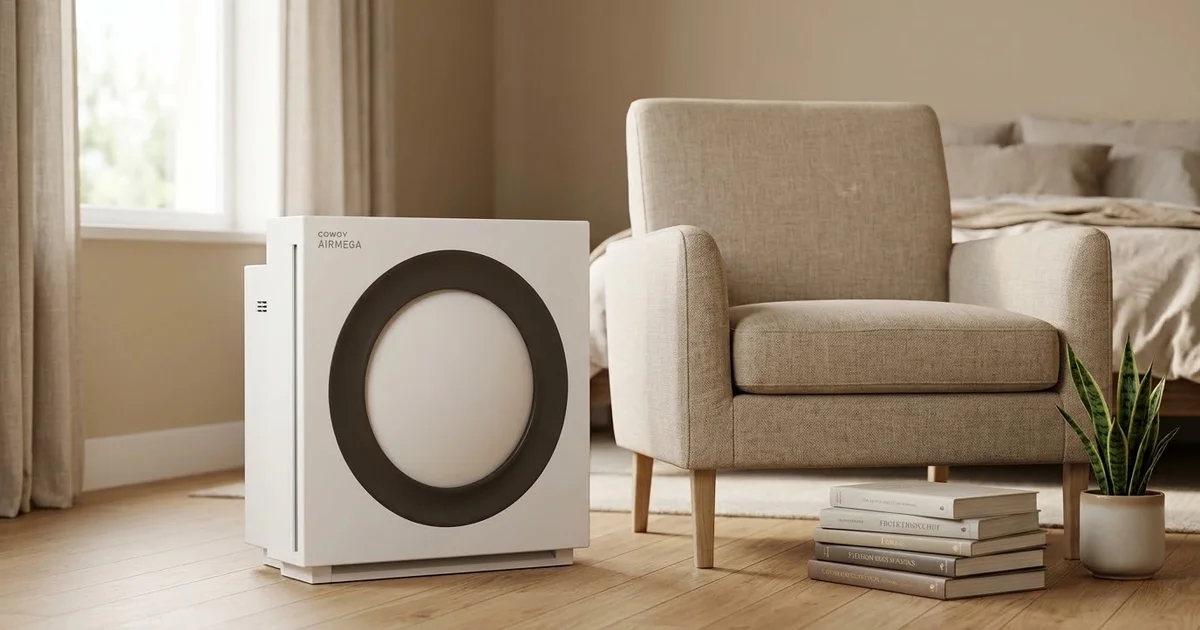
Coway Mighty2 vs AP-1512HH (2026)
Coway's Mighty2 replaced the AP-1512HH as Wirecutter's top pick. We compare CADR, noise, sensors, filter costs, and whether the older unit is still the smarter buy.
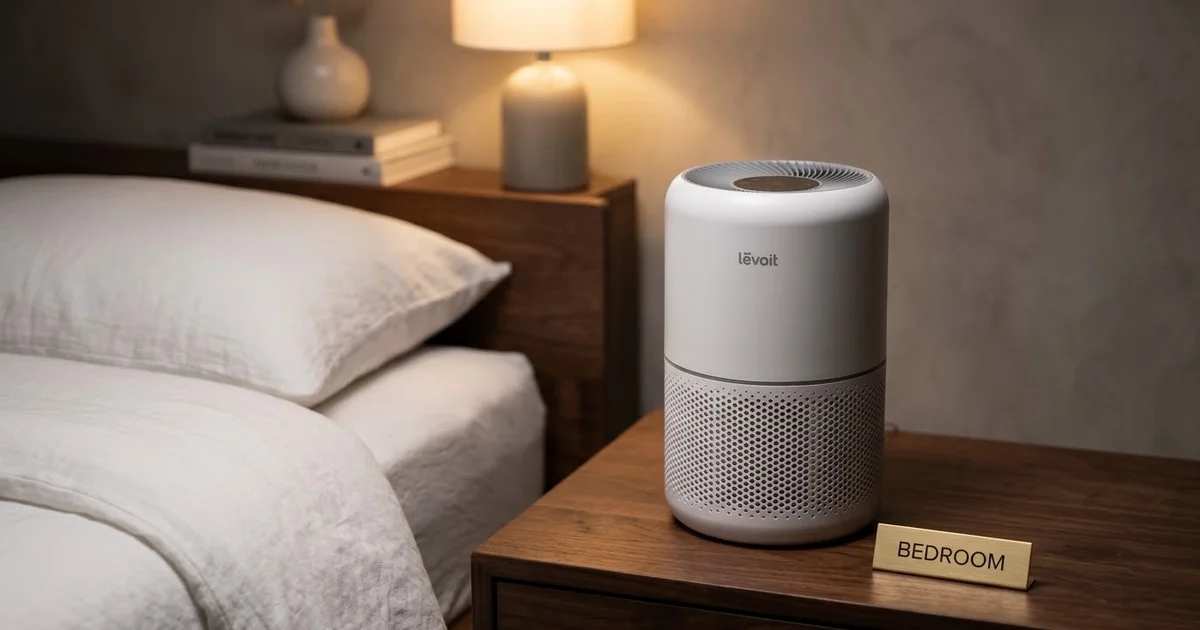
Levoit Core 300 vs 300-P: What Changed
Levoit quietly replaced the Core 300 with the Core 300-P. We explain the AHAM certification, whether filters still fit, and which one you should actually buy.
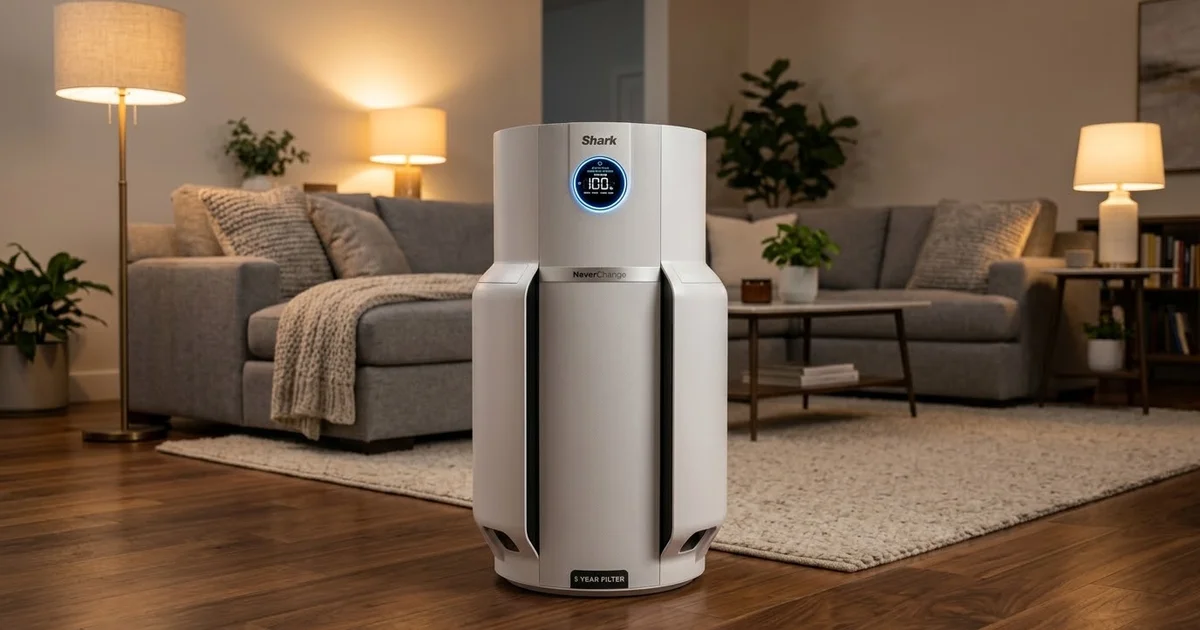
Shark NeverChange HP302 Review
Shark's NeverChange HP302 promises 5 years on one filter. We dig into the real running costs, the odor neutralizer catch, and whether it beats cheaper rivals.
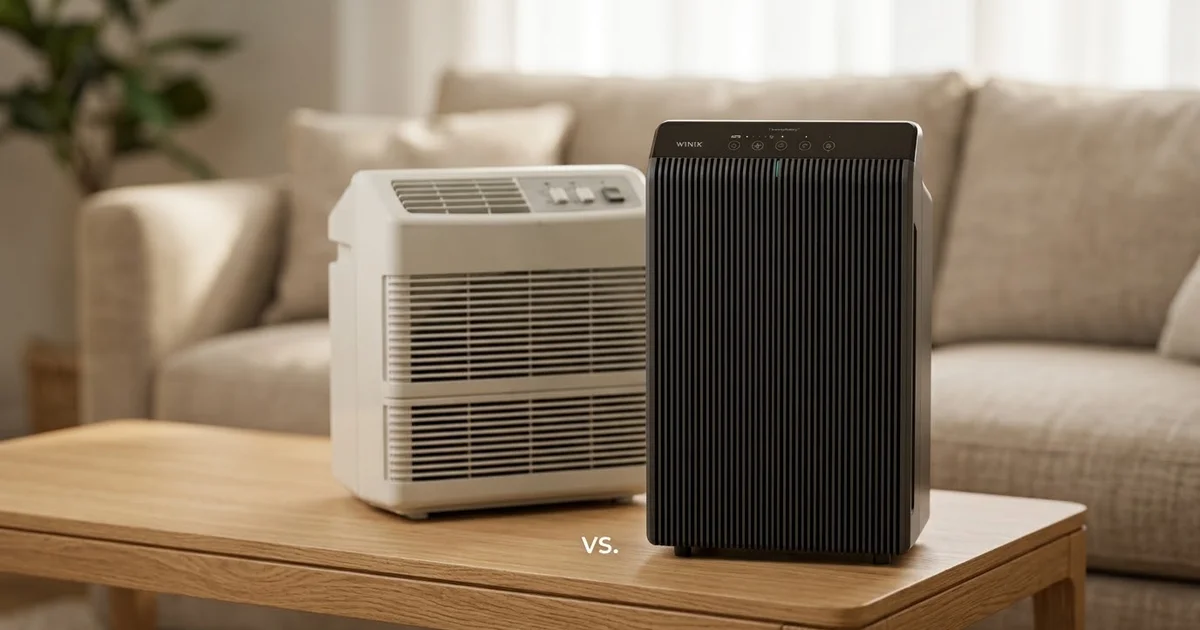
Winix 5510 vs 5500-2: 2026 Verdict
The Winix 5500-2 is discontinued and the 5510 takes over. We compare CADR, noise, filter costs, and the one compatibility problem nobody mentions.
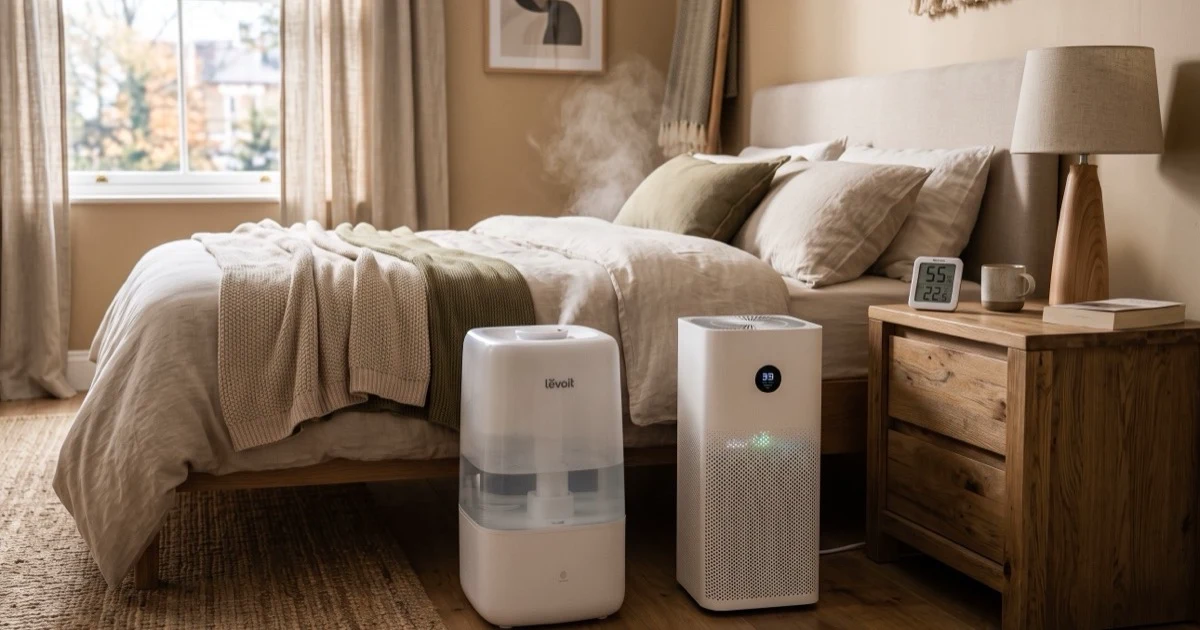
Does an Air Purifier Dry Out the Air? The Honest Answer
If your throat feels dry after running a purifier, you're not imagining it — but it's probably not the purifier. Here's the humidifier-vs-purifier reality, with the measurements to prove it.
🛒 Products Mentioned
As an Amazon Associate, we earn from qualifying purchases.
Covers indoor air quality science, respiratory health, allergy management, and wildfire smoke protection.
View all articles by Sarah →