The Short Answer: VOCs and formaldehyde require activated carbon, not HEPA filters. The Austin Air HealthMate Plus ($714, 15 lbs carbon) is the best consumer option. The IQAir HealthPro Plus ($899, 5 lbs carbon) is also effective. Budget options like the Winix 5500-2 with pellet carbon upgrade ($159-199) work for light VOCs. Source control (removing the source, ventilating) is always the first step.
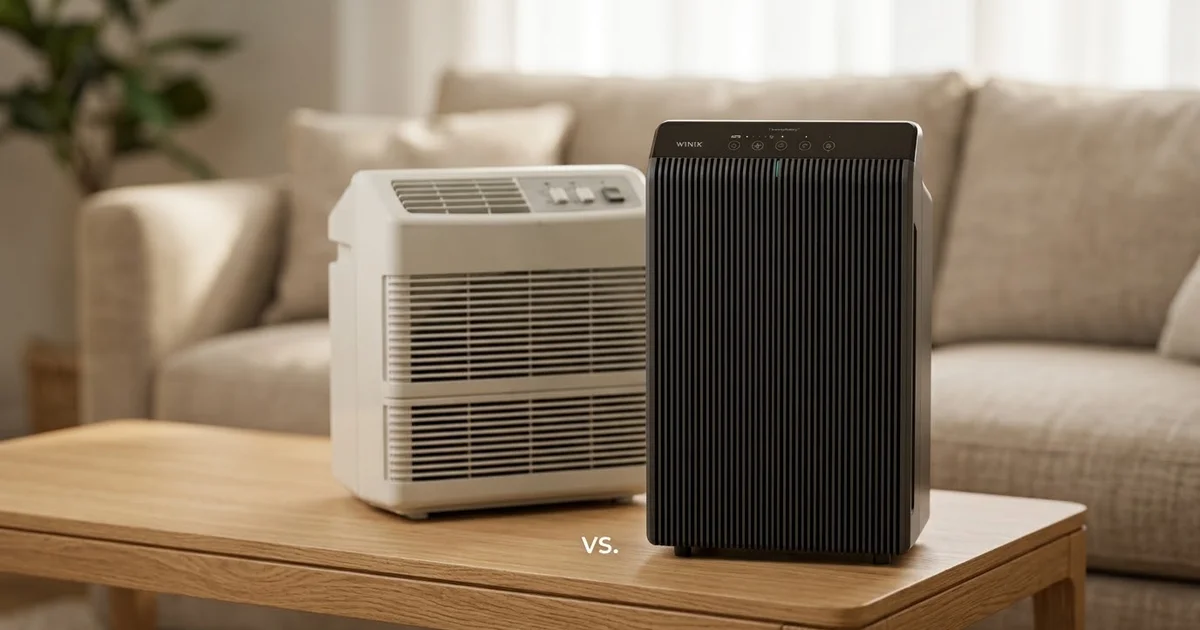
Editor’s note (September 2026): The Winix 5500-2 has been discontinued and remaining stock is limited. Winix’s official successor is the Winix 5510, which adds app control and uses a new filter. Read our Winix 5510 vs 5500-2 comparison before you buy either one.

The VOC problem
Volatile Organic Compounds (VOCs) are carbon-based chemicals that evaporate at room temperature. They come from paint, furniture, carpets, cleaning products, air fresheners, dry-cleaned clothing, and even some cosmetics. Formaldehyde, one of the most common and concerning VOCs, is used in the adhesives that bind plywood, particleboard, and fiberboard. That “new furniture smell” is largely formaldehyde off-gassing.
The health effects of VOC exposure range from immediate (eye and throat irritation, headaches, dizziness) to long-term (liver and kidney damage, central nervous system effects, and for formaldehyde specifically, cancer. The IARC classifies it as a Group 1 carcinogen).
Learn more about indoor air quality and health.
Why standard HEPA doesn’t work for VOCs
HEPA filters capture particles. VOCs are gases. Individual molecules, not particles. A formaldehyde molecule is roughly 0.0004 microns. The smallest particle HEPA captures at 99.97% is 0.3 microns. 750 times larger. Gases pass through HEPA media as if it weren’t there.
This is the fundamental misunderstanding behind most “VOC” purifier claims. A purifier with a HEPA filter and a token carbon sheet is not a VOC purifier. It’s a particle purifier with a marketing claim.
What actually works for VOCs
Activated carbon (adsorption)
The primary mechanism for VOC removal. Gas molecules physically bind to the carbon surface through van der Waals forces. The key metric isn’t the presence of carbon. It’s the mass of carbon and its dwell time (how long air stays in contact with the carbon).
- Thin carbon sheets (0.1-0.3 lbs): Almost useless for VOCs. Effective for mild odors only.
- Carbon pellets (1-3 lbs): Moderate VOC removal. Effective for cooking odors and light chemical off-gassing.
- Heavy carbon beds (5-15 lbs): Significant VOC removal. The only consumer-grade option for meaningful formaldehyde and chemical sensitivity applications.
The carbon must also be replaced. Once all adsorption sites are occupied, the filter stops working. Unlike HEPA filters, you can’t visually assess carbon saturation. General guideline: replace pellet carbon every 6 months, heavy carbon beds every 2-5 years depending on exposure.
Potassium permanganate and impregnated carbon (chemisorption)
Some carbons are impregnated with potassium permanganate (KMnO4) or potassium iodide (KI) to enable chemisorption. A chemical reaction that binds formaldehyde and other low-molecular-weight gases more effectively than physical adsorption alone. The carbon changes color (typically from black to purple-brown) as the impregnation is consumed, providing a visual indicator of saturation.
This is the technology used in the Austin Air HealthMate Plus and some commercial-grade filtration systems. It’s effective but expensive.
Photocatalytic oxidation (PCO)
Molekule’s PECO technology and similar systems use UV light on a titanium dioxide catalyst to theoretically break down VOCs into CO2 and water. The peer-reviewed evidence is mixed: lab studies under idealized conditions show some VOC reduction, but real-world performance in indoor environments with complex VOC mixtures has been inconsistent. Independent testing by Consumer Reports and academic labs has not replicated the VOC removal rates claimed by manufacturers.
Best purifiers for VOCs and formaldehyde
| Purifier | Price | Carbon Mass | VOC Effectiveness | Best For |
|---|---|---|---|---|
| Austin Air HealthMate Plus | $714 | 15 lbs | Excellent | Chemical sensitivity, formaldehyde |
| IQAir HealthPro Plus | $899 | 5 lbs | Very good | General VOC reduction |
| Winix 5500-2 (pellet upgrade) | $159-199 | 1.5 lbs | Moderate | Light VOCs, cooking odors |
| Coway AP-1512HH | $189 | 0.5 lbs | Limited | Mild odors only |
Best overall: Austin Air HealthMate Plus ($714)
The HealthMate Plus contains 15 pounds of activated carbon impregnated with potassium iodide, plus zeolite for ammonia adsorption. It’s the only consumer purifier with enough carbon mass and dwell time to achieve meaningful formaldehyde reduction in real-world conditions.
- Carbon mass: 15 lbs potassium iodide-impregnated carbon + zeolite
- VOC removal: Independently tested to reduce formaldehyde by 85-95% in sealed chamber tests
- Trade-off: Large, heavy (47 lbs), industrial appearance, expensive upfront
Best mid-range: IQAir HealthPro Plus ($899)
The V5-Cell gas filter contains 5 pounds of activated carbon and impregnated alumina, with a pellet design that maximizes surface area and dwell time. IQAir publishes detailed filter efficiency curves for specific VOCs including formaldehyde, benzene, and toluene.
- Carbon mass: 5 lbs pellet carbon + alumina
- VOC removal: Published efficiency data for formaldehyde (>90% initial, declining as carbon saturates)
- Available separately as a gas-filter add-on for the HealthPro series
Read our IQAir review for more details.
Best budget VOC option: Winix 5500-2 with pellet carbon upgrade ($159-199)
The standard Winix 5500-2 has a washable AOC carbon filter. For VOC applications, Winix sells a pellet-based carbon filter (approximately $50) that replaces the standard carbon component with roughly 1.5 lbs of carbon pellets. It’s not in the Austin Air/IQAir league, but for a $200 total investment, it provides meaningful VOC reduction for light to moderate off-gassing.
Read our Winix review for more details.
Source control: always the first step
No purifier can keep up with active, ongoing VOC sources. Before buying a carbon-heavy purifier:
- Identify and remove the source. New particleboard furniture, recently painted rooms, strong cleaning products.
- Ventilate aggressively. Open windows for 30+ minutes daily, run exhaust fans, use box fans to exchange indoor air.
- Choose low-VOC alternatives. Greenguard Gold furniture, zero-VOC paint, fragrance-free cleaning products.
- Let new items off-gas in a ventilated space (garage, spare room with open windows) for 1-2 weeks before bringing them into living spaces.
The purifier handles what’s left after source control, not the other way around.
The carbon weight rule of thumb
For meaningful VOC reduction, you need at minimum 2-3 pounds of activated carbon. Most consumer purifiers have 0.2-0.5 pounds in a thin impregnated sheet. Adequate for cooking odors, useless for off-gassing from new furniture or renovation fumes. The IQAir HealthPro Plus (5 lbs), Austin Air HealthMate Plus (15 lbs), and AirPura (18-26 lbs depending on model) are the only consumer units with sufficient carbon for gas-phase filtration.
The carbon also needs to be replaced on schedule. Saturated carbon off-gasses captured VOCs during temperature or humidity shifts. If you’ve had the same carbon filter for 3+ years and it still “seems fine,” you’re breathing VOCs that the filter captured and is now re-releasing. Replace carbon every 2-3 years under normal use, annually in high-VOC environments.
Common VOC sources in your home
| Source | VOCs Released | Solution |
|---|---|---|
| New furniture (particleboard) | Formaldehyde | Off-gas 1-2 weeks, use low-VOC furniture |
| Paint | Benzene, toluene, xylene | Use zero-VOC paint, ventilate during painting |
| Cleaning products | Various VOCs | Use fragrance-free, green-certified products |
| Air fresheners | Formaldehyde, phthalates | Remove air fresheners, use ventilation |
| Dry-cleaned clothes | Perchloroethylene | Air out dry-cleaned clothes before wearing |
| Carpets | Formaldehyde, 4-PC | Choose low-VOC carpets, ventilate after installation |
| Cosmetics | Various VOCs | Choose fragrance-free products |
How to test your VOC levels
- VOC monitor ($100-200): Devices like the Temtop M10 or ECOWITT WH0290 measure total VOC levels in real-time.
- Professional testing ($200-500): An indoor air quality professional can test for specific VOCs including formaldehyde.
- DIY test kits ($30-50): Passive sampling badges that you mail to a lab for analysis.
If your VOC levels are consistently above 500 ppb, you need both source control and a carbon-heavy air purifier.
Electricity costs for carbon-heavy purifiers
Carbon-heavy purifiers tend to use more power than standard HEPA purifiers:
| Purifier | Watts (Medium) | Monthly Cost | Annual Cost |
|---|---|---|---|
| Winix 5500-2 | 40W | $4.00 | $48 |
| IQAir HealthPro Plus | 75W | $7.50 | $90 |
| Austin Air HealthMate Plus | 80W | $8.00 | $96 |
Based on average US electricity rate of $0.15/kWh
Calculate your exact electricity cost based on your local rate.
The bottom line
VOCs and formaldehyde require activated carbon, not HEPA filters. The Austin Air HealthMate Plus ($714) is the best consumer option with 15 pounds of carbon. The IQAir HealthPro Plus ($899) with 5 pounds of carbon is also effective. Budget options like the Winix 5500-2 with pellet carbon upgrade ($159-199) work for light VOCs.
Source control is always the first step. No purifier can keep up with active, ongoing VOC sources. Remove the source, ventilate aggressively, then use a carbon-heavy purifier for what’s left.
My recommendation: If you have chemical sensitivity or significant formaldehyde off-gassing, the Austin Air HealthMate Plus is worth the investment. For general VOC reduction, the IQAir HealthPro Plus is a good choice. For budget buyers, the Winix 5500-2 with pellet carbon upgrade handles light VOCs.
You May Also Like
- Best Air Purifier for Formaldehyde and VOCs 2026
- Best Air Purifier for Elderly and Seniors
- Best Air Purifier for COPD
- Air Purifier and Sleep Quality
Frequently Asked Questions
How long should I run my air purifier each day?
For best results, run your air purifier 24/7 on medium speed. Air purification works by continuously removing particles—turning it off allows them to accumulate again. Modern purifiers use 30-80W on medium (similar to a light bulb), making continuous operation energy-efficient.
Where is the best place to put an air purifier?
Place the purifier 3-5 feet from your breathing zone, near pollution sources, with unobstructed airflow on all sides. Avoid corners, curtains, and furniture that block intake or output. For bedrooms, position near the bed but not blowing directly on you.
How do I know when to replace the filter?
Most purifiers have filter indicator lights. Without indicators, replace HEPA filters every 6-12 months and carbon filters every 3-6 months. Signs of a clogged filter: reduced airflow, visible discoloration, increased noise, or the purifier seeming less effective.
Are air purifiers noisy?
Noise levels vary by model and fan speed. Sleep modes (20-25 dB) are quieter than a whisper. Medium speeds (35-45 dB) are similar to background music. High speeds (50-60 dB) are conversation level. For bedrooms, look for sleep modes under 25 dB.
Do air purifiers use a lot of electricity?
No. Most purifiers use 30-80W on medium and 5-15W on sleep mode. Running 24/7 on medium costs $2-8/month at average US electricity rates. Energy Star models use 15-40% less electricity. The main ongoing cost is filter replacement ($30-120/year).
Disclosure: We may earn a commission from qualifying purchases. VOC health information: EPA Indoor Air Quality, IARC Monographs.
Support This Guide
Helpful? Add The Air Purifier Guide as a preferred source on Google so our guides show up in your search results.
Related Articles
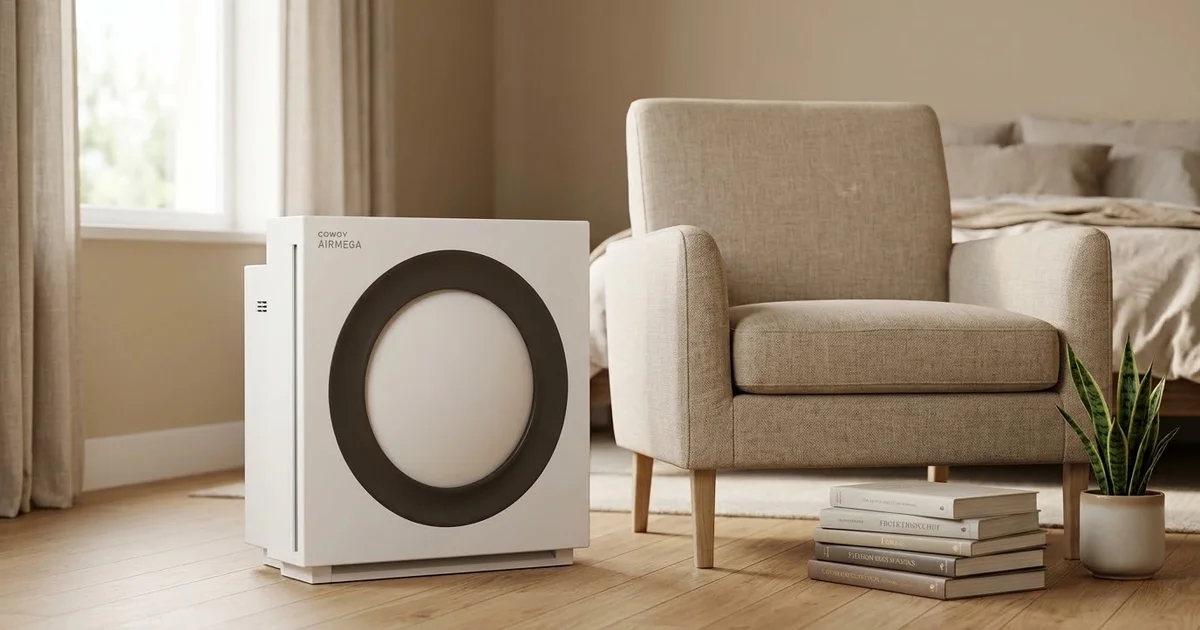
Coway Mighty2 vs AP-1512HH (2026)
Coway's Mighty2 replaced the AP-1512HH as Wirecutter's top pick. We compare CADR, noise, sensors, filter costs, and whether the older unit is still the smarter buy.
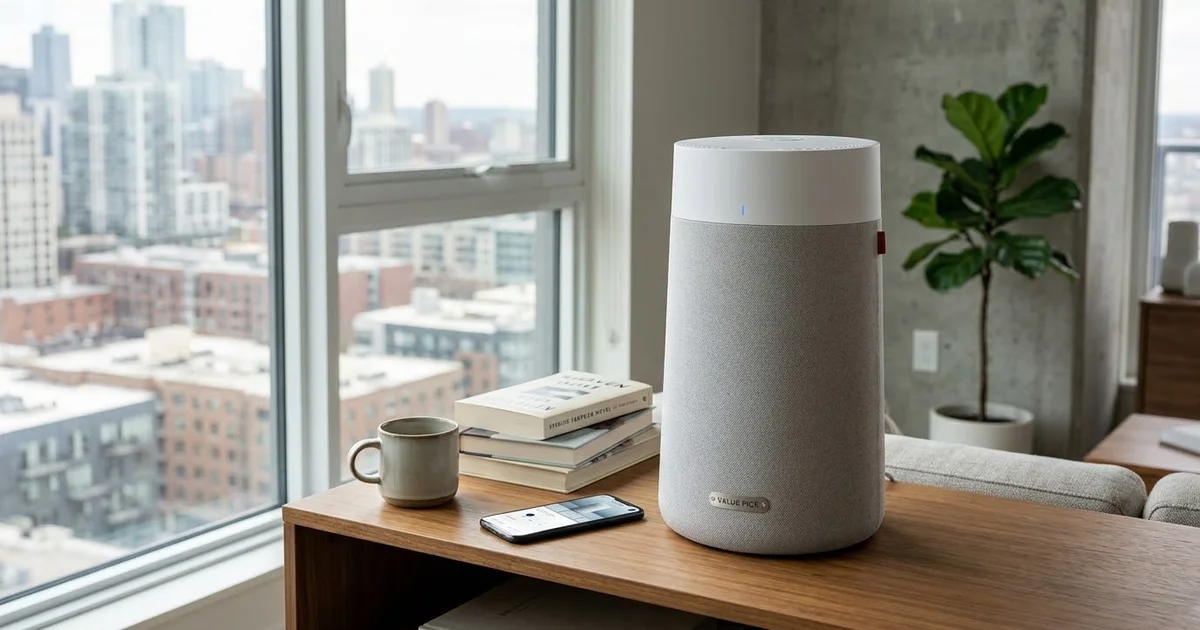
KNKA APH4000 Review: $150 Dark Horse
KNKA's APH4000 is one of Amazon's best-selling purifiers at $150. We check the AHAM certification, decode the 1,695 sq ft claim, and compare it to Levoit and Coway.
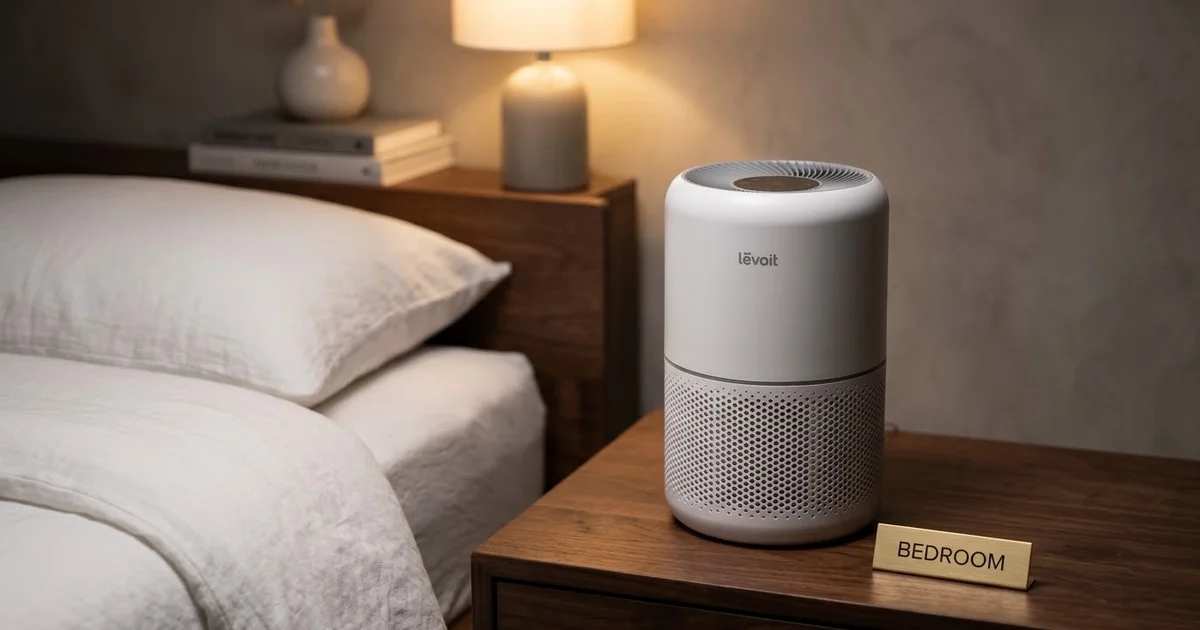
Levoit Core 300 vs 300-P: What Changed
Levoit quietly replaced the Core 300 with the Core 300-P. We explain the AHAM certification, whether filters still fit, and which one you should actually buy.
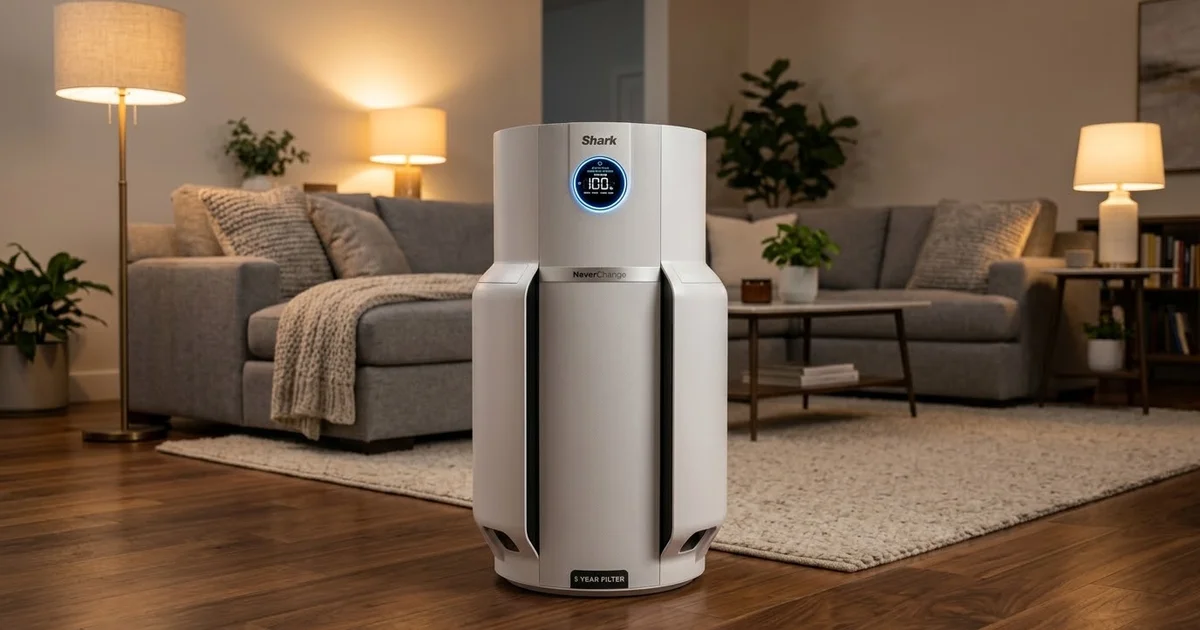
Shark NeverChange HP302 Review
Shark's NeverChange HP302 promises 5 years on one filter. We dig into the real running costs, the odor neutralizer catch, and whether it beats cheaper rivals.
Winix 5510 vs 5500-2: 2026 Verdict
The Winix 5500-2 is discontinued and the 5510 takes over. We compare CADR, noise, filter costs, and the one compatibility problem nobody mentions.
🛒 Products Mentioned
As an Amazon Associate, we earn from qualifying purchases.
Covers indoor air quality science, respiratory health, allergy management, and wildfire smoke protection.
View all articles by Sarah →