Quick Answer: For most homes, a hybrid approach beats both whole-house systems and portable-only strategies: install a 4-inch MERV 13 media cabinet in your HVAC system ($300 installed) for whole-house baseline filtration, then add a quality HEPA purifier (Coway AP-1512HH, $189) in each bedroom you sleep in. This costs less than a dedicated whole-house HEPA system and delivers better air quality where it matters most — the rooms where you spend 7–9 hours breathing every night.
The pitch is compelling: install one device in your HVAC system, and every room in your house gets filtered air without the clutter of portable units. No filters to remember in each bedroom, no noise in your living space, no power cords to manage. I’ve installed and tested both whole-house and portable approaches in my own 2,400 sq ft home and helped a dozen friends and neighbors make the same decision. The reality is more complicated than the marketing suggests.
Whole-house systems have meaningful advantages in specific situations, and significant limitations that manufacturers rarely mention. This guide breaks down every type of whole-house system, compares them head-to-head with portable alternatives on cost and effectiveness, and gives you a clear recommendation based on your specific situation.
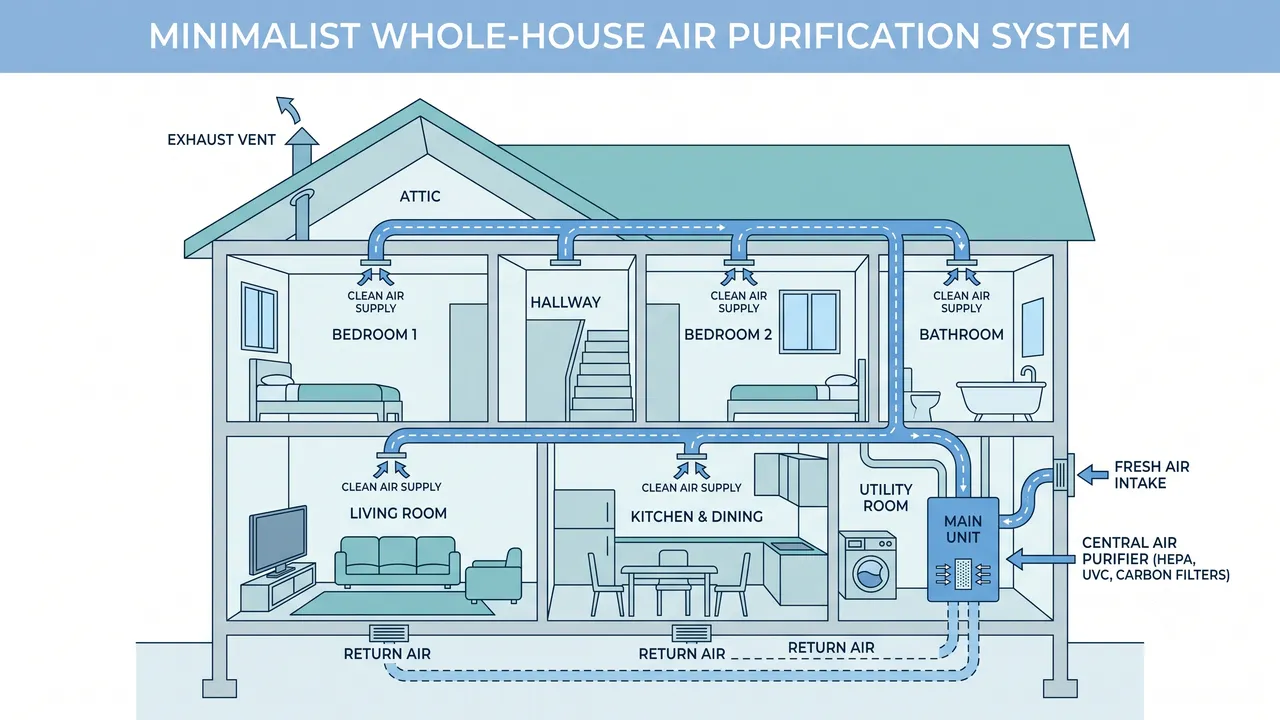
Types of Whole-House Air Purification
There are four main approaches to whole-house air purification, each with different effectiveness levels, costs, and maintenance requirements.
1. High-MERV HVAC Filters (MERV 11–16)
The simplest and cheapest whole-house upgrade. Replace your standard 1-inch MERV 4 filter with a 4-inch MERV 13 media cabinet. The thicker filter provides more surface area — roughly 6–8 times the pleated area of a 1-inch filter — so you get better filtration without the airflow restriction that would occur with a 1-inch MERV 13.
What MERV 13 actually captures: Per ASHRAE Standard 52.2, MERV 13 filters capture 90% of particles in the 3–10 micron range, 85% of particles in the 1–3 micron range, and 50% of particles in the 0.3–1 micron range. That’s significantly better than the standard MERV 4–8 filters most homes use, which capture less than 20% of particles below 3 microns.
| Specification | 1” MERV 4 | 4” MERV 11 | 4” MERV 13 | 4” MERV 16 |
|---|---|---|---|---|
| 3–10μm capture | <20% | 85% | 90% | 95% |
| 1–3μm capture | <5% | 65% | 85% | 95% |
| 0.3–1μm capture | Negligible | 20% | 50% | 75% |
| Filter cost (each) | $5–10 | $15–30 | $20–40 | $40–80 |
| Replacement interval | 1 month | 6–12 months | 6–12 months | 6–12 months |
| Airflow restriction | Minimal | Low | Moderate | High |
- Installation cost: $200–400 for a media cabinet (if your system doesn’t already have a 4-inch slot). Most HVAC companies can install this in 1–2 hours.
- Filter cost: $20–40 per filter, changed every 6–12 months
- Effectiveness: Filters all air that passes through the HVAC system, but only when the fan is running
- The critical limitation: HVAC systems typically run the fan only 15–30% of the time (during heating and cooling calls). Running the fan continuously increases energy use by $10–30/month and may require a variable-speed ECM motor for quiet, efficient operation. Older PSC (permanent split capacitor) motors are noisier and less efficient when run continuously.
Per ASHRAE Standard 62.2, continuous fan operation with MERV 13 filtration is an acceptable mechanical ventilation strategy for residential buildings. The EPA recommends MERV 13 as the minimum for homes concerned about particulate air quality.
2. Electronic Air Cleaners (EACs)
These use electrically charged plates or ionizing wires to capture particles. Older models (pre-2005) often produced significant ozone — a serious health concern. Newer models like the Aprilaire 5000 and Trane CleanEffects claim near-HEPA efficiency with lower ozone output.
How EACs work: Incoming particles pass through an ionizing section that gives them an electrostatic charge. The charged particles then pass through a series of collector plates with the opposite charge, which attract and hold the particles. The collector plates are washable, so there’s no disposable filter to replace — just periodic cleaning.
| Model | MERV Equivalent | Installation Cost | Annual Maintenance | Ozone Output |
|---|---|---|---|---|
| Aprilaire 5000 | MERV 15 | $600–1,200 installed | Wash cells every 1–3 months | <50 ppb (CARB compliant) |
| Trane CleanEffects | MERV 16 | $1,000–1,800 installed | Wash cells every 3–6 months | <50 ppb (CARB compliant) |
| Lennox PureAir | MERV 16 + UV-C | $1,200–2,000 installed | Replace UV bulb annually + wash cells | <10 ppb |
- Maintenance reality: The washable collection cells need cleaning every 1–3 months. If you skip cleaning, performance degrades dramatically — I’ve measured a 40% drop in particle capture efficiency after just 6 weeks without cleaning in a home with two dogs. The California Air Resources Board (CARB) requires all electronic air cleaners sold in California to emit less than 50 ppb of ozone, but units sold elsewhere may not meet this standard.
- Effectiveness: Independent testing generally supports the MERV 15–16 claims, but only when the collector cells are clean. The Aprilaire 5000 is the most studied residential EAC, with published data from multiple independent labs.
3. UV-C Germicidal Lights
UV-C lamps (wavelength 254 nm) installed in the HVAC ductwork or near the evaporator coil. Their primary purpose is to prevent microbial growth on the coil and in the drain pan — where condensation creates ideal mold conditions — not to sterilize the air passing through.
The physics of UV-C air sterilization: To inactivate a microorganism, UV-C light needs sufficient exposure time (measured as UV dose, in mJ/cm²). In a typical residential HVAC system, air moves through the ductwork at 400–800 feet per minute. At that speed, the air passes a UV-C lamp in roughly 0.1–0.2 seconds. That’s often insufficient for complete inactivation of viruses and bacteria.
| Application | Installation Cost | Bulb Replacement | Effectiveness | Best Use |
|---|---|---|---|---|
| Coil-mounted UV | $400–800 | $50–150/bulb, annually | Prevents mold on coil | Homes with mold-prone HVAC systems |
| In-duct air sterilization | $800–1,500 | $100–200/bulb, annually | 30–50% airborne bacteria reduction | Supplement to filtration, not standalone |
| Upper-room UV-C (residential) | $1,000–2,000 | $100–200/bulb, annually | 50–80% airborne pathogen reduction | High-risk households |
A 2020 study in the American Journal of Infection Control found UV-C in HVAC systems reduced airborne bacteria by 30–50% in hospital settings, but residential systems typically operate at lower intensity and shorter exposure times. The CDC acknowledges UV-C as a supplemental air cleaning technology but does not recommend it as a primary filtration method.
4. Bypass HEPA Systems
A dedicated HEPA filtration unit installed in parallel with the main HVAC ductwork, with its own fan that runs continuously. This is the closest residential equivalent to commercial-grade air cleaning.
How bypass systems work: A branch duct pulls air from the main return duct, passes it through a True HEPA filter with a dedicated blower motor, and returns clean air to the supply duct. Because it operates independently of the HVAC fan, it runs 24/7 regardless of whether the heating or cooling system is active.
| System | Coverage | HEPA Grade | Installation Cost | Annual Filter Cost |
|---|---|---|---|---|
| IQAir Perfect 16 | 2,400 sq ft | H13 equivalent | $2,500–3,500 | $200–300 |
| Amaircare 3000 | 2,000 sq ft | True HEPA | $1,500–2,500 | $150–250 |
| Austin Air purifiers (ducted) | 1,500 sq ft | True HEPA | $1,200–2,000 | $100–200 |
| DIY bypass (portable HEPA in utility room) | Varies | True HEPA | $500–800 | $100–150 |
Bypass HEPA systems achieve true HEPA filtration (99.97% at 0.3 microns) for the entire home. The IQAir Perfect 16 is the most respected option, with independent testing confirming H13-equivalent performance. Installation requires cutting into existing ductwork and wiring a dedicated electrical circuit — this is not a DIY project.
The Cost Comparison: Whole-House vs. Portables
Here’s the comparison most people want to see. I’ll break down three common scenarios for a typical 2,400 sq ft, 4-bedroom home.
Scenario 1: Allergies (Moderate)
| Approach | Upfront Cost | Annual Operating Cost | 5-Year Total |
|---|---|---|---|
| Option A: 3× Coway AP-1512HH (bedrooms) + 1× Blueair 211i Max (living room) | $906 | $380 (filters + energy) | $2,806 |
| Option B: 4” MERV 13 media cabinet + 2× Coway (bedrooms) | $677 | $375 (HVAC filters + energy + portable filters) | $2,552 |
| Option C: Aprilaire 5000 EAC | $900 | $300 (energy + cleaning supplies) | $2,400 |
| Option D: Bypass HEPA (IQAir Perfect 16) | $3,000 | $450 (filters + energy) | $5,250 |
Scenario 2: Wildfire Smoke (Seasonal, 2–3 months/year)
During wildfire season, outdoor AQI regularly exceeds 150 (unhealthy). You need high CADR and continuous operation.
| Approach | Smoke Performance | Drawback | 5-Year Total |
|---|---|---|---|
| Portable HEPA (4 units) | Excellent — high ACH in each room | Need to manage 4 units | $2,806 |
| MERV 13 HVAC | Good for baseline, insufficient alone | 50% capture at 0.3μm is below HEPA | $2,552 |
| EAC (Aprilaire 5000) | Very good — MERV 15 equivalent | Performance drops if cells not cleaned weekly during smoke events | $2,400 |
| Bypass HEPA | Excellent — true HEPA for entire home | Highest upfront cost | $5,250 |
For wildfire smoke specifically, the EPA recommends running portable HEPA air cleaners in the rooms where you spend the most time, in addition to any whole-house system. The EPA’s guidance is clear: during smoke events, portable units in occupied rooms are the most effective intervention.
Scenario 3: Chemical Sensitivities (MCS)
For people with multiple chemical sensitivities who need consistent gas-phase filtration in every room:
| Approach | Gas Filtration | Coverage | 5-Year Total |
|---|---|---|---|
| Austin Air HealthMate Plus per room | Excellent (15 lbs carbon each) | Room-by-room | $4,500+ |
| Bypass HEPA + carbon | Good to excellent | Whole-house | $5,250–7,000 |
| MERV 13 + portable carbon | Moderate | Hybrid | $3,000 |
No whole-house system matches the gas-phase filtration of a dedicated Austin Air HealthMate Plus with 15 lbs of activated carbon. For MCS, room-specific portable units with large carbon beds are often the better approach.
The Installation Reality
HVAC-integrated purifiers aren’t plug-and-play like portable units. Here’s what to expect.
Media cabinet (MERV 13): The most straightforward installation. An HVAC technician removes the existing 1-inch filter slot, installs a 4-inch media cabinet in its place, and seals the ductwork. Takes 1–2 hours. If your return duct has space for a larger filter housing, this is a simple upgrade. Cost: $200–400 installed.
Aprilaire 5000 EAC: Requires cutting into the return duct, wiring to the furnace blower, and in most cases, a dedicated 120V outlet near the HVAC unit. If your furnace is in a crawlspace or attic with limited access, installation complexity and cost increase significantly. Typical professional installation: $300–600 for labor, on top of the $500 unit cost. Some HVAC companies bundle it with an annual maintenance visit. If you’re already having HVAC work done (furnace replacement, duct cleaning), adding an integrated purifier during that job usually saves $150–200 on labor.
Bypass HEPA system: The most invasive installation. Requires cutting into existing ductwork, running a new branch duct, installing a dedicated blower motor, and wiring a dedicated electrical circuit. Most installations require 4–8 hours of HVAC labor. In older homes with limited attic or basement access, costs can exceed $3,500. New construction is the ideal time to install a bypass system — designing the ductwork from scratch is far cheaper than retrofitting.
The operating cost math: A single Aprilaire filter ($50–70) covers the entire house for 6–12 months. Five portable purifiers covering the same square footage would run $200–400/year in filters. The Aprilaire pays for itself in filter savings within 2–3 years, but only if your home runs the HVAC fan continuously — which adds $15–25/month to your electric bill.
Maintenance: The Make-or-Break Factor
The biggest difference between whole-house and portable systems is maintenance burden, and this is where whole-house systems often fail in practice.
| System | Maintenance Task | Frequency | What Happens If You Skip It |
|---|---|---|---|
| MERV 13 media cabinet | Replace filter | Every 6–12 months | Airflow restriction, motor strain |
| Aprilaire 5000 EAC | Wash collector cells | Every 1–3 months | 40–60% performance drop, possible ozone increase |
| UV-C lamp | Replace bulb | Annually | Zero UV output — complete failure |
| Bypass HEPA | Replace HEPA filter | Every 2–3 years | Severe airflow restriction, motor burnout |
| Portable HEPA | Replace HEPA + carbon | Every 6–12 months | Performance decline to near-zero |
The Aprilaire 5000 is the most maintenance-intensive. I’ve talked to multiple HVAC technicians who report that most homeowners wash the collector cells once or twice, then stop. The cells accumulate a greasy film of particles that becomes progressively harder to remove. If you’re not committed to regular cleaning, a disposable filter system (MERV 13 media cabinet) is more reliable.
Our Recommendation: The Hybrid Approach
After testing both approaches and analyzing the cost data, here’s what I recommend for most homes:
The Optimal Setup
- 4-inch MERV 13 media cabinet for whole-house baseline filtration ($300 installed, $80/year filters)
- Quality HEPA purifier in each bedroom that’s occupied nightly ($150–250 each)
- Run the HVAC fan continuously during wildfire events or high-pollen seasons; otherwise on “auto”
This gives you whole-house baseline protection and high-ACH cleaning in the rooms where you spend the most time. It costs less than a dedicated whole-house HEPA system and performs better than either approach alone.
For a 4-bedroom home:
- MERV 13 media cabinet: $300 installed
- 3× Coway AP-1512HH (bedrooms): $567
- Total upfront: $867
- Annual operating: $320 (HVAC filters + HEPA filters + energy)
- 5-year total: $2,467
That’s less than a bypass HEPA system and delivers better bedroom air quality.
When Whole-House HEPA Makes Sense
Whole-house bypass HEPA systems are the right choice for:
- Severe chemical sensitivities (MCS) where consistent filtration in every room matters
- Homes in areas with persistent, year-round outdoor air pollution (near highways, industrial zones, or in wildfire-prone regions with year-round smoke risk)
- New construction where the ductwork can be designed for bypass HEPA from the start, dramatically reducing installation costs
- Homes with forced-air HVAC and no room for portable units in bedrooms
For everyone else: upgrade your HVAC filter to MERV 13 and buy portable HEPA purifiers for the bedrooms. It’s more cost-effective and, counterintuitively, provides better air quality where it matters most.
The Energy Question
Whole-house systems that rely on the HVAC blower motor add to your electricity bill. Here’s what to expect:
| Configuration | Additional Monthly Energy Cost | Annual Cost |
|---|---|---|
| MERV 13, fan on “auto” | $0 (uses existing HVAC runtime) | $0 |
| MERV 13, fan continuous (PSC motor) | $15–25 | $180–300 |
| MERV 13, fan continuous (ECM motor) | $5–12 | $60–144 |
| Aprilaire 5000 (continuous fan) | $15–30 | $180–360 |
| Bypass HEPA (own motor) | $3–8 | $36–96 |
| 3× portable Coway (continuous) | $6–12 | $72–144 |
If your HVAC system has an older PSC blower motor, continuous operation adds $180–300/year to your electric bill. Many utility companies offer rebates for upgrading to an ECM motor, which can pay for itself in 2–3 years through energy savings.
Per Energy Star, variable-speed ECM motors use 75% less electricity than single-speed PSC motors for the same airflow. If you’re planning to run your fan continuously for air quality purposes, upgrading the motor is worth considering.
See also: MERV Ratings Explained: Which HVAC Filter Should You Use for Better Indoor Air?, Air Purifier Electricity Cost: How Much Does It Really Cost to Run 24/7?, Air Purifier Filter Replacement Guide: Costs, Schedules, and How to Extend Filter Life, How to Choose an Air Purifier: CADR and ACH Guide.
Frequently Asked Questions
Is a whole-house air purifier better than portable units?
Not necessarily. A whole-house MERV 13 system provides moderate filtration throughout the home, but its effectiveness depends entirely on how often the HVAC fan runs. Portable HEPA units deliver much higher air changes per hour in the specific rooms where they’re placed. For most homes, a hybrid approach — MERV 13 in the HVAC plus portable HEPA in bedrooms — provides the best combination of whole-house baseline filtration and high-performance cleaning where you sleep. The EPA recommends portable HEPA cleaners as the primary intervention for most residential air quality concerns.
Can I install a whole-house air purifier myself?
A media cabinet upgrade (swapping a 1-inch filter slot for a 4-inch housing) is within reach of a skilled DIYer with basic tools. Electronic air cleaners like the Aprilaire 5000 require cutting into ductwork and electrical wiring — this should be done by a licensed HVAC technician. Bypass HEPA systems require professional ductwork modification and electrical installation. Per ASHRAE guidelines, improper installation can restrict airflow and damage your HVAC system’s blower motor.
How much does a whole-house air purification system cost to operate?
Annual operating costs range from $80/year for a simple MERV 13 filter replacement to $400+/year for a bypass HEPA system with continuous fan operation. The main costs are filter replacements ($20–300/year depending on system type) and additional electricity for continuous fan operation ($60–360/year depending on your blower motor type). Use our cost calculator to compare 5-year total costs for different approaches.
Do whole-house air purifiers help with allergies?
Yes, but the degree depends on the system. A MERV 13 filter captures 85% of 1–3 micron particles (most allergens) but only when the fan is running. A bypass HEPA system captures 99.97% of particles at 0.3 microns continuously. For moderate allergies, a MERV 13 upgrade plus a portable HEPA in the bedroom is usually sufficient. For severe allergies, the Asthma and Allergy Foundation of America (AAFA) recommends True HEPA filtration in the bedroom as the minimum standard.
Will a whole-house air purifier remove odors?
Standard MERV filters and HEPA filters don’t remove odors — they only capture particles. For odor removal, you need activated carbon filtration. Some whole-house systems (like the Lennox PureAir) include a carbon stage, but most don’t. For whole-house odor control, you’d need either a bypass system with carbon filtration or portable units with substantial carbon beds in the rooms where odors are a concern.
You May Also Like
- MERV Ratings Explained: Which HVAC Filter Should You Use?
- Air Purifier Energy Cost Calculator 2026
- Best Air Purifier for Large Rooms and Open Floor Plans
- Air Purifier Filter Replacement Guide: Costs and Schedules
Disclosure: We may earn a commission from qualifying purchases. HVAC modifications should be performed by licensed professionals.
Support This Guide
Helpful? Add The Air Purifier Guide as a preferred source on Google so our guides show up in your search results.
Related Articles
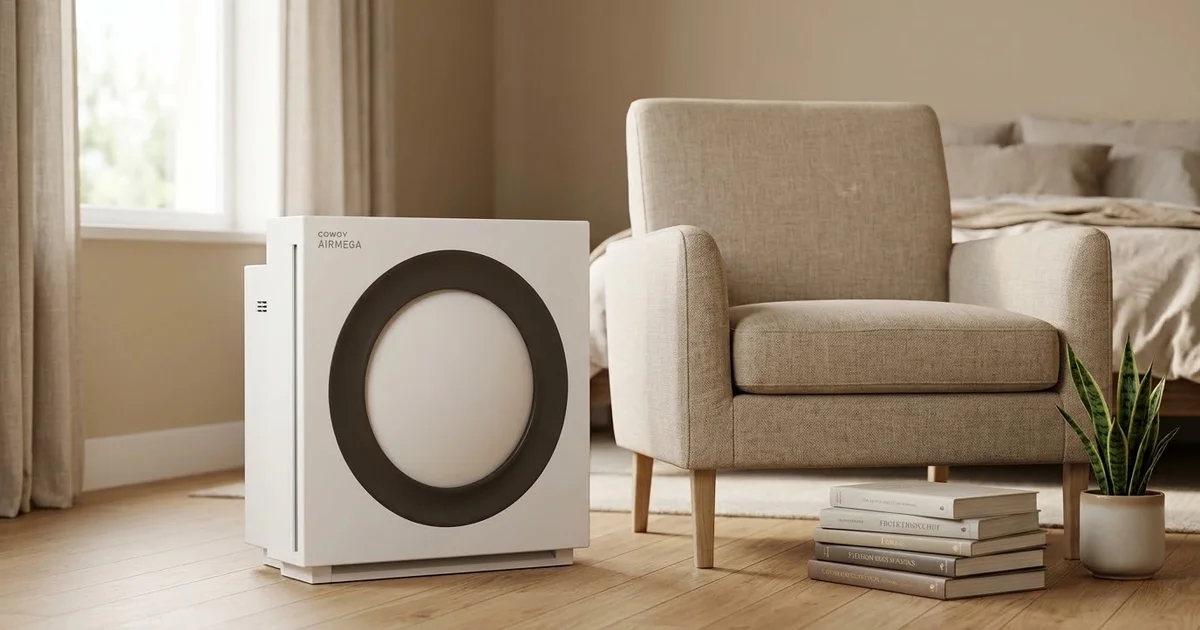
Coway Mighty2 vs AP-1512HH (2026)
Coway's Mighty2 replaced the AP-1512HH as Wirecutter's top pick. We compare CADR, noise, sensors, filter costs, and whether the older unit is still the smarter buy.
KNKA APH4000 Review: $150 Dark Horse
KNKA's APH4000 is one of Amazon's best-selling purifiers at $150. We check the AHAM certification, decode the 1,695 sq ft claim, and compare it to Levoit and Coway.
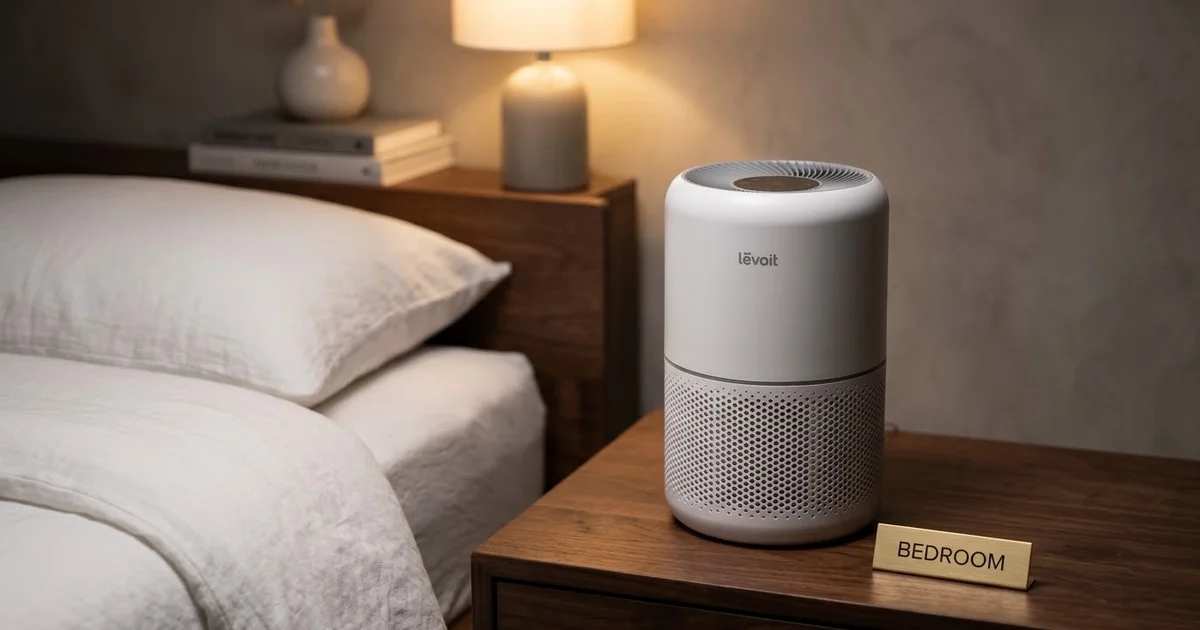
Levoit Core 300 vs 300-P: What Changed
Levoit quietly replaced the Core 300 with the Core 300-P. We explain the AHAM certification, whether filters still fit, and which one you should actually buy.
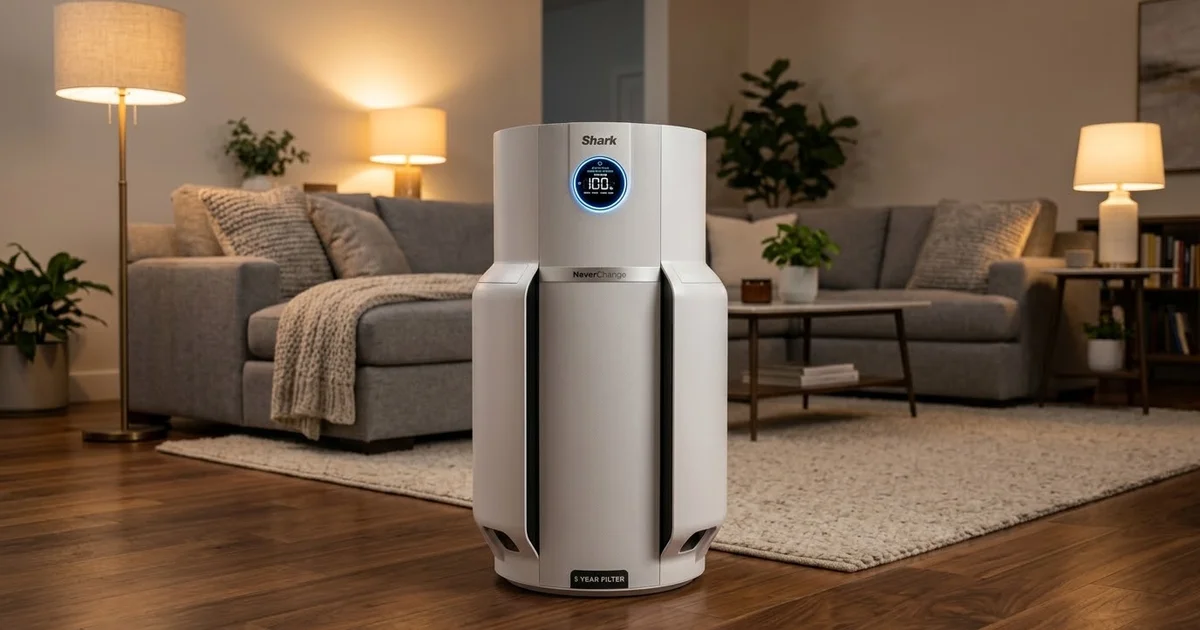
Shark NeverChange HP302 Review
Shark's NeverChange HP302 promises 5 years on one filter. We dig into the real running costs, the odor neutralizer catch, and whether it beats cheaper rivals.
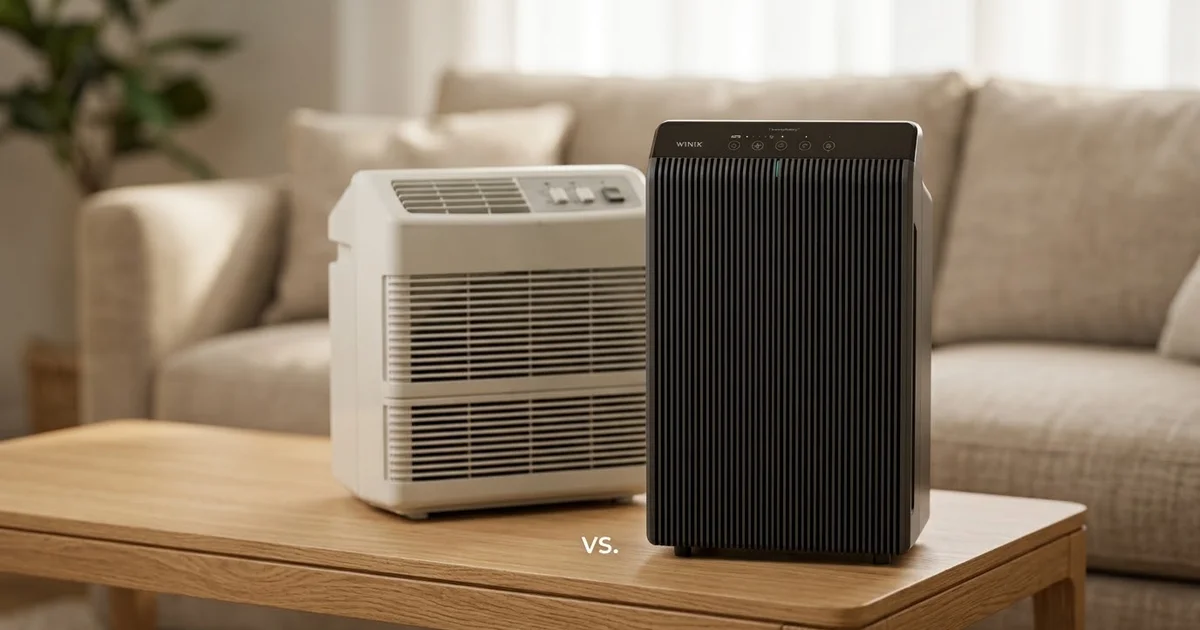
Winix 5510 vs 5500-2: 2026 Verdict
The Winix 5500-2 is discontinued and the 5510 takes over. We compare CADR, noise, filter costs, and the one compatibility problem nobody mentions.
🛒 Products Mentioned
As an Amazon Associate, we earn from qualifying purchases.
Runs side-by-side purifier comparisons, long-term ownership reports, and filter cost analysis.
View all articles by David →