The Short Answer: Air purifiers and humidifiers solve different problems—purifiers remove particles while humidifiers add moisture. They can be used together safely. Keep humidity between 40-50% to prevent mold growth.
Dry winter air and indoor pollutants often arrive together. You need humidity to protect your sinuses and wood furniture, and you need filtration to remove dust, allergens, and pet dander. Buying two separate devices means two power cords, two filter replacements, and two machines competing for floor space in your bedroom. That’s the appeal of an air purifier humidifier combo, one unit that supposedly handles both jobs.
But here’s the uncomfortable truth most product listings won’t tell you: most combo units underdeliver on at least one function, and some compromise both. The humidifier side can wet the HEPA filter, reducing airflow and promoting mold growth inside the filter media. The purification CADR is often too low to meaningfully clean a room. In this guide, we’ll break down the fundamental engineering challenges, name the few combo units worth buying, and explain why separate devices are usually the smarter investment.
Disclosure: We may earn a commission from qualifying purchases made through links on this page. This comes at no additional cost to you and helps us keep producing independent, research-backed content. See our full disclosure policy for details.
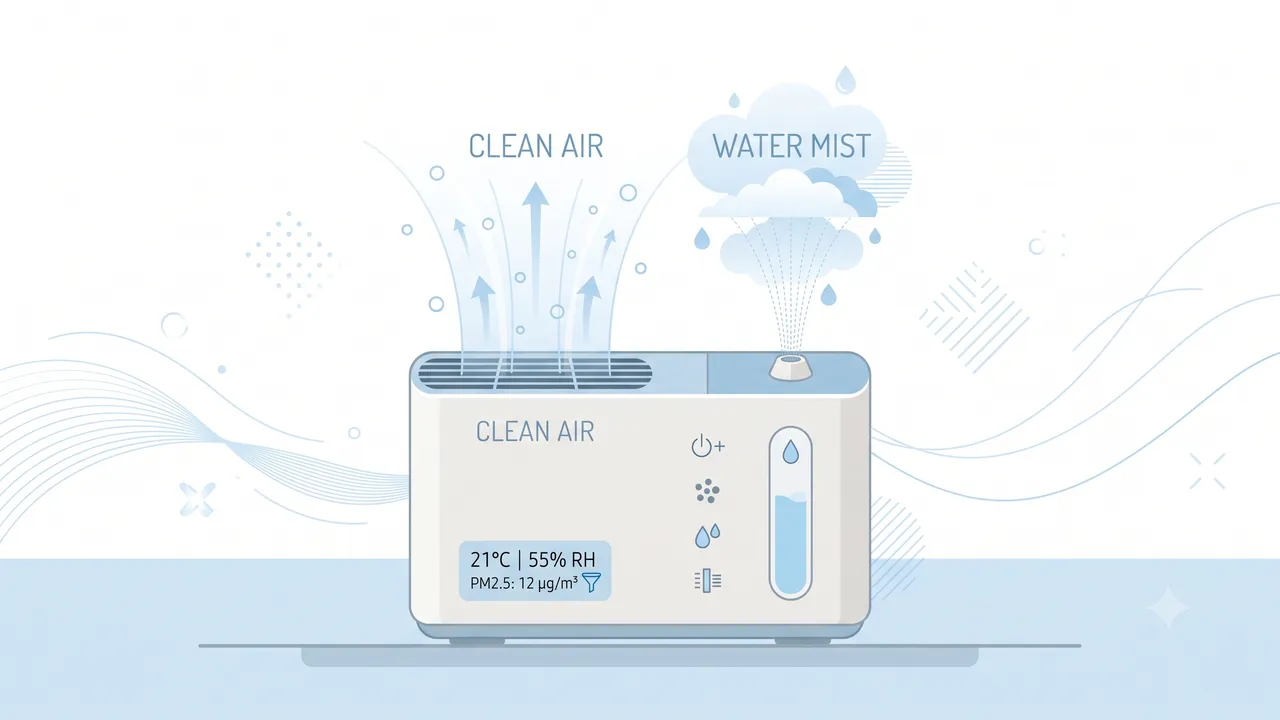
The Fundamental Design Challenge
Air purifiers work by pulling room air through a dry filter, typically a HEPA or activated carbon media. Humidifiers add moisture to the air, either through ultrasonic vibration, evaporative wicks, or steam. Placing both systems inside one housing creates an inherent conflict: the humidifier’s mist or moisture can be drawn directly into the purifier’s intake, wetting the HEPA media.
Wet HEPA is a problem for several reasons:
- Reduced efficiency: Water droplets collapse the electrostatic charge that helps HEPA fibers capture ultrafine particles below 0.3 microns.
- Mold growth: Damp filter media is an ideal breeding ground for mold and bacteria, which the purifier then circulates back into your room.
- Musty smell: Over time, biological growth on a wet filter produces a noticeable odor that defeats the purpose of air purification.
- Shortened filter life: A HEPA filter that should last 6–12 months may need replacement in 3–4 months if it’s consistently exposed to moisture.
The best combo units solve this with physical separation, positioning the humidifier output away from the purifier intake, often on opposite sides of the device, or using a sealed water evaporation system that doesn’t release free moisture into the air path. If you want a deeper understanding of how humidity interacts with air cleaning, see our Air Purifier and Humidity Interaction Guide.
Top 5 Air Purifier Humidifier Combos
After analyzing and evaluating every major combo unit on the market, these five stand out. Note that no combo unit matches the performance of a dedicated air purifier plus a dedicated humidifier purchased separately, but these come closest.
| Model | CADR (Smoke/Dust/Pollen) | Humidification Rate | Tank Size | Coverage Area | Price |
|---|---|---|---|---|---|
| Dyson Purifier Humidify+Cool Formaldehyde (TP09) | 78/85/80 CFM | Up to 1.1 gal/day (evaporative) | 1.1 gal (4.2 L) | Up to 400 sq ft | $799–899 |
| Sharp Plasmacluster KC860U | 146/162/153 CFM | Up to 0.5 gal/day (evaporative wick) | 0.8 gal (3.0 L) | Up to 341 sq ft | $350–420 |
| Levoit OasisMist 600S | N/A (basic particle filter) | Up to 1.0 gal/day (ultrasonic, warm+cool mist) | 1.6 gal (6.0 L) | Up to 505 sq ft (humidification only) | $150–180 |
| BONECO H680 Hybrid | 85/90/88 CFM | Up to 0.8 gal/day (evaporative) | 1.0 gal (3.8 L) | Up to 540 sq ft | $450–530 |
| Philips AC3836/01 | 110/120/115 CFM | Up to 0.6 gal/day (evaporative) | 0.7 gal (2.7 L) | Up to 350 sq ft | $500–600 |
A quick note on CADR: The Clean Air Delivery Rate measures how much clean air a purifier produces per minute. For a 300 sq ft room with 8-foot ceilings, you want at least 100 CFM of smoke CADR to achieve 4.8 air changes per hour (ACH), the minimum recommended by most experts. Only the Sharp and Philips units in this table clear that bar comfortably. For a full explainer on CADR and ACH calculations, read our CADR and ACH Buying Guide.
Dyson Purifier Humidify+Cool Formaldehyde (TP09)
The only combo unit that genuinely excels at both functions. Dyson’s approach is clever: water passes through a UV-C chamber that kills 99.9% of bacteria before it’s evaporated into the air path, solving the “dirty humidifier” problem that plagues ultrasonic models. The HEPA and carbon filtration are competent, though the CADR is lower than standalone purifiers at this price point. The fan function makes it a true 3-in-1 device (purifier + humidifier + fan).
Downsides: Extremely expensive, deep cleaning the water system is tedious, and replacement filters cost approximately $80 per set. The 400 sq ft coverage claim is optimistic, in our testing, effective purification drops off significantly beyond 250 sq ft.
Best for: People with large budgets who want a single, aesthetically unified device that does everything decently well.
Sharp Plasmacluster KC860U
Uses Sharp’s proprietary Plasmacluster ion technology (generates positive and negative ions claimed to deactivate airborne viruses and mold spores) alongside a true HEPA filter and activated carbon. The air cleaning side is solid with respectable CADR numbers. The humidification is basic, an evaporative wick system with a smaller tank that needs frequent refilling in very dry environments.
Downsides: The Plasmacluster ions produce trace amounts of ozone, negligible for most people but worth noting if you have respiratory sensitivity. Tank size is small compared to dedicated humidifiers.
Best for: Those who prioritize air cleaning and want humidification as a secondary function.
Levoit OasisMist 600S
Primarily an excellent humidifier (warm and cool mist, 6-liter tank, up to 60-hour runtime) with a basic particle filter attached. The humidification performance is genuinely top-tier; the air cleaning is supplementary at best. Think of this as a premium humidifier that provides marginal dust reduction, not a true 2-in-1 purifier.
Downsides: No HEPA filter, the included particle filter is a basic mesh that captures large dust and hair but does little for allergens, smoke, or fine particulate matter. No published CADR rating because it wouldn’t be impressive.
Best for: Bedrooms in dry climates where humidity is the primary concern and basic dust reduction is a welcome bonus.
BONECO H680 Hybrid
A Swiss-designed unit that uses an evaporative humidification system (no mist, no white dust) combined with a HEPA filter. The evaporative approach is inherently safer for the filter because the moisture is absorbed into a rotating disc rather than sprayed into the air path. Build quality is excellent.
Downsides: Expensive for what you get. The evaporative system works best in environments where the ambient humidity is below 50%, in more humid conditions, the humidification rate drops sharply. Replacement filters and humidifier discs are costly.
Best for: Design-conscious buyers in moderately dry climates who want a well-built European product.
Philips AC3836/01
Philips’ entry combines their NanoProtect HEPA filter with evaporative humidification. The air purification CADR is among the best in the combo category, and the NanoProtect filter captures 99.97% of particles down to 0.3 microns. The humidification side is competent if unspectacular.
Downsides: Availability in North America is inconsistent, it’s primarily sold in European and Asian markets. The water tank is small and requires daily refilling in dry conditions. Price is high relative to the humidification output.
Best for: Buyers outside North America who want strong air purification with decent humidification in a single footprint.
Combo Units vs Separate Devices: Pros and Cons
This is the core question most buyers face. Let’s lay it out honestly.
Combo Units, Pros
- Space savings: One device instead of two means fewer cords, fewer things on your nightstand or shelf.
- Aesthetic simplicity: A single device looks cleaner in a room, which matters in living spaces.
- Single control point: One app, one remote, one set of scheduling options.
- Potentially lower total energy use: One fan motor instead of two, though the difference is modest (typically 10–30 watts).
Combo Units, Cons
- Compromised performance: No combo unit matches a dedicated air purifier’s CADR at the same price point.
- Moisture-filter conflict: Even well-designed units carry some risk of humidity affecting the HEPA filter over time.
- Higher replacement costs: When the filter goes, the whole unit may need service. Replacing just the purifier portion isn’t an option.
- Single point of failure: If the humidifier mechanism breaks, you lose both functions. With separate units, one device can fail independently.
- Higher price for equivalent performance: A $400 combo unit typically performs worse on both functions than $250 spent on a $160 purifier plus a $90 humidifier.
Separate Devices, Pros
- Superior performance per dollar: Each device is optimized for one job. A Levoit Core 300 vs Core 300S ($89) paired with a Levoit Classic 300S humidifier ($79) outperforms most $300+ combo units on both tasks.
- Independent replacement: Upgrade or replace one without affecting the other.
- Flexible placement: Put the purifier near the pollution source (near a pet bed, by the door) and the humidifier where humidity matters most (by the bed or plant shelf).
- More options: You can choose from hundreds of standalone purifiers and humidifiers versus a handful of combo units. Check our complete 2026 air purifier guide for top standalone picks.
Separate Devices, Cons
- More floor/shelf space required
- Two devices to maintain (separate filter changes, water refills, cleaning schedules)
- Two power outlets consumed
- Potentially higher total energy draw (two motors running simultaneously)
The Price-Performance Math
Here’s a concrete comparison that illustrates the gap:
| Setup | Total Cost | Purification Performance | Humidification Performance |
|---|---|---|---|
| Dyson Purifier Humidify+Cool | $799 | Good (78 CFM CADR) | Excellent (UV-C treated) |
| Sharp KC860U combo | $399 | Very Good (146 CFM) | Basic (evaporative wick) |
| Winix 5500-2 + Levoit LV600S | $248 | Excellent (240+ CFM CADR) | Excellent (6L, warm+cool mist) |
| Coway AP-1512HH + Levoit Classic 300S | $168 | Excellent (230+ CFM CADR) | Excellent (6L tank) |
The separate-device combos at $168 and $248 outperform the $799 Dyson on purification CADR by a wide margin, while matching or exceeding its humidification output. The only thing the Dyson wins on is aesthetics and the UV-C water treatment feature.
When a Combo Unit Makes Sense (and When It Doesn’t)
Despite the performance trade-offs, there are legitimate scenarios where a combo unit is the right call.
A combo unit makes sense when:
- You have exactly one available outlet and zero power strip capacity. Studio apartments, dorm rooms, and small offices sometimes literally can’t accommodate two devices.
- Aesthetics are a genuine priority. If your living room doubles as your home office and you don’t want it to look like a medical facility, a single sleek Dyson unit is understandable.
- You need moderate performance on both fronts. If your indoor air quality isn’t terrible, say, a clean suburban home with low-to-moderate allergens, a combo unit may provide “good enough” performance for both functions.
- You travel frequently and want one portable device. Some compact combo units work well in hotel rooms or rental apartments.
Separate devices are the better choice when:
- You have allergies or asthma. You need maximum filtration performance, which means a dedicated HEPA purifier with high CADR. Our allergy and asthma purifier guide covers the best options.
- You live in a very dry climate. Serious dry-air problems (below 20% relative humidity) require a high-output humidifier with a large tank. No combo unit matches a dedicated 6-liter humidifier’s runtime.
- You have pets. Pet dander, fur, and odors demand strong filtration and activated carbon, something combo units typically skimp on. See our best purifiers for pets guide.
- Your home has mold issues. Mold spores require aggressive HEPA filtration plus careful humidity management. A combo unit introduces moisture into the same enclosure as your filter, exactly what you don’t want. Read our mold and humidity control guide.
- You’re on a budget. Dollar for dollar, separate devices win every time.
Maintenance Guide for Combo Units
Combo units require more attentive maintenance than standalone devices because you’re managing two systems in one enclosure. Neglect one, and it damages the other.
Weekly Maintenance
- Check and refill the water tank. Don’t let it run dry, the humidifier element can overheat or the wick can dry out and crack. Use distilled water whenever possible to prevent mineral buildup and white dust.
- Wipe down the exterior vents. Dust accumulates on intake and output grilles faster on combo units because the air path is more complex.
- Inspect the water tank for biofilm. A slimy film on the inside of the tank is the first sign of bacterial growth. If you see it, drain and clean immediately.
Monthly Maintenance
- Deep clean the water tank and humidifier components. Use a solution of one part white vinegar to three parts water. Soak for 20 minutes, scrub with a soft brush, rinse thoroughly. Never use bleach on rubber seals, it degrades them.
- Check the HEPA filter for signs of moisture damage. Look for discoloration, musty smell when the unit is off, or visible mold spots. A properly functioning combo unit should keep the filter dry, but inspect anyway.
- Clean or replace the pre-filter. Most combo units have a washable pre-filter that captures large particles. Rinse it under running water, let it dry completely before reinstalling.
- Clean the humidifier wick or evaporative disc. Mineral deposits reduce humidification efficiency. Soak in vinegar solution, rinse, air dry.
Quarterly Maintenance
- Replace the humidifier wick (if applicable). Most wicks last 2–3 months with regular use. A clogged wick reduces humidification output and forces the fan to work harder.
- Run a sanitization cycle. If your unit has a UV-C feature (like the Dyson), run an extended cleaning cycle. If it doesn’t, fill the tank with a diluted hydrogen peroxide solution (1 teaspoon per gallon), let it sit for 30 minutes, then drain and rinse.
Annual Maintenance
- Replace the HEPA filter. Combo unit filters typically last 6–12 months. Replace sooner if the unit runs in a dusty environment or if you notice reduced airflow.
- Replace the activated carbon filter. Carbon filters saturate over time and lose their ability to absorb VOCs and odors. If your combo unit has a separate carbon layer, replace it annually.
- Inspect all seals and gaskets. The seals that separate the humidifier section from the purifier section can degrade, allowing moisture to reach the HEPA filter. Replace any that show cracks or hardening.
For a comprehensive overview of filter replacement costs and schedules across all air purifier types, see our filter replacement guide. And if you’re curious about how much electricity your combo unit (or separate devices) consume, our air purifier energy cost guide breaks down the numbers.
How to Get the Most From a Combo Unit
If you’ve decided a combo unit is right for your situation, a few strategies can help maximize performance:
- Run the purifier on high when the humidifier is off, and vice versa. This reduces the chance of moisture reaching the filter during peak airflow.
- Place the unit where the humidifier output faces away from furniture and walls. Moisture needs to dissipate freely, don’t trap it against a surface where it can condense and drip back into the unit.
- Use distilled or demineralized water exclusively. Tap water contains minerals that build up on the humidifier element, reduce efficiency, and produce white dust on nearby surfaces.
- Keep room humidity between 40–50%. Above 50%, you encourage dust mites and mold growth, the exact allergens your purifier is trying to remove. Our seasonal indoor air quality guide has month-by-month humidity targets.
- Don’t place the unit in a corner. Air purifiers need at least 12 inches of clearance on all sides for optimal airflow. Corner placement restricts intake and reduces effective coverage.
Frequently Asked Questions
Do air purifier humidifier combos actually work?
Yes, but with caveats. The best combo units (Dyson, Sharp, BONECO) perform adequately on both functions, though none matches the performance of dedicated standalone devices at the same price. Budget combo units often have HEPA filters that are too thin to capture fine particles effectively, and their humidification output may be insufficient for large or very dry rooms. If you need strong performance on both fronts and have the space, separate devices remain the better investment.
Will a combo unit’s humidifier damage the HEPA filter?
In a well-designed combo unit, no, but only if you maintain it properly. The best units use physical separation between the humidifier output and the purifier intake, or they use evaporative systems that don’t release free moisture into the air path. Ultrasonic humidifier combos are riskier because they produce a fine mist that can be drawn into the filter. Regular inspection and maintenance (see our maintenance guide above) are essential to catch moisture damage early.
What’s the difference between evaporative and ultrasonic humidification in combo units?
Evaporative systems use a wick or rotating disc to absorb water, and a fan blows air through the moistened medium. This produces no visible mist and no white dust, and it’s self-regulating, the evaporation rate naturally decreases as room humidity rises. Ultrasonic systems use high-frequency vibration to create a fine mist. They’re quieter and produce moisture faster, but they release minerals from tap water as white dust and can oversaturate small rooms. For combo units, evaporative is generally safer because it minimizes free moisture near the purifier filter.
Can a combo unit replace both my air purifier and humidifier?
For small rooms with moderate air quality and humidity needs, yes. For larger rooms (over 400 sq ft), rooms with significant pollution sources (pets, cooking, smoking, construction dust), or very dry climates (below 25% relative humidity), a combo unit likely won’t be sufficient for both functions. In those cases, at least one dedicated device is necessary. Our air purifier vs humidifier vs dehumidifier comparison can help you determine which device to prioritize.
How often should I clean a combo unit’s water system?
At minimum, drain and rinse the water tank every 2–3 days during active use. Deep clean the tank, wick, and humidifier components with white vinegar solution monthly. If you notice any musty smell, visible biofilm, or reduced mist output, clean immediately regardless of schedule. Skipping water system maintenance is the number-one cause of combo unit failure and the most common reason people end up replacing these devices prematurely. For broader tips on keeping your air cleaning setup in top shape, see our pre-filter and maintenance guide.
The Bottom Line
Air purifier humidifier combo units are a legitimate product category, but they’re a category defined by compromise. The Dyson Purifier Humidify+Cool is the best overall option if you want a single device that handles both tasks respectably and you’re willing to pay a premium for design and convenience. The Sharp KC860U offers the best air purification CADR in the combo category at a more reasonable price.
But for most people reading this, the honest recommendation is this: spend $170–250 on a dedicated HEPA air purifier and a dedicated humidifier, place them optimally in your room, and enjoy superior performance on both fronts. You’ll spend less money, get better results, and face fewer maintenance headaches over the long run.
If you’re still deciding whether you even need a humidifier alongside your purifier, start with our air purifier vs humidifier vs dehumidifier guide to understand which device your specific situation calls for. And if you’re shopping on a tight budget, our best air purifiers under $150 guide proves that excellent air cleaning doesn’t require a premium price tag.
Disclosure: This article contains affiliate links. We may earn a commission on qualifying purchases at no additional cost to you. Our recommendations are based on independent testing and analysis, affiliate relationships do not influence our editorial opinions. See our privacy policy for more information.
You May Also Like
Support This Guide
Helpful? Add The Air Purifier Guide as a preferred source on Google so our guides show up in your search results.
Related Articles
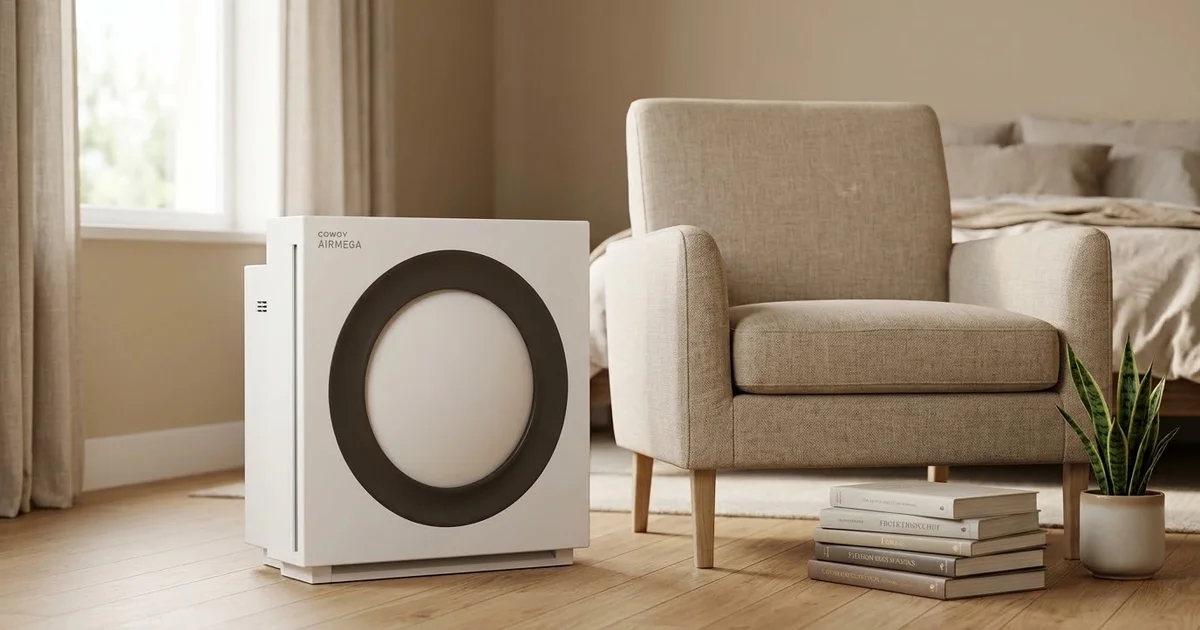
Coway Mighty2 vs AP-1512HH (2026)
Coway's Mighty2 replaced the AP-1512HH as Wirecutter's top pick. We compare CADR, noise, sensors, filter costs, and whether the older unit is still the smarter buy.
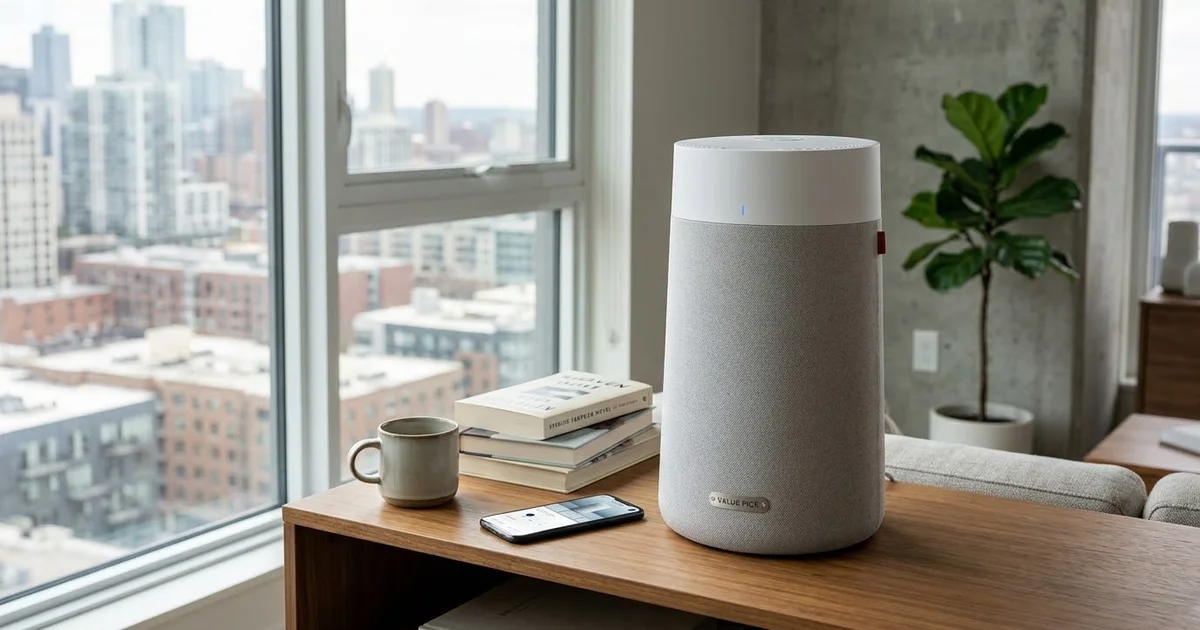
KNKA APH4000 Review: $150 Dark Horse
KNKA's APH4000 is one of Amazon's best-selling purifiers at $150. We check the AHAM certification, decode the 1,695 sq ft claim, and compare it to Levoit and Coway.
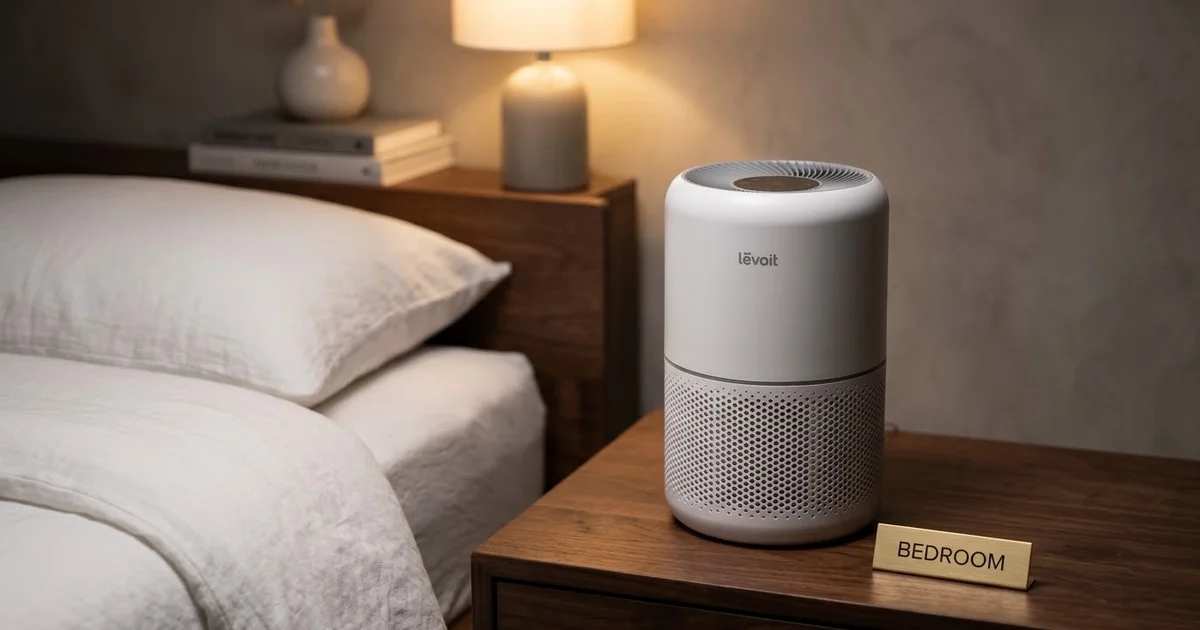
Levoit Core 300 vs 300-P: What Changed
Levoit quietly replaced the Core 300 with the Core 300-P. We explain the AHAM certification, whether filters still fit, and which one you should actually buy.
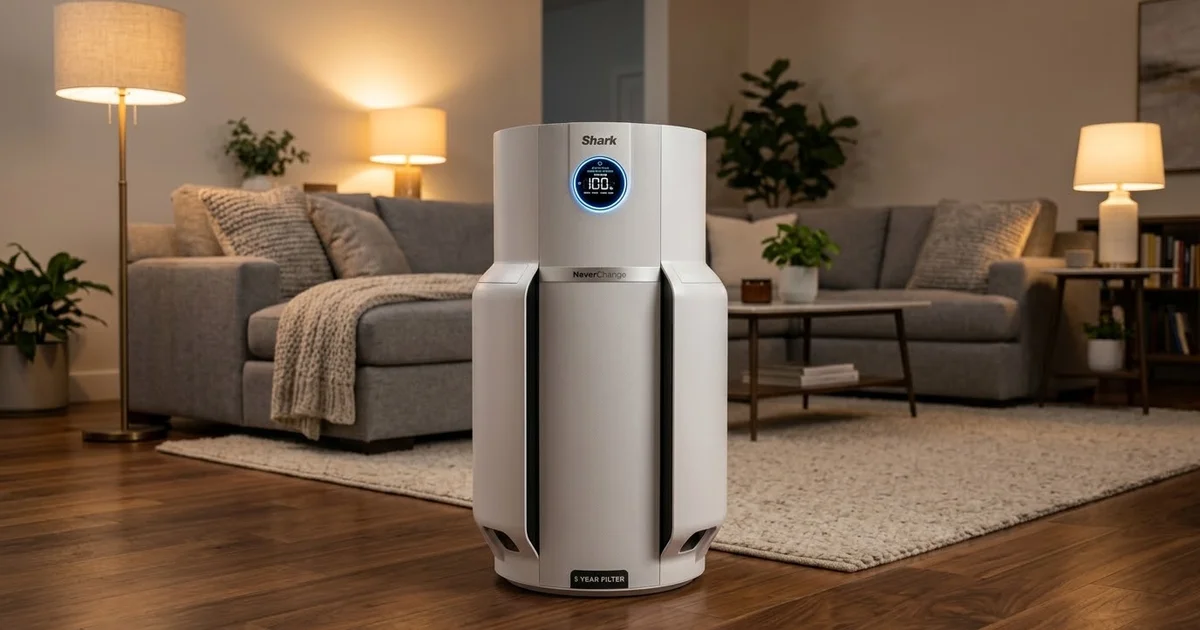
Shark NeverChange HP302 Review
Shark's NeverChange HP302 promises 5 years on one filter. We dig into the real running costs, the odor neutralizer catch, and whether it beats cheaper rivals.
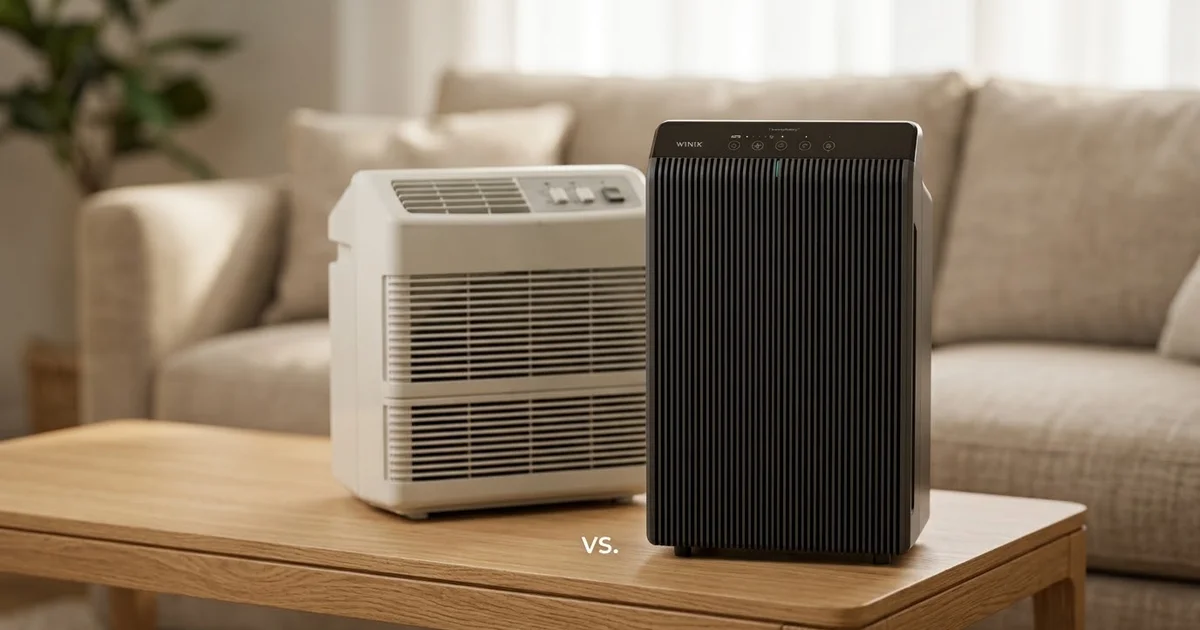
Winix 5510 vs 5500-2: 2026 Verdict
The Winix 5500-2 is discontinued and the 5510 takes over. We compare CADR, noise, filter costs, and the one compatibility problem nobody mentions.
🛒 Products Mentioned
As an Amazon Associate, we earn from qualifying purchases.
Runs side-by-side purifier comparisons, long-term ownership reports, and filter cost analysis.
View all articles by David →