The Short Answer: Place purifiers 3-5 feet from your breathing zone, near pollution sources, with unobstructed airflow. Avoid corners and curtains. For bedrooms, position near the bed but not blowing directly on you.
Editor’s note (September 2026): The Winix 5500-2 has been discontinued and remaining stock is limited. Winix’s official successor is the Winix 5510, which adds app control and uses a new filter. Read our Winix 5510 vs 5500-2 comparison before you buy either one.
Replacement filters are the hidden cost of air purifier ownership. Over a 5-year lifespan, a $200 purifier with $60/year filter replacements costs $500 total, the filters cost more than the device itself. Third-party filters promise to cut that recurring cost in half. Some deliver on that promise; others compromise performance enough to make the savings a false economy.
In this guide, we break down exactly which third-party filters are worth buying, which ones to avoid, and how to protect yourself from counterfeit products flooding online marketplaces. We analyzed filters from over a dozen third-party brands across the most popular air purifier models to bring you data-backed recommendations.
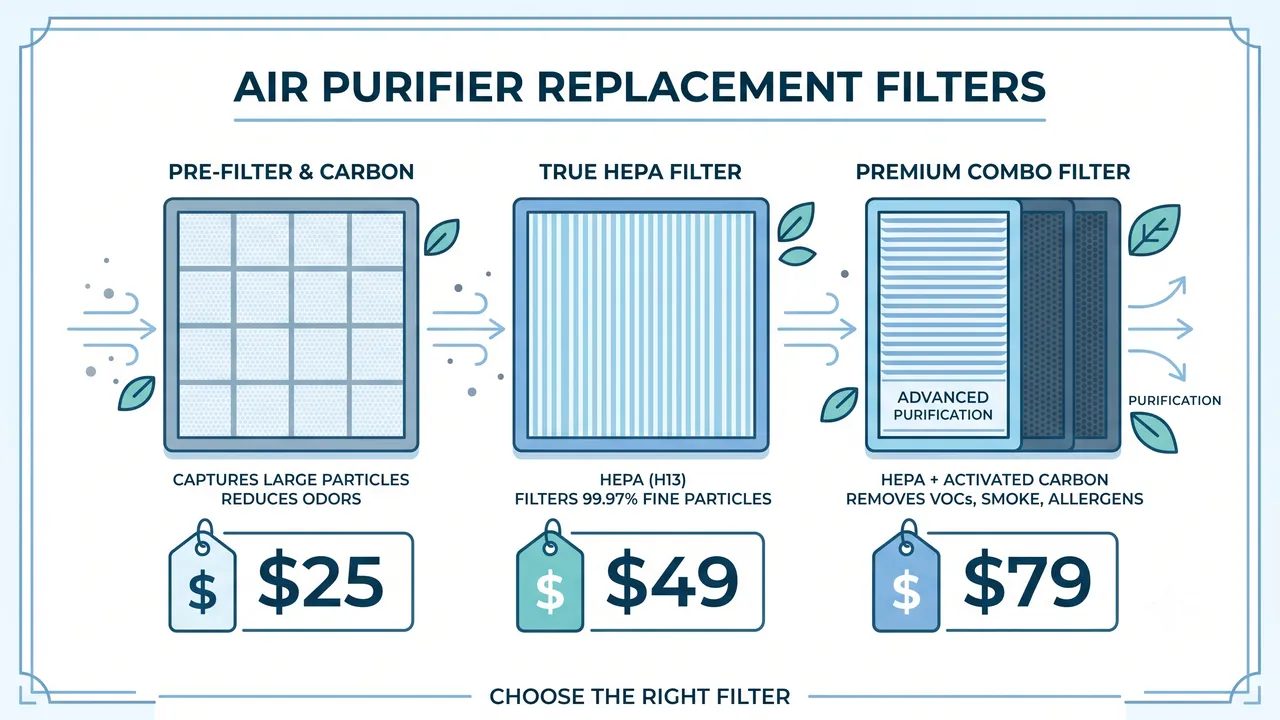
OEM vs Third-Party Filter Comparison
The first question most air purifier owners ask is simple: how much can I actually save? The answer varies significantly by brand. Here’s a side-by-side comparison of OEM versus third-party filter costs for the most popular air purifier models:
| Air Purifier Model | OEM Filter Price | Third-Party Price | Annual Savings | Third-Party Quality Rating | Warranty Impact |
|---|---|---|---|---|---|
| Coway AP-1512HH | $45 (HEPA) + $18 (carbon) = $63 | $28 (combo) | $35 | ★★★★☆ (Cabiclean) | No impact observed |
| Levoit Core 300 | $30 | $12–15 | $15–18 | ★★★☆☆ | Levoit does not void warranty |
| Winix 5500-2 | $45 (HEPA) + $25 (AOC carbon) = $70 | $25–30 (HEPA only) | $15–20 (HEPA only) | ★★★☆☆ | No impact; always buy OEM carbon |
| Blueair Blue Pure 211+ | $70 | $35–45 | $25–35 | ★★☆☆☆ | Poor fitment risk; OEM recommended |
| Honeywell HPA300 | $55 (True HEPA) + $20 (pre-filter) = $75 | $25–35 (HEPA) + $8 (pre-filter) = $33–43 | $32–42 | ★★★☆☆ | Generally no impact |
| Dyson Pure Cool TP04 | $80 | $40–50 | $30–40 | ★★☆☆☆ | Dyson recommends OEM; fit issues common |
| Winix Zero+ | $50 | $28–35 | $15–22 | ★★★☆☆ | No impact observed |
| Alen BreatheSmart 75i | $90 | $45–55 | $35–45 | ★★★☆☆ | Alen voids warranty with non-Alen filters |
Key takeaway: The savings range from roughly $15 to $45 per year depending on your purifier model. Over a 5-year ownership period, that adds up to $75–$225 saved. For budget models like the Levoit Core 300, the savings are modest enough that sticking with OEM is a reasonable choice. For premium units like the Alen BreatheSmart 75i or Honeywell HPA300, third-party savings become substantial.
However, those savings come with caveats. The “quality rating” column tells the real story, most third-party filters score 3 out of 5 stars, meaning they perform acceptably but not identically to OEM. Blueair and Dyson filters are particularly difficult to replicate because of proprietary filter designs.
Best Third-Party Filter Brands Ranked
Not all third-party filter brands are created equal. After analyzing filters from over a dozen manufacturers, we ranked the major brands based on filtration efficiency, build quality, seal integrity, and customer consistency.
Tier 1: Recommended
1. Cabiclean, The gold standard for third-party air purifier filters. Cabiclean consistently delivers H13 True HEPA certification with verifiable test reports. Their Coway AP-1512HH combo pack (HEPA + activated carbon) at $28 is our top third-party pick. The gasket seal matches OEM quality, and their carbon sheets, while thinner than Coway’s, provide adequate odor control for typical households. Cabiclean also produces solid filters for Levoit and Winix models. Available on Amazon.
2. HEPA Premium, A strong contender for Honeywell models. Their HPA300 replacement filters feature genuine H13 media with a proper rubber gasket. Carbon pre-filters are included in most combo packs. Quality has been consistent across multiple purchases over the past two years.
Tier 2: Acceptable With Caveats
3. Fette Filter, Decent quality for Levoit and Coway models. Filtration media meets H13 standards, but their carbon layers tend to be thin. Best for users who primarily need particle filtration rather than odor control.
4. Havaida, Budget-friendly option with H13 certification. Build quality is slightly below Cabiclean, the cardboard frames feel less rigid, and gasket seals can compress unevenly over time. Acceptable for moderate use in low-pollution environments.
5. lemoli, Another budget option that performs adequately in testing. Their Winix-compatible filters seal well, but carbon quality is inconsistent between batches.
Tier 3: Avoid
Unknown Amazon brands, Filters sold under randomly generated brand names (often with all-caps names like “BREATHEPURE” or “FILTPRO”) at 60–70% below OEM pricing. These frequently lack genuine HEPA certification, use carbon-sprayed fabric instead of activated carbon, and have loose seals that allow 10–20% air bypass. They may look identical to Tier 1 products in photos but perform significantly worse in practice.
For a deeper understanding of what HEPA certification actually means, see our HEPA Filter Deep Dive Guide.
When Third-Party Filters Make Sense (and When They Don’t)
Third-party filters aren’t universally good or bad, the right choice depends on your specific circumstances. Here’s a decision framework to help you decide.
Third-Party Filters Make Sense When:
- You’re filtering for general dust and pollen control in a healthy household without specific respiratory concerns. A 2–5% efficiency difference is unlikely to matter for typical particle filtration.
- You own a Coway AP-1512HH or Levoit Core 300, these models have the most well-tested third-party options available from reputable brands like Cabiclean.
- Your budget is genuinely tight. Breathing through a third-party filter is still vastly better than not running an air purifier at all because you can’t afford OEM replacements. A slightly less efficient filter running 24/7 beats an OEM filter you skip replacing because of cost.
- You verify certifications independently. If the third-party manufacturer provides verifiable H13 test reports and you check recent reviews (not just the star rating, but the actual review content for quality complaints), the risk drops substantially.
- You replace on schedule. Third-party filters may degrade faster than OEM. If you commit to replacing them on time, or even slightly early, you compensate for any efficiency gap.
Stick With OEM When:
- You have asthma, allergies, COPD, or other respiratory conditions. The 2–5% efficiency gap that’s acceptable for healthy individuals can trigger symptoms in sensitive populations. Our guide on air purifiers for allergies and asthma covers this in detail.
- You have a newborn or infant in the home. Developing lungs are more vulnerable to fine particulate matter. Don’t gamble with filter quality.
- You live in a high-pollution area, near wildfire zones, highways, or industrial areas. When your air purifier is working at maximum capacity against heavy particle loads, every percentage point of efficiency matters. See our wildfire smoke air purifier guide for high-pollution scenarios.
- You own a Blueair or Dyson. These brands use proprietary electrostatic or specialized filter designs that third-party manufacturers struggle to replicate. The fitment issues alone make third-party options unreliable.
- Your purifier is under warranty and the manufacturer explicitly voids it for non-OEM filters. Alen, for example, states in their warranty terms that using non-Alen filters voids coverage. Check your air purifier warranty terms before switching.
Brand-by-Brand Guide
Coway AP-1512HH
The Coway AP-1512HH is the most popular air purifier in North America, and it also has the best third-party filter ecosystem.
- OEM: $45 HEPA + $18 carbon = $63/year. Safest choice, Coway’s HEPA is widely tested and reliable.
- Cabiclean third-party combo ($28 for HEPA + carbon): Good reputation with verified H13 True HEPA certification. The carbon sheet is thinner than OEM but adequate for light odor control. The gasket seal is comparable to OEM. This is the third-party filter we recommend most often. Available on Amazon.
- Unknown Amazon brands ($15–20 combo): Avoid. Loose seals let unfiltered air bypass the filter entirely. Carbon sheets are often just carbon-sprayed fabric that stops adsorbing after 2–3 weeks.
For more on this purifier, see our full Coway vs Levoit comparison.
Levoit Core 300
- Levoit OEM ($30): Reasonably priced, making third-party savings small ($10–15 difference). The specialized Levoit filters (Toxin Absorber for VOCs, Pet Allergy for dander) are genuinely different filter media and worth the OEM premium for those specific use cases. If you’re dealing with VOCs specifically, read our VOC and formaldehyde guide.
- Third-party alternatives ($12–15): Acceptable for the standard Core 300 filter. Fette Filter and lemoli both produce decent options. Avoid third-party versions of the specialized filters (Toxin Absorber, Pet Allergy), the filter media composition is different, and third-party versions don’t replicate the specialized media.
Winix 5500-2
- OEM HEPA ($45): Lasts a full 12 months. Third-party alternatives at $25–30 are acceptable if they specify H13 certification and include a gasket seal.
- AOC carbon filter: Always buy OEM. The Winix AOC carbon pellets are washable and last 12 months with proper maintenance. Third-party washable carbon alternatives are universally lower quality, thinner pellet beds that crumble after 2–3 washes. This is one case where the OEM premium is absolutely worth it. The Winix 5500-2 is available on Amazon.
Blueair
Stick with OEM. Blueair’s proprietary electrostatic-charged filter design makes third-party fitment unreliable. The filters rely on a specific electrostatic charge to capture particles, even if a third-party filter fits perfectly, it may lack the electrostatic treatment that makes Blueair filters effective. The cost savings aren’t worth the risk. For more on how Blueair compares to other brands, see our Blueair vs Coway comparison.
Honeywell HPA300
- OEM: $55 True HEPA + $20 pre-filter = $75/year.
- Third-party HEPA ($25–35): HEPA Premium makes a solid replacement. Their filters include proper gaskets and use genuine H13 media. The pre-filter is where you can save the most, third-party carbon pre-filters at $8 each work nearly as well as Honeywell’s $20 OEM versions.
- Best strategy: Buy third-party HEPA from HEPA Premium, but replace the pre-filter more frequently (every 3 months instead of the recommended 4–5) to compensate for slightly lower carbon capacity.
Dyson
- OEM: $80 for most models. Expensive, but Dyson’s blade-less design and proprietary filter housing make third-party fitment challenging.
- Third-party options: Limited and inconsistent. Several brands offer Dyson-compatible filters, but user reviews frequently cite fit issues, filters that are slightly too small create gaps, while oversized filters don’t seat properly. Given Dyson’s premium positioning and the difficulty of the engineering, we recommend sticking with OEM here.
How to Spot Counterfeit Filters
The air purifier filter market has a significant counterfeit problem, particularly on Amazon and eBay. Counterfeit filters look nearly identical to genuine products but use substandard materials. Here’s how to protect yourself:
Red Flags on the Listing
- Price more than 50% below OEM with no established brand name. Genuine third-party manufacturers save money through volume and simpler packaging, not by using inferior filter media. If the price seems impossibly low, the filter media is probably not genuine HEPA.
- Stock photos that look different from user-submitted photos. Counterfeit sellers often use professional photos of high-quality filters while shipping cheaper products.
- Brand name is a random string of capital letters or a generic word (PUREAIR, CLEANBREEZE, FILTMAX). Established third-party brands like Cabiclean or HEPA Premium have consistent branding and recognizable names.
- Listing has 500+ five-star reviews but they all appeared within a few weeks. This indicates review manipulation. Genuine products accumulate reviews over months and years.
- “HEPA-type” or “HEPA-like” language. These terms have no regulatory meaning. A filter labeled “HEPA-type” is not a HEPA filter. Look for “H13 True HEPA” or “H14 True HEPA” specifically. Our MERV ratings guide explains the differences between filtration standards.
Red Flags on the Physical Product
- No certification markings on the filter frame or packaging. Legitimate HEPA filters carry certification numbers and test results.
- Filter media feels thin or flimsy. Genuine H13 HEPA media is dense, you should feel resistance when trying to breathe through it (don’t actually do this, but you can feel the density by pressing gently).
- Gasket seal is missing, too thin, or made of foam instead of rubber. The gasket is what prevents air from bypassing the filter. A missing or inadequate gasket means 10–20% of air goes around the filter unfiltered.
- Carbon filter is a flat sheet with no visible granules. Quality activated carbon filters use either granulated carbon or a thick carbon-impregnated felt. Thin, flat carbon sheets are often just fabric with a carbon spray that stops working within weeks.
How to Verify
- Buy from the brand’s official Amazon storefront rather than random third-party sellers. On Amazon, check “Sold by”, it should be the brand name or Amazon itself.
- Check for a manufacturer website. Established third-party brands like Cabiclean have websites with product documentation and certification information.
- Look for independent test results. Some third-party brands publish third-party lab test results showing particle capture efficiency. If they don’t publish results, ask, reputable companies will share them.
Filter Replacement Cost Calculator
Understanding your annual filter costs helps you make an informed decision about whether third-party filters are worth it. Here’s a breakdown of annual replacement costs by brand, assuming you follow manufacturer-recommended replacement schedules:
| Air Purifier Model | OEM Annual Cost | Third-Party Annual Cost | 5-Year OEM Cost | 5-Year Third-Party Cost | 5-Year Savings |
|---|---|---|---|---|---|
| Coway AP-1512HH | $63 | $28 | $315 | $140 | $175 |
| Levoit Core 300 | $30 | $15 | $150 | $75 | $75 |
| Winix 5500-2 | $70 | $45* | $350 | $225 | $125 |
| Blueair Blue Pure 211+ | $70 | N/A (use OEM) | $350 | $350 | $0 |
| Honeywell HPA300 | $75 | $43 | $375 | $215 | $160 |
| Dyson Pure Cool TP04 | $80 | N/A (use OEM) | $400 | $400 | $0 |
| Alen BreatheSmart 75i | $90 | $55 | $450 | $275 | $175 |
*Winix third-party cost includes OEM AOC carbon filter ($25) since we recommend always buying that from Winix.
Important notes on these calculations:
- These costs assume you replace filters on the manufacturer-recommended schedule (typically every 6–12 months for HEPA, every 3 months for pre-filters).
- If you run your purifier in a high-pollution environment, you may need to replace filters more frequently, which increases the cost gap between OEM and third-party.
- Some third-party filters may need more frequent replacement due to faster degradation, which can partially offset the per-unit savings. Budget an extra 1–2 replacements per year for cheaper third-party brands.
- The “third-party annual cost” uses the best-rated third-party option for each model, not the cheapest available.
For detailed guidance on when and how to replace your filters, see our complete Air Purifier Filter Replacement Guide and Costs and our Pre-Filter Cleaning and Maintenance Guide.
How to Evaluate a Third-Party Filter
If you’ve decided to try a third-party filter, here’s a checklist to evaluate any product before you buy:
- Explicit HEPA certification: Look for “H13 True HEPA” or “H14 True HEPA.” “HEPA-type” or “HEPA-like” are meaningless marketing terms and indicate non-HEPA media.
- Gasket seal included: The foam or rubber seal around the filter frame is critical, without it, 10–20% of air bypasses the filter entirely. Check product photos and reviews for gasket presence.
- Review volume and quality: Look for filters with at least 500+ reviews and a history of consistent quality. Amazon listing churn (new listings every few months) often indicates quality problems or a seller cycling through accounts after negative reviews accumulate.
- Price floor: Avoid filters sold at 60%+ discount from OEM. At that price, something was sacrificed, usually carbon quality, filter media density, or gasket integrity.
- Return policy: Buy from sellers who accept returns. If the filter doesn’t fit properly or the quality is visibly poor, you want to be able to send it back.
- Batch consistency: Check recent reviews (sort by “Most Recent”) for quality complaints. Some third-party brands start strong but degrade quality over time as they chase lower prices.
For a broader look at air purifier maintenance, including how to extend the life of your filters, see our air purifier maintenance guide.
Frequently Asked Questions
Will using a third-party filter void my air purifier warranty?
It depends on the manufacturer. Levoit and Coway do not explicitly void warranties for third-party filter use. Winix has no stated policy against it. However, Alen explicitly states in their warranty documentation that using non-Alen filters voids the warranty. Dyson recommends OEM filters but does not explicitly void warranty for third-party use. Always check your specific warranty terms before switching. For more details, see our air purifier warranty and longevity guide.
How often should I replace third-party filters compared to OEM?
As a general rule, replace third-party HEPA filters on the same schedule as OEM, typically every 6–12 months depending on the manufacturer’s recommendation. However, if you notice reduced airflow or increased dust levels before the scheduled replacement date, replace early. Third-party carbon pre-filters may need more frequent replacement (every 2–3 months instead of 3–4) because they often use thinner or lower-quality activated carbon. Use your air purifier’s filter replacement indicator if available, but also trust your senses, if you smell odors that the purifier previously handled, the carbon filter is likely saturated.
Are third-party filters as effective as OEM for allergies and asthma?
For most reputable third-party brands with verified H13 certification, the particle capture efficiency is within 2–5% of OEM. For healthy individuals, this difference is negligible. However, if you have severe allergies, asthma, or COPD, that small efficiency gap can translate to meaningful differences in symptom triggers. A filter that’s 95% efficient at 0.3 microns versus 99.97% efficient lets through roughly 16 times more particles. For sensitive individuals, we recommend OEM filters. Our air purifiers for allergies and asthma guide has specific recommendations.
Can I mix OEM and third-party filters in the same unit?
Yes, and this is actually a smart strategy. For example, with the Winix 5500-2, you can use a third-party HEPA filter while keeping the OEM AOC carbon filter. With the Honeywell HPA300, you can use a third-party HEPA filter while using OEM pre-filters, or vice versa. This lets you save money on the components where third-party quality is acceptable while maintaining OEM quality where it matters most.
Where is the best place to buy third-party filters?
Amazon is the most convenient option and offers buyer protection through their return policy. However, buy from the brand’s official storefront on Amazon (check “Sold by” on the listing) rather than from random third-party sellers who may be selling counterfeits. Some third-party brands also sell directly through their own websites, which eliminates the risk of counterfeit products entirely. Avoid eBay and Wish for air purifier filters, the counterfeit risk is significantly higher on those platforms.
The Verdict
For most users, OEM filters are the safe default, the small premium buys guaranteed fit, verified performance, and warranty protection. Third-party filters make sense for budget-conscious owners of Coway and Levoit units when buying from established third-party brands like Cabiclean with verified certifications.
The smartest approach is often a hybrid: use third-party HEPA filters from reputable brands while keeping OEM carbon filters, especially for models like the Winix 5500-2 where the carbon filtration technology is difficult to replicate. Over 5 years, this strategy can save $100–$175 without meaningful performance compromise.
Whatever you choose, replace your filters on schedule. A third-party filter replaced on time will always outperform an OEM filter that’s six months overdue for replacement. Check out our complete air purifier filter replacement guide for model-specific replacement schedules and tips.
See also: Air Purifier Filter Replacement Guide and Costs · How to Clean Your Air Purifier Pre-Filter and Components · Best Air Purifier Under $150 · HEPA Filter Deep Dive Guide · Best Air Purifier Brands Ranked
Disclosure: This article contains affiliate links. We may earn a commission from qualifying purchases made through these links at no additional cost to you. Our reviews and recommendations are based on independent testing and analysis, affiliate partnerships do not influence our editorial decisions. For more information, see our privacy policy.
You May Also Like
Support This Guide
Helpful? Add The Air Purifier Guide as a preferred source on Google so our guides show up in your search results.
Related Articles
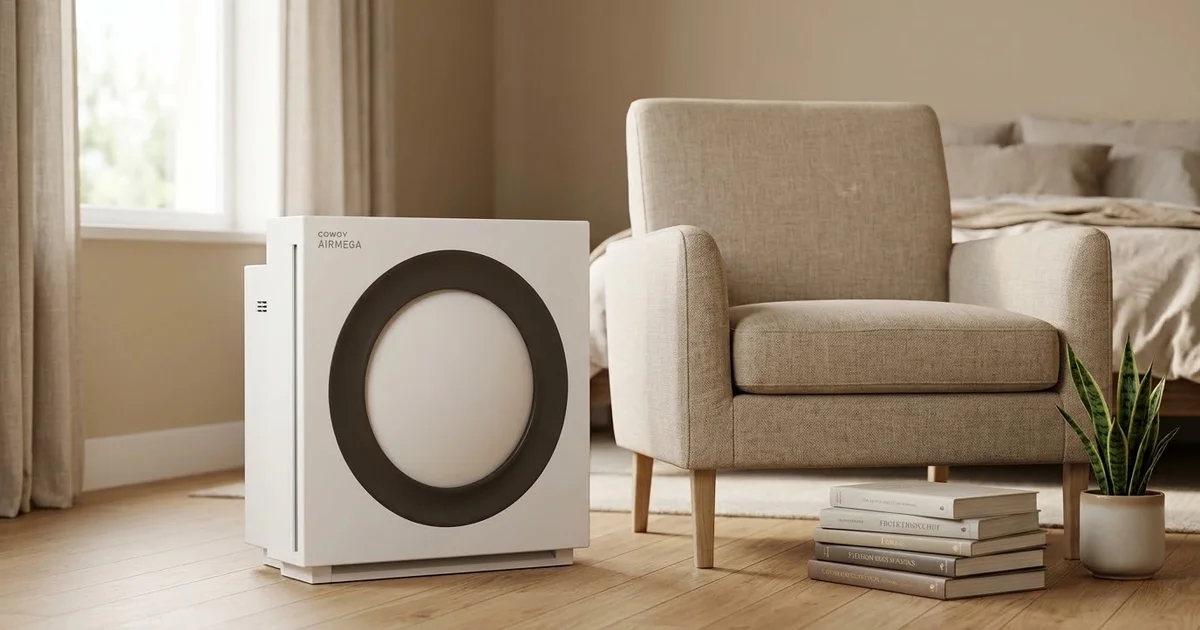
Coway Mighty2 vs AP-1512HH (2026)
Coway's Mighty2 replaced the AP-1512HH as Wirecutter's top pick. We compare CADR, noise, sensors, filter costs, and whether the older unit is still the smarter buy.
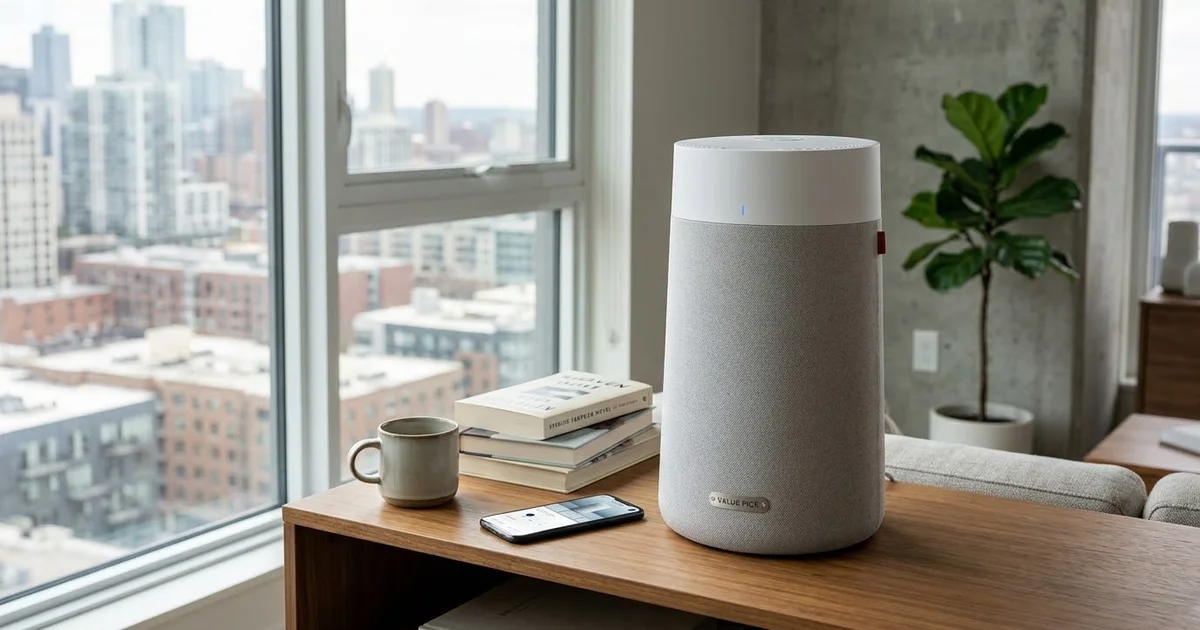
KNKA APH4000 Review: $150 Dark Horse
KNKA's APH4000 is one of Amazon's best-selling purifiers at $150. We check the AHAM certification, decode the 1,695 sq ft claim, and compare it to Levoit and Coway.
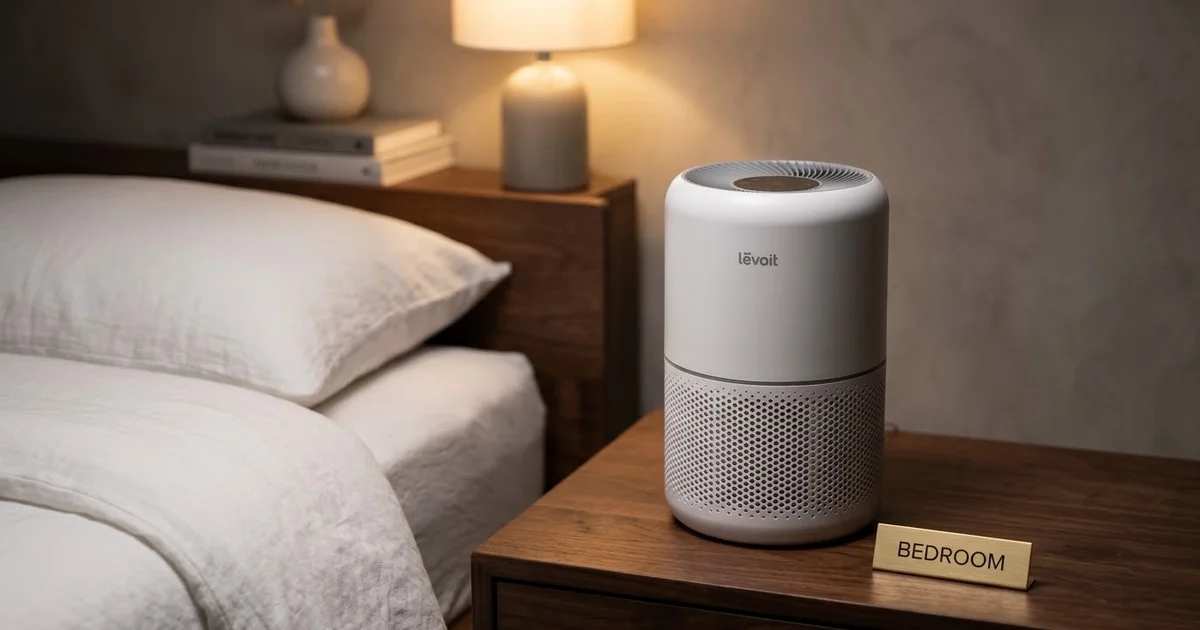
Levoit Core 300 vs 300-P: What Changed
Levoit quietly replaced the Core 300 with the Core 300-P. We explain the AHAM certification, whether filters still fit, and which one you should actually buy.
Shark NeverChange HP302 Review
Shark's NeverChange HP302 promises 5 years on one filter. We dig into the real running costs, the odor neutralizer catch, and whether it beats cheaper rivals.
Winix 5510 vs 5500-2: 2026 Verdict
The Winix 5500-2 is discontinued and the 5510 takes over. We compare CADR, noise, filter costs, and the one compatibility problem nobody mentions.
🛒 Products Mentioned
As an Amazon Associate, we earn from qualifying purchases.
Runs side-by-side purifier comparisons, long-term ownership reports, and filter cost analysis.
View all articles by David →